Neural Defend

Introducing

ARCAS 1B

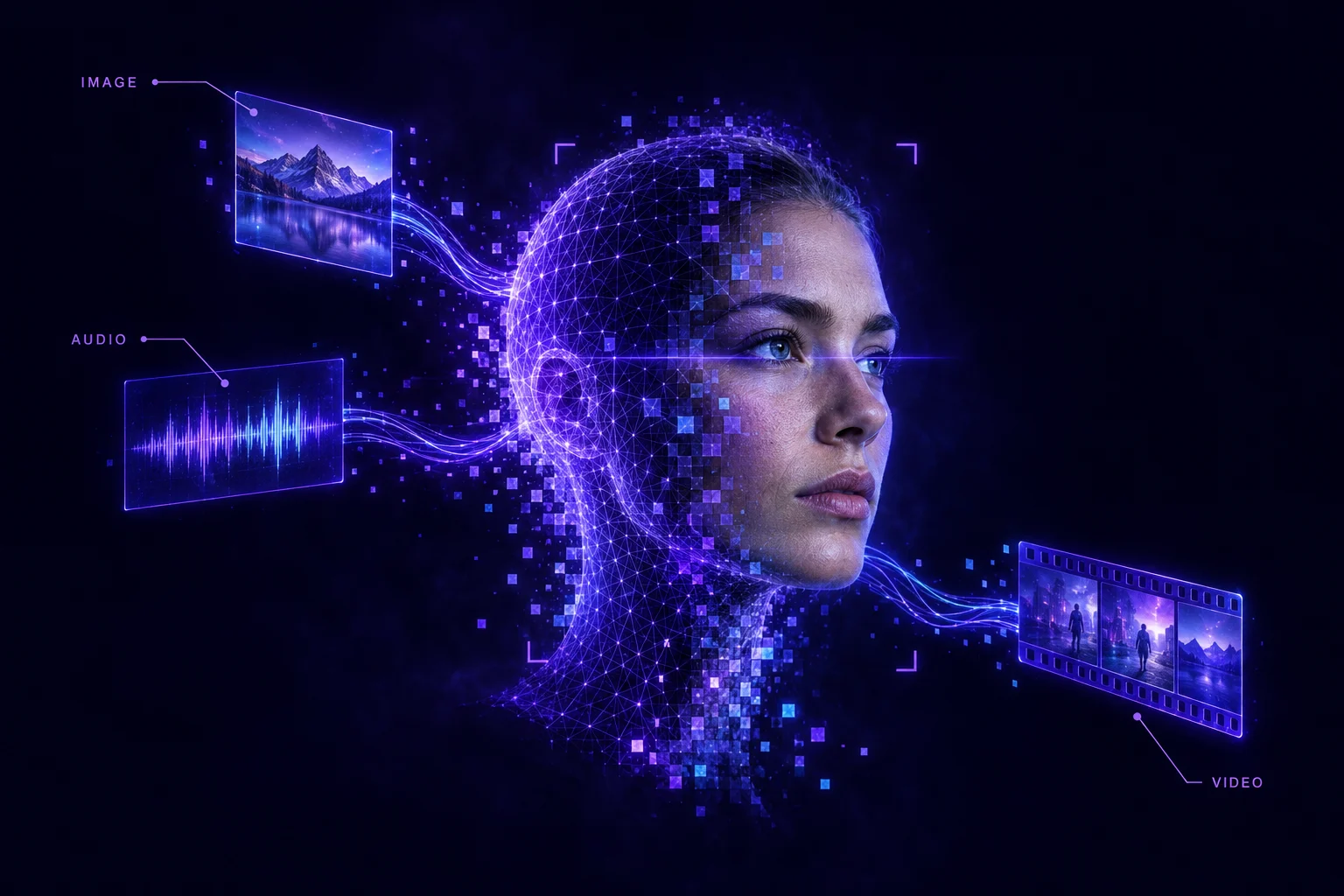
Neural Defend's foundational model for deepfake detection. ARCAS decomposes a single frame into spectral, noise, compression and geometric layers, inspects each one, and fuses the evidence into one calibrated score.

Images in trainingInternal
10M+
Images evaluatedInternal testing
20M+
Generators evaluated, incl. ChatGPT and GeminiInternal testing
5,000+
Public benchmark records scoredARCAS paper
1.3M
Public benchmark familiesARCAS paper
7

[MODULE 01//Concept labPreview]

What ARCAS sees that you can't.

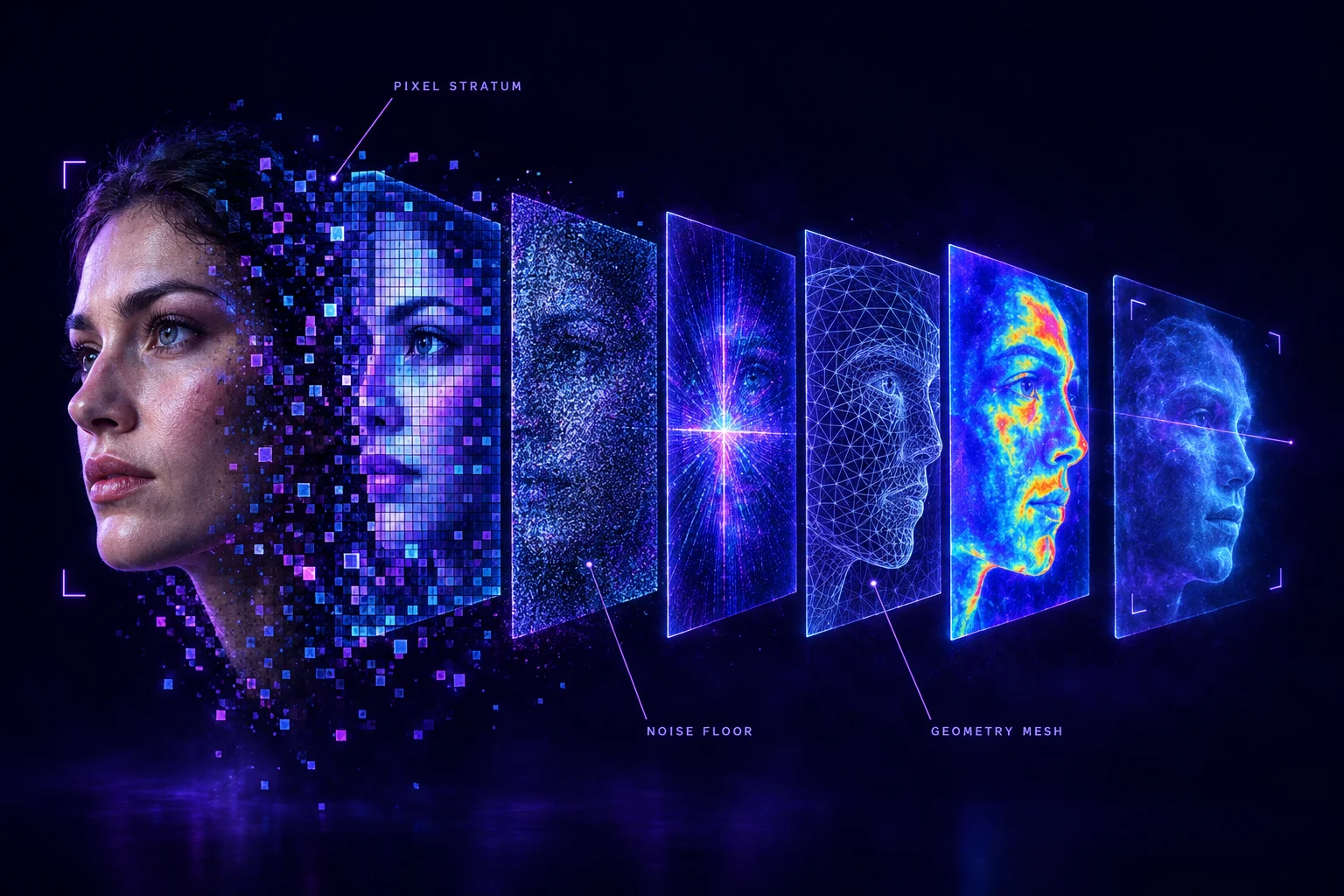
C01 // Anatomy of a deepfake

One frame, pulled apart

What does a single synthetic frame look like when every forensic stratum is separated?

Pixel grid, noise floor, frequency starburst, geometry mesh and heatmap. Each stratum holds evidence the others miss.

ARCAS 1BARCAS separates these strata in a single pass and weighs them together.

  • Pixel stratum
  • Noise floor
  • Geometry mesh

C02 // Generator fingerprints

Every generator signs its work

Can one model learn the signatures of generator families it was never shown?

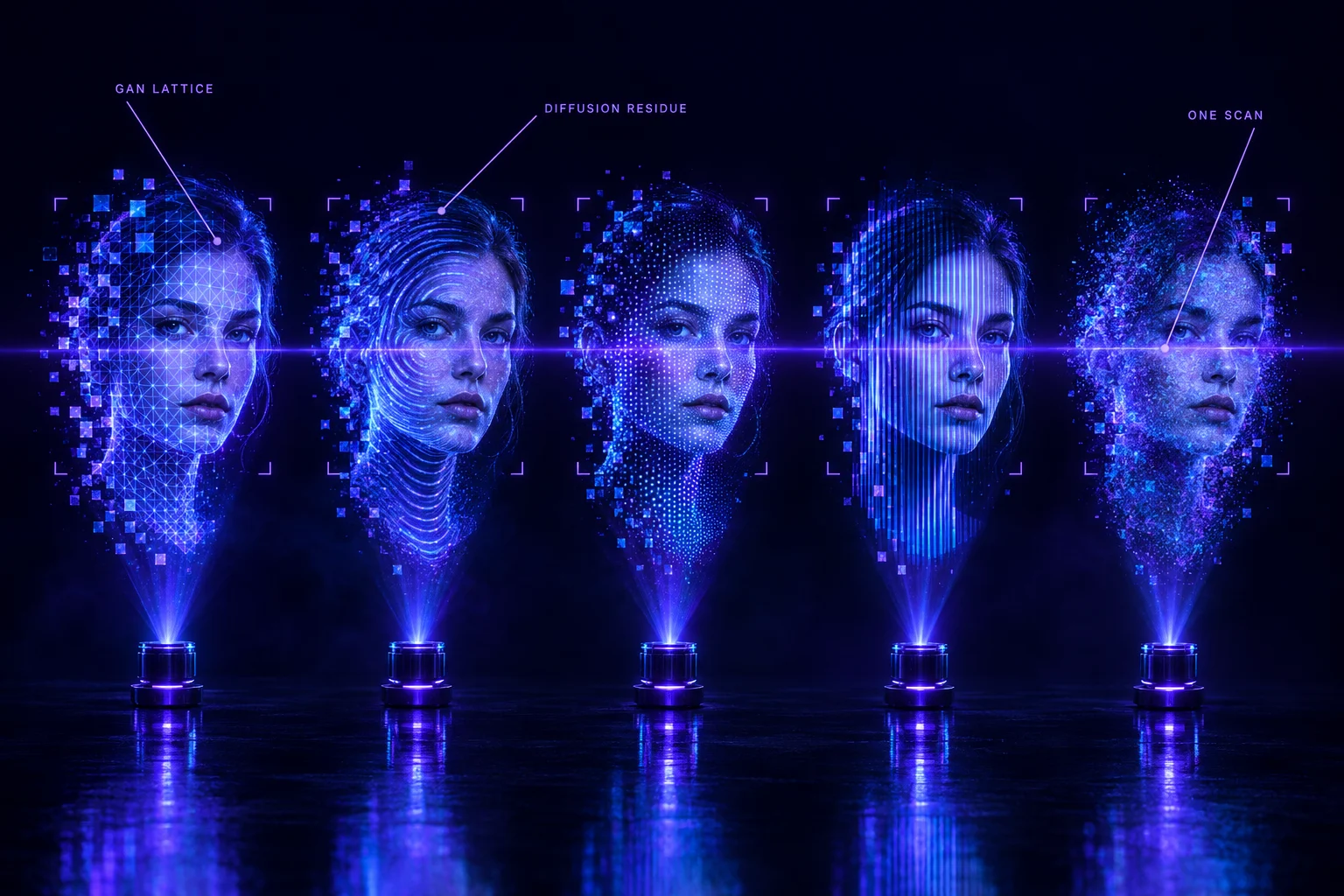
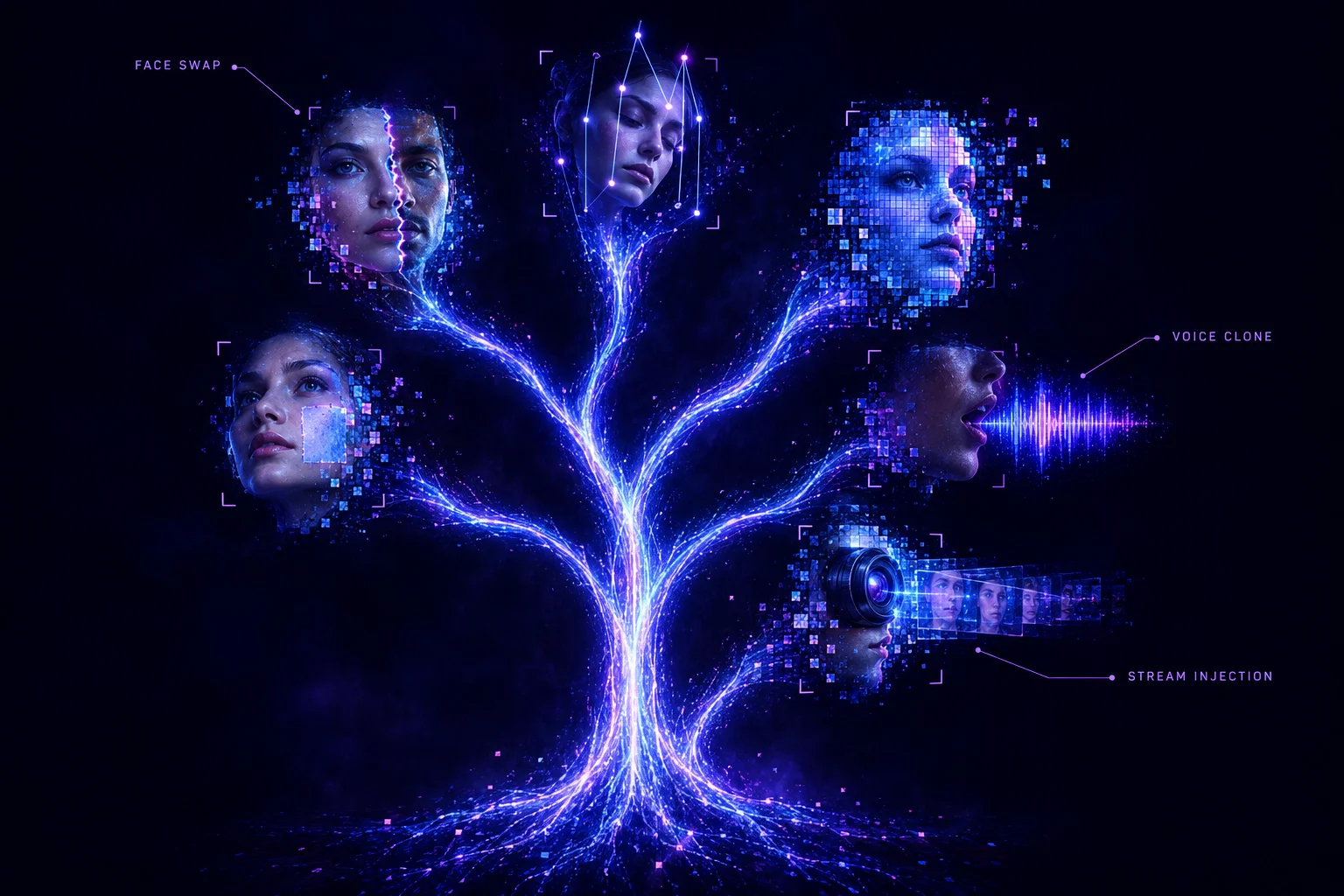
GAN lattices, diffusion grain, face-swap seams and tiled decoders all leave distinct traces. ARCAS reads them into one shared representation.

ARCAS 1BARCAS learns generator traces as one representation, so a new tool still leaves evidence it can read.

  • GAN lattice
  • Face-swap seam
  • Shared core

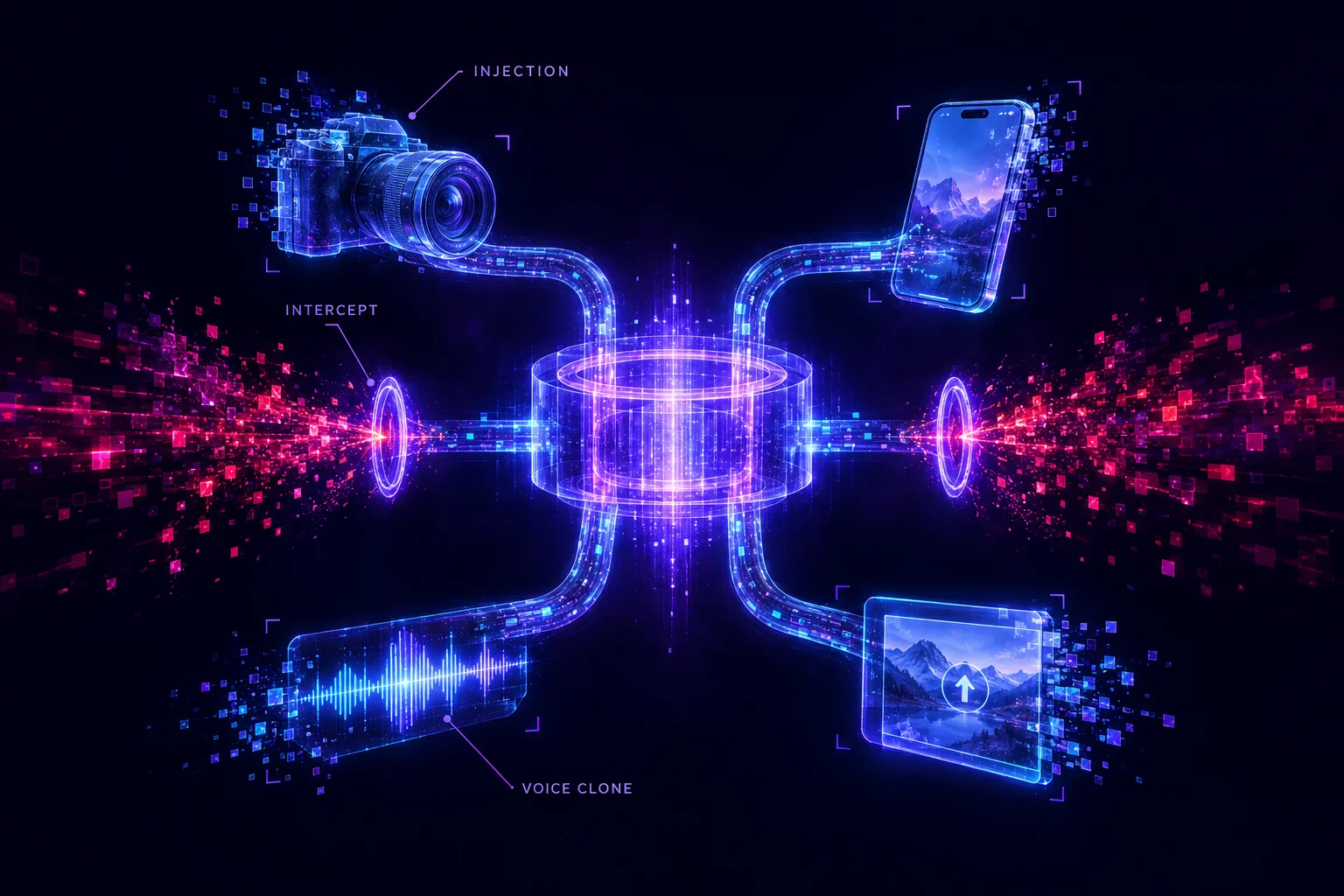
C03 // Attack surface

Every entry point, one gate

Where does synthetic media enter a real workflow, and where should detection sit?

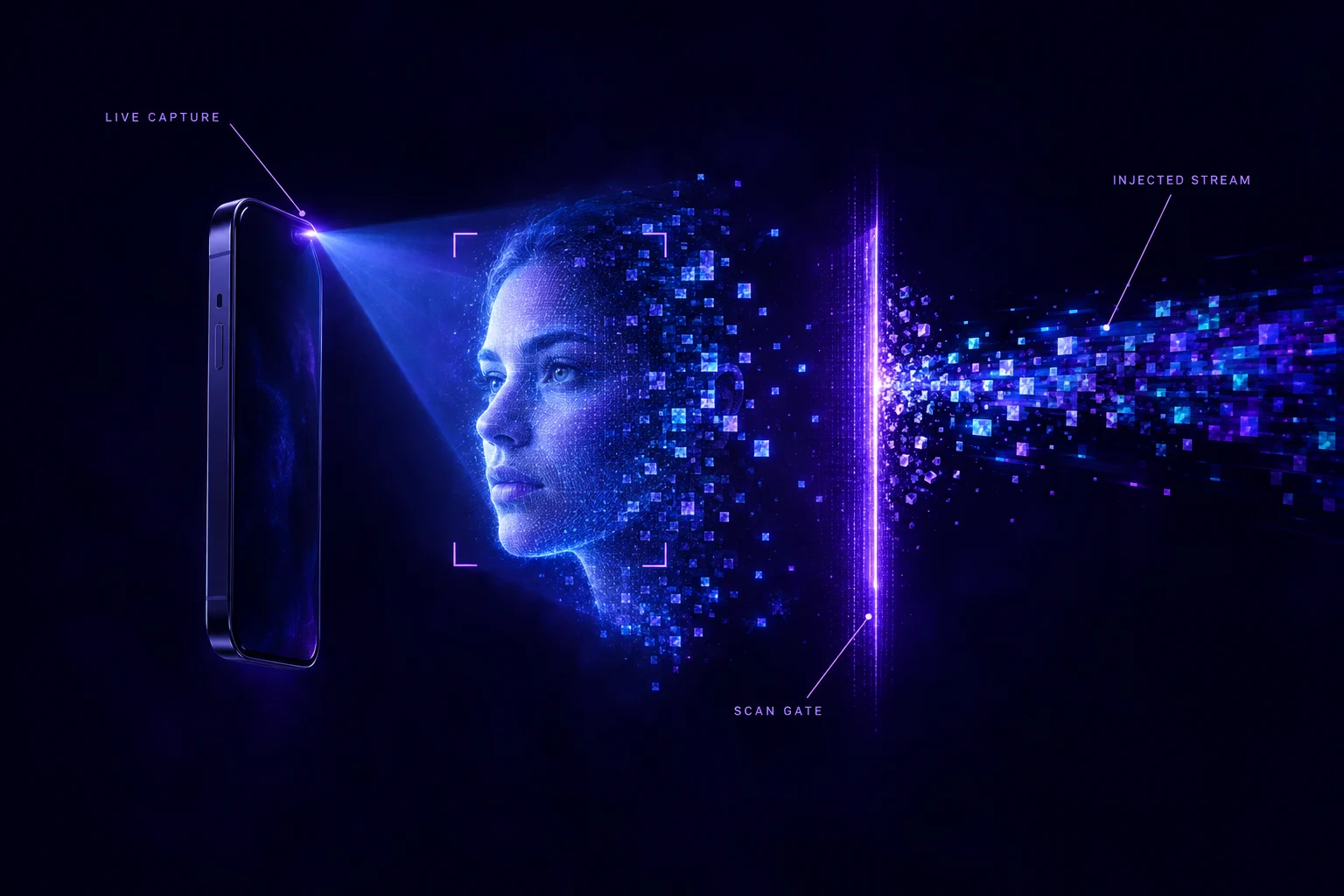
Camera injection, replayed uploads and cloned voices arrive through different channels. Intercepting them at one scan gate keeps policy consistent.

ARCAS 1BARCAS sits at that gate and reads every channel with one foundation model.

  • Camera injection
  • Voice clone
  • Intercept

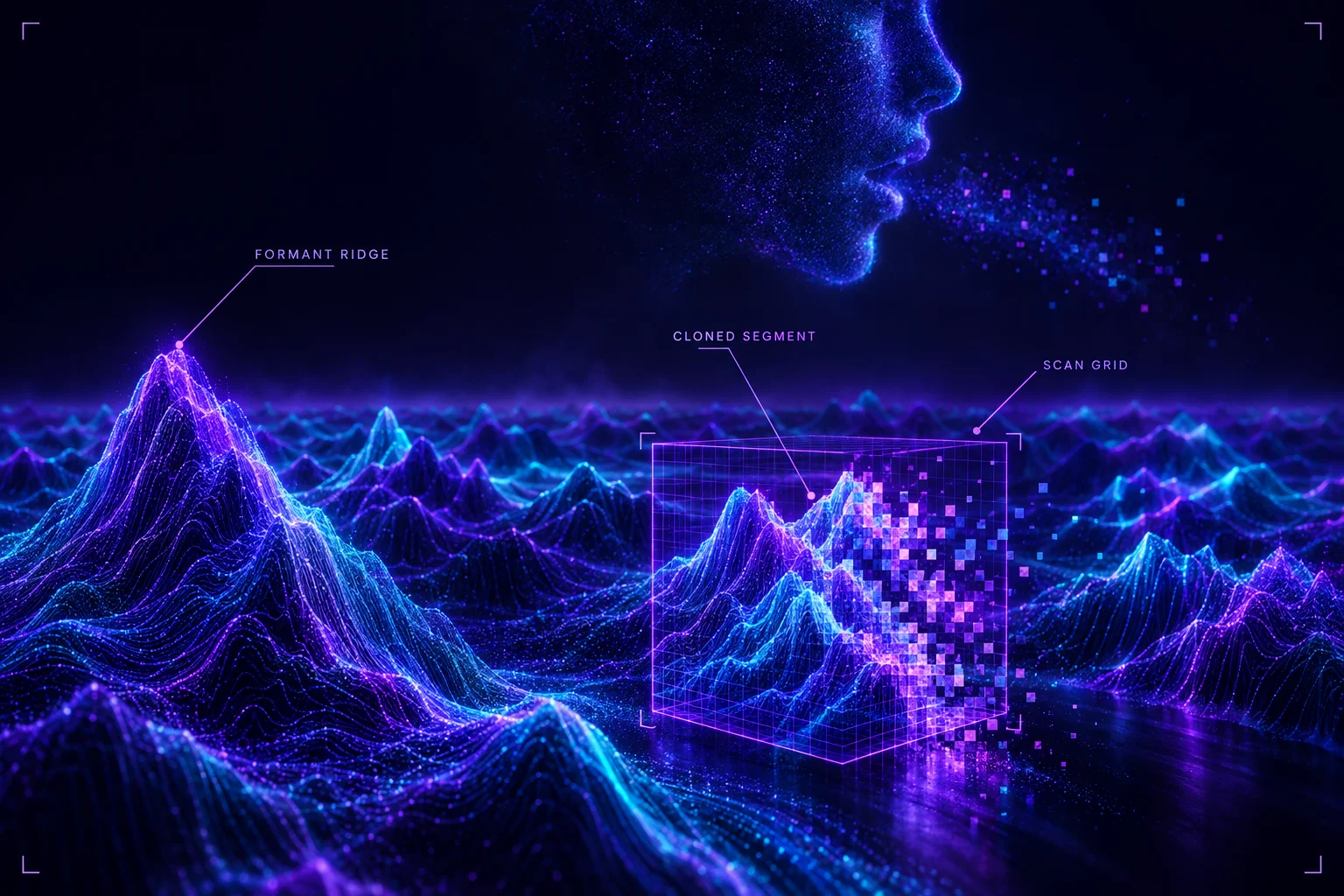
C04 // Voice spectrogram

The terrain of a voice

Where in the spectrum does a cloned voice stop sounding human?

Formant ridges, breath noise and harmonic texture form a landscape. Synthetic segments flatten or repeat in ways the ear forgives.

ARCAS 1BARCAS reads the voice spectrum for the textures cloning leaves behind.

  • Formant ridge
  • Cloned segment
  • Scan grid

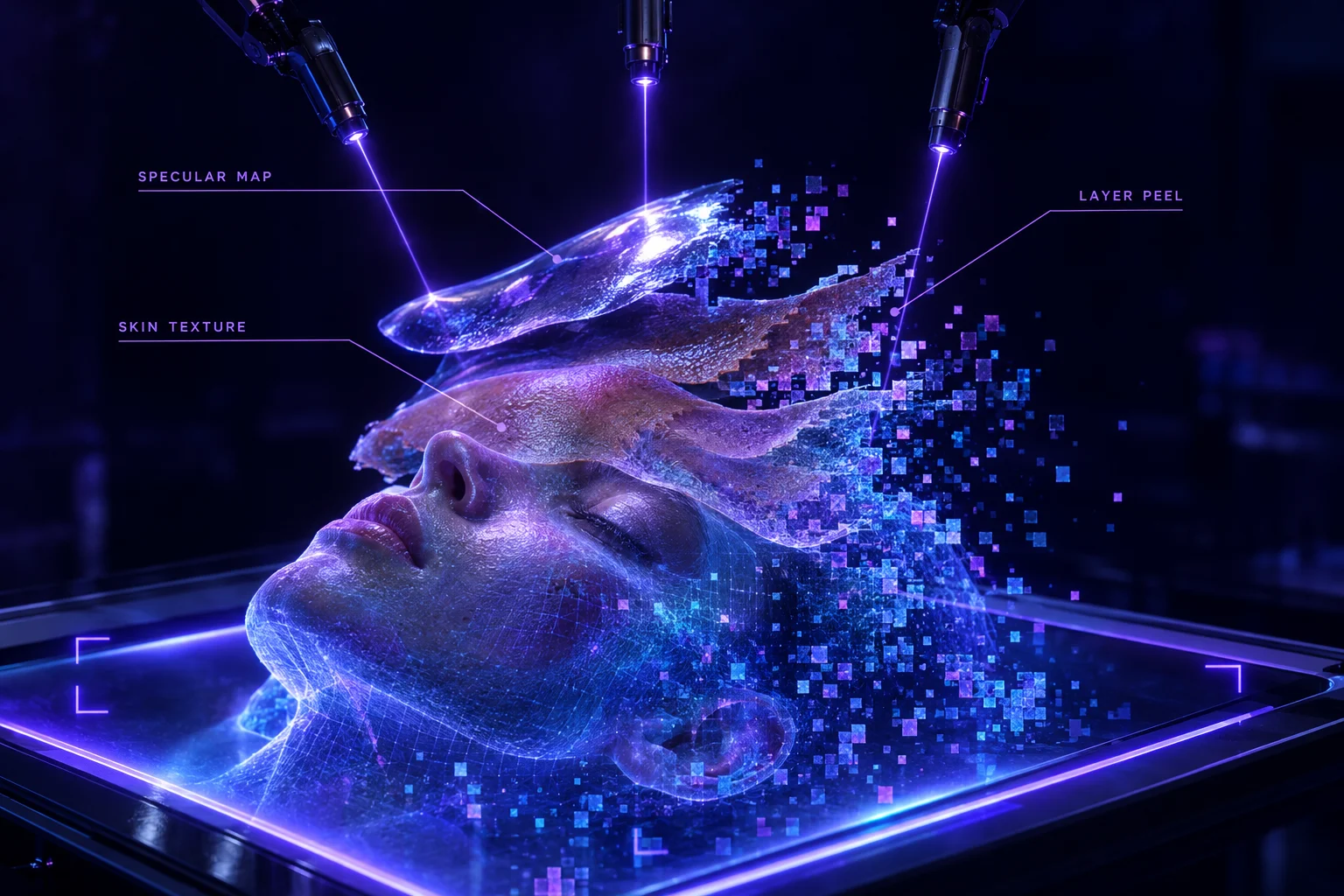
C05 // Forensic autopsy

A deepfake, under the lights

What does a full examination of one face reveal, layer by layer?

Specular highlights, skin micro-texture and blend boundaries are lifted off and examined separately, the way an analyst works a case in NeuroDetect.

ARCAS 1BARCAS runs this examination automatically, on every frame it receives.

  • Specular map
  • Skin texture
  • Layer peel

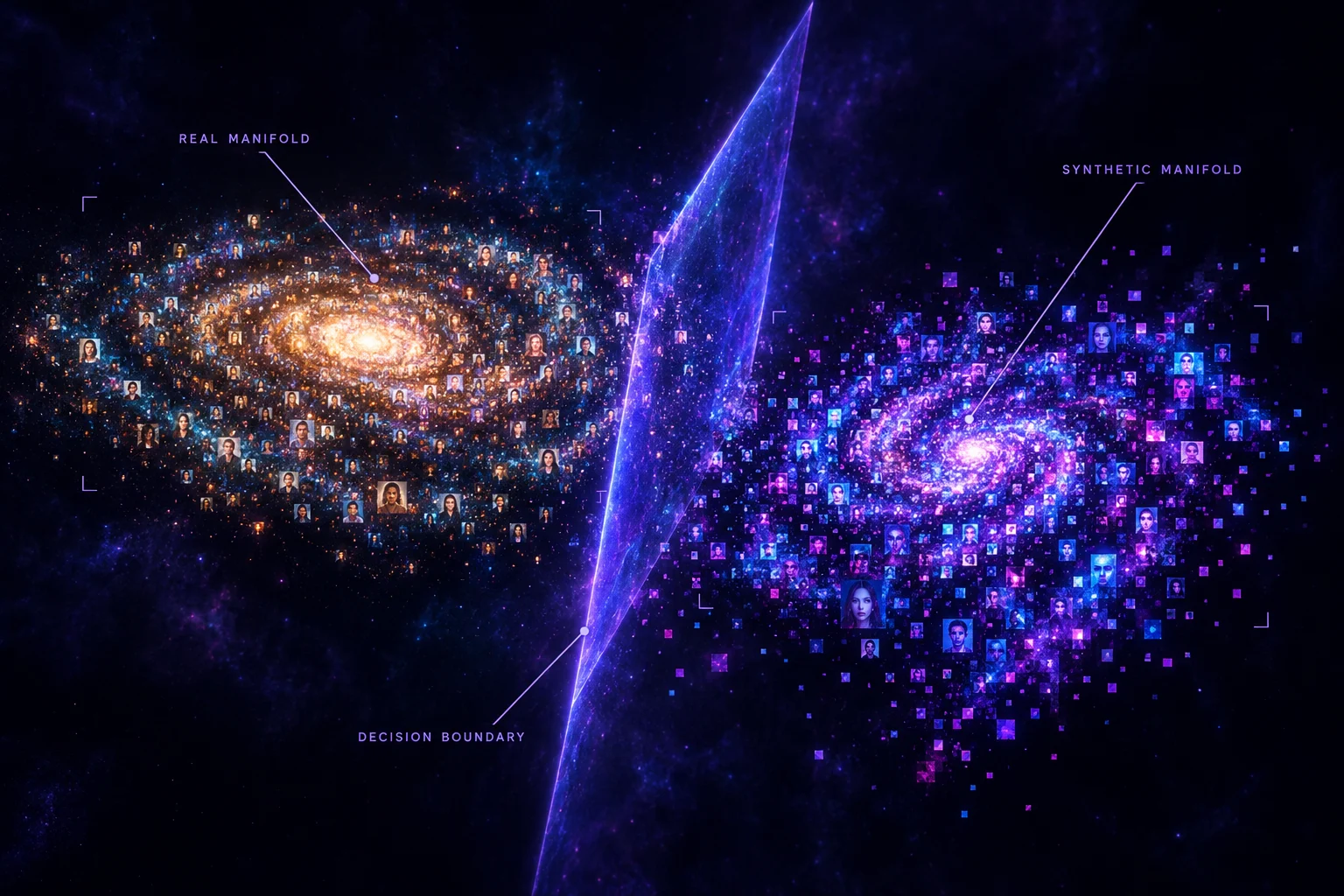
C06 // Latent space

Two galaxies, one boundary

In the space a model learns, how far apart are real and synthetic faces?

Real photographs gather on one manifold, generated faces on another. Detection is drawing the boundary between them and keeping it sharp as generators move.

ARCAS 1BARCAS is forensically trained to keep that boundary sharp as generators move.

  • Real manifold
  • Synthetic manifold
  • Decision boundary

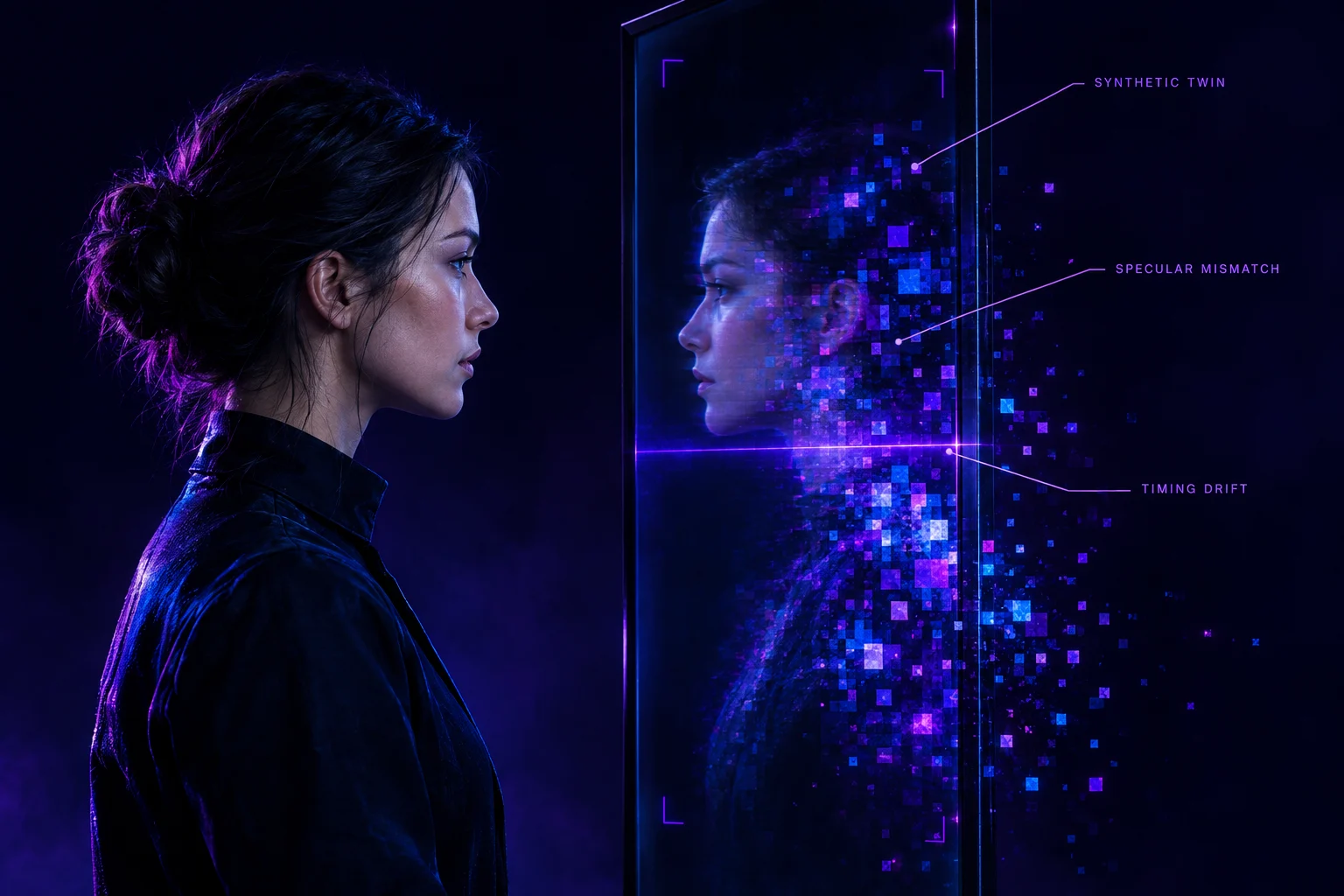
C07 // The mirror test

The reflection that lies

When a synthetic twin looks right at a glance, which physical cues give it away?

Specular reflections, light direction and micro-timing must agree with the scene. A synthetic twin often matches the face but not the physics.

ARCAS 1BARCAS checks the physics of the scene, not just the face.

  • Synthetic twin
  • Specular mismatch
  • Timing drift

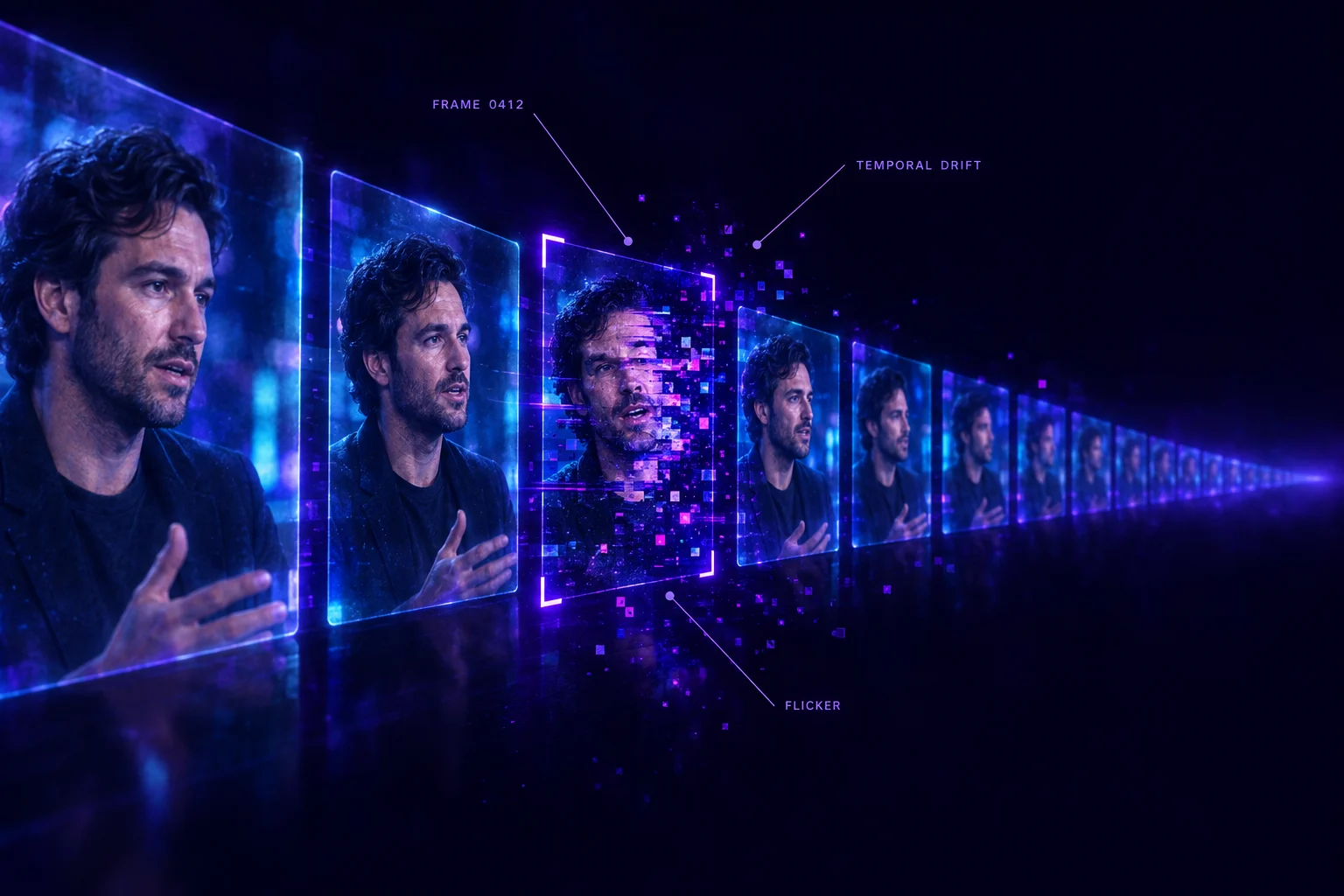
C08 // Temporal forensics

One bad frame in a thousand

How do you find the single frame where a video stops being consistent?

Identity, lighting and motion should drift smoothly from frame to frame. A manipulated frame breaks the sequence with flicker and temporal drift.

ARCAS 1BARCAS tracks consistency across frames to find the one that breaks.

  • Frame 0412
  • Temporal drift
  • Flicker

[MODULE 02//Forensic researchActive research]

Forensically trained to see what's hidden.

R01 // Representation learning

One backbone, every modality

Can a single backbone learn a forensic representation that transfers across image, video and audio, instead of one brittle classifier per media type?

We study traces that survive a change of carrier: specular consistency in the eye, skin micro-texture, and noise statistics that hold across frames.

ARCAS 1BARCAS is that backbone: one foundation model behind every check.

  • Specular reflection
  • Texture entropy
  • Shared latent

R02 // Out-of-distribution generalisation

Generators it has never seen

Does the decision boundary hold for samplers, VAE decoders and fine-tunes that were absent from training?

Each generator family leaves a different fingerprint: GAN upsampling grids, diffusion denoising residue, decoder smoothing. The research target is the trace, not the tool.

ARCAS 1BARCAS is trained on the trace, not the tool, so new generators still leave something it can read.

  • Upsampling peaks
  • Decoder residue
  • Spectral fingerprint

R03 // Adversarial robustness

Evidence that survives the attack

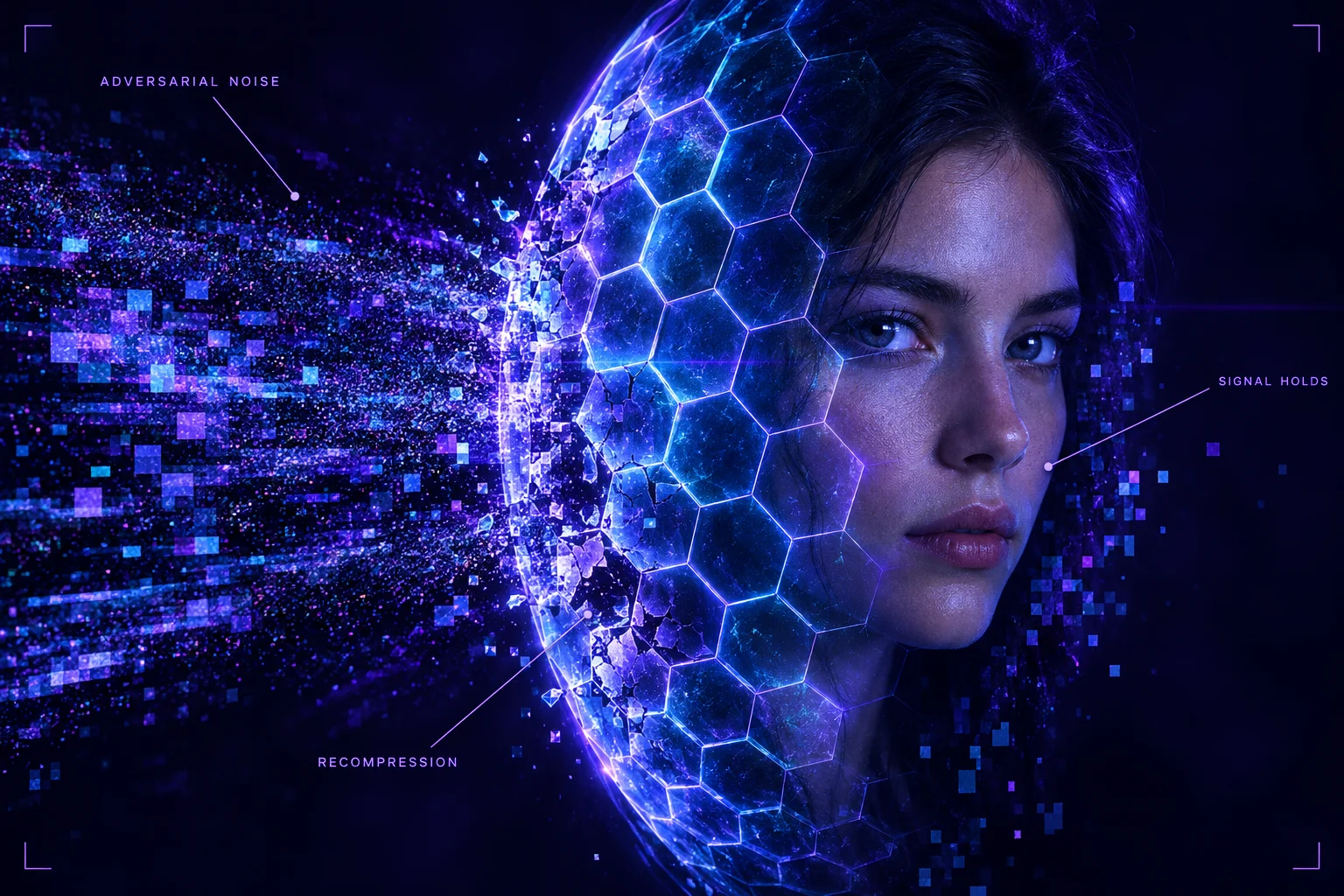
How stable is p(synthetic) under recompression, resizing, colour filters and gradient-based evasion that targets the detector itself?

Recompression wipes high-frequency detail, filters shift colour statistics, and targeted noise attacks the model directly. We measure which forensic signals survive each transform.

ARCAS 1BARCAS is trained to hold its verdict when an attacker reshapes the pixels.

  • DCT quantisation
  • Colour statistics
  • Adversarial noise

R04 // Audio-visual consistency

When the voice and the face disagree

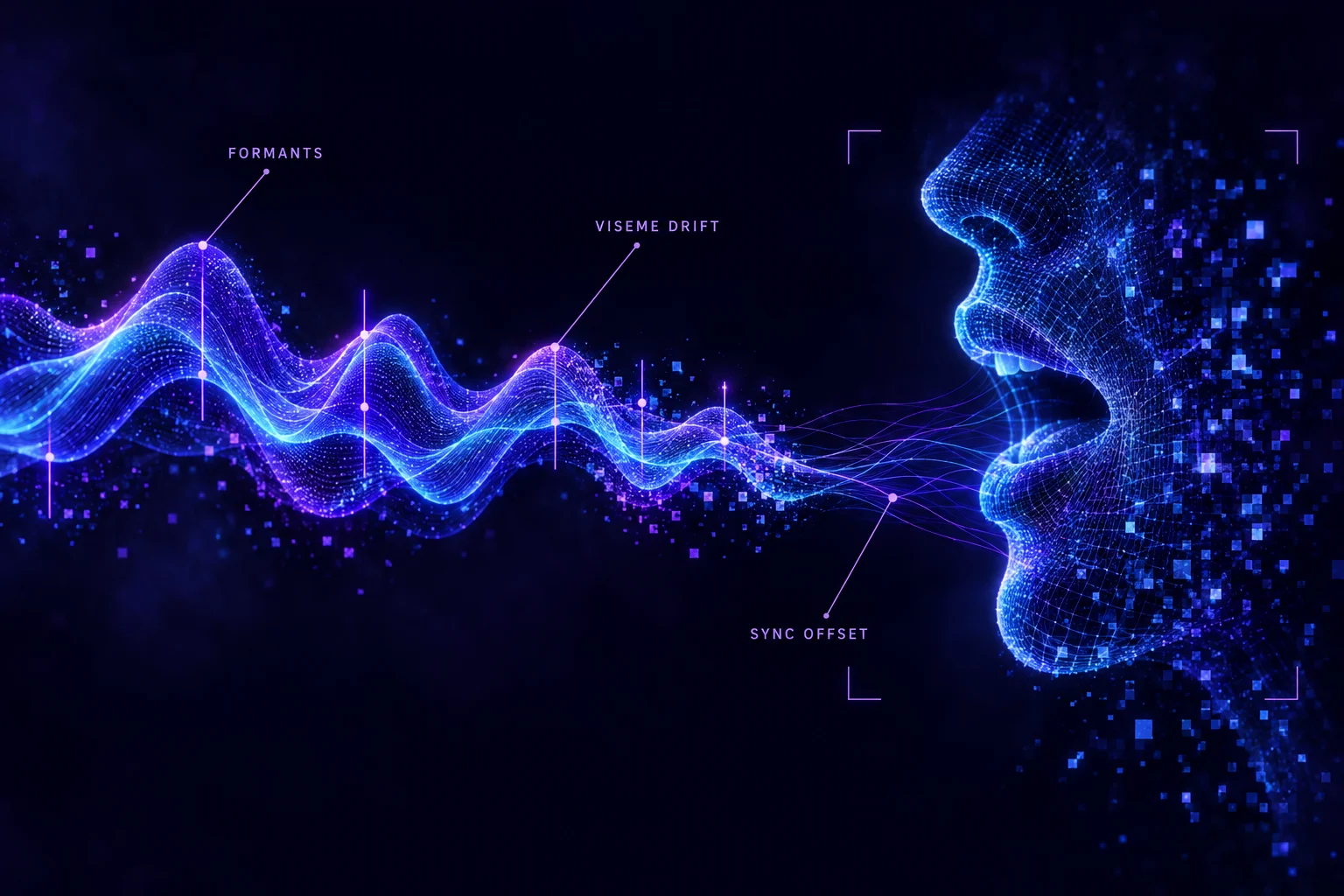
When lip kinematics, voice timbre and facial dynamics disagree, how should the evidence be fused and how should the conflict be reported?

Cloned voices carry artifacts in formants and breath; lip-sync models drift between phoneme and viseme timing. Disagreement between channels is evidence in itself.

ARCAS 1BARCAS weighs voice and face together and reports exactly where they disagree.

  • Formant artifacts
  • Viseme drift
  • Channel disagreement

R05 // Capture-loop inference

Forensics inside the capture loop

Can forensic-grade inference run inside a live capture flow, before the user notices the wait?

Injected camera streams, virtual devices and replayed frames reach the pipeline before any face is analysed. Our product target is under 200 ms p95 on eligible image requests.

ARCAS 1BARCAS runs inside the capture flow, before the decision is made.

  • Injected stream
  • Replayed frames
  • p95 latency

[MODULE 03//Threat taxonomyMapped]

Every way a face can be faked.

  1. T01Face swap

    One identity pasted onto another person’s video.

    ARCAS readsBlending boundaries, identity-texture mismatch

  2. T02Face re-enactment

    A real face driven by someone else’s expressions.

    ARCAS readsLandmark dynamics, temporal consistency

  3. T03Full synthesis

    A face or scene generated from nothing.

    ARCAS readsGenerator fingerprints, spectral peaks

  4. T04Inpainting and local edits

    One region regenerated inside a real photo.

    ARCAS readsLocal noise, compression-history mismatch

  5. T05Voice cloning

    Synthetic speech in a real person’s voice.

    ARCAS readsFormant and breath artifacts, lip-sync drift

  6. T06Injection and replay

    A fake stream fed in place of the live camera.

    ARCAS readsCapture-path signals, replayed-frame traces

[MODULE 04//Open problemsActive research]

What we are still solving.

  1. OP-01Active
    Partial manipulation

    Finding a small inpainted region inside an otherwise authentic photograph, where most of the evidence says “real”.

  2. OP-02Active
    Unseen samplers and fine-tunes

    New generators and community fine-tunes ship every week. The trace has to generalise faster than the tools change.

  3. OP-03Active
    Adaptive attacks

    Attackers who know a detector exists optimise against it. Robustness to targeted evasion is an open problem for the whole field.

  4. OP-04Exploring
    Fusion under real-world noise

    Phone-quality audio, low light and heavy compression degrade every channel at once. Fusing weak signals honestly is unsolved.

  5. OP-05Exploring
    Calibration in the wild

    A score should mean the same thing on every device, codec and platform. Keeping it calibrated outside the lab is ongoing work.

[MODULE 05//Research notesLab notes]

Notes from the lab.

  • Lab note N-01Frequency forensics
    What upsampling leaves in the spectrum

    Generators that upsample learn to hide it in pixel space, not in the frequency domain. Periodic structure from transposed convolutions shows up in the Fourier magnitude as a grid of bright points the eye never sees.

  • Lab note N-02Robustness
    Why recompression breaks naive detectors

    Every platform re-encodes uploads. The high-frequency traces a simple detector relies on are the first thing JPEG quantisation removes, so robust detection has to rest on signals that survive the round trip.

  • Lab note N-03Audio-visual forensics
    The gap between phoneme and viseme

    Lip-sync models align mouth shapes to audio frame by frame. Small timing offsets and coarticulation errors accumulate, and the mismatch between what is heard and what is seen becomes measurable evidence.

[MODULE 06//PublicationsPreprint]

Published research.

Preprint · arXiv 2609.2515421 Sep 2026

Benchmarking Neural Defend ARCAS 1B: A Foundational Multimodal Deepfake Detection Model

Sivashankar Selvarajan · Piyush Verma · Sumit Kumar · Sharayu N. Deshmukh

Evaluates ARCAS 1B across seven public benchmark families without benchmark-specific parameter updates. It reports each benchmark's native metrics alongside pooled results, record-level coverage accounting and subgroup diagnostics, and restricts comparisons with prior work to aligned evidence. The authors state that the findings cover the evaluated records only.

  • Deepfake detection
  • Foundation models
  • Evaluation methodology

[MODULE 07//Model cardPublished]

ARCAS 1B, specified.

Spec sheet · ND-ARCAS-1BRev 3.1
Model
ARCAS 1B · version 3.1
Developer
Neural Defend
Type
Foundational multimodal model for deepfake detection
Inputs
Face images, video, audio
Output
Calibrated p(synthetic) risk score with per-signal evidence
Intended use
Identity verification and onboarding, fraud and forensic investigation, platform safety
Decision rights
Customer policy or a trained analyst makes the final call
Out of scope
Identity-document analysis
Training data
10M+ images
Internal evaluation
20M+ images evaluated in internal testing
Generators tested
5,000+ generative models, including ChatGPT and Gemini image generation
Public evaluation
Seven public image benchmark families, no benchmark-specific tuning (ARCAS paper, arXiv 2609.25154)
Known limits
Results cover the evaluated records only. No claim of resistance to future adaptive attacks.
Latency
Product target under 200 ms p95 on eligible image requests
Deployment
Managed cloud API, private cloud / VPC, on-premises, air-gapped
Assurance
ISO/IEC 27001 · ISO/IEC 27701 · ISO/IEC 42001 · SOC 2 Type II
Release
Architecture, weights and training code are not publicly released

  • Disclosed
  • Limitation
  • Not released

[MODULE 08//CollaborateOpen call]

Research with us.

Open call // Research partners

Bring us something that breaks detectors.

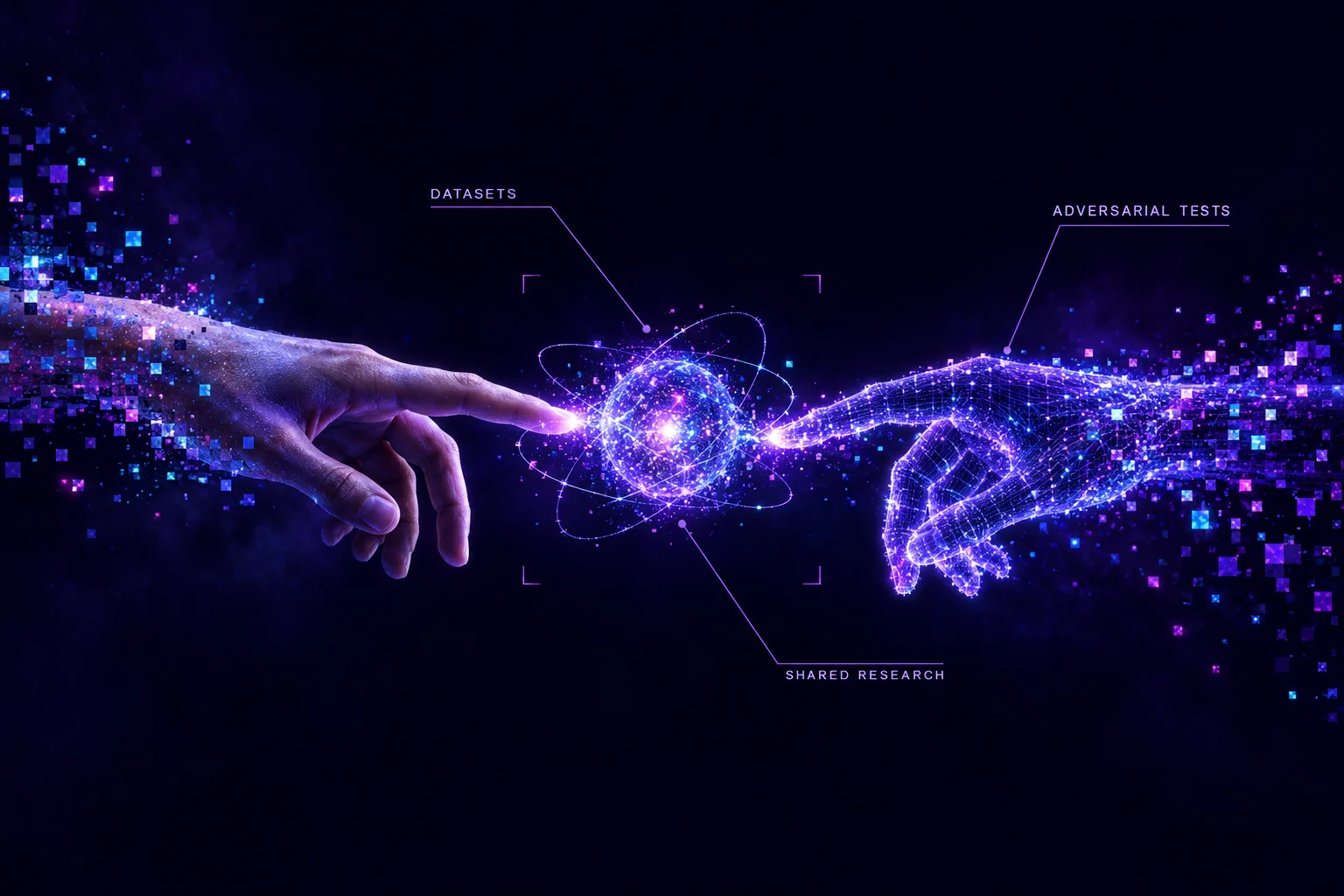
We work with universities, red teams and platform trust and safety teams on datasets, adversarial testing and shared research questions.

Start a research conversation