What Are Video Deepfakes?
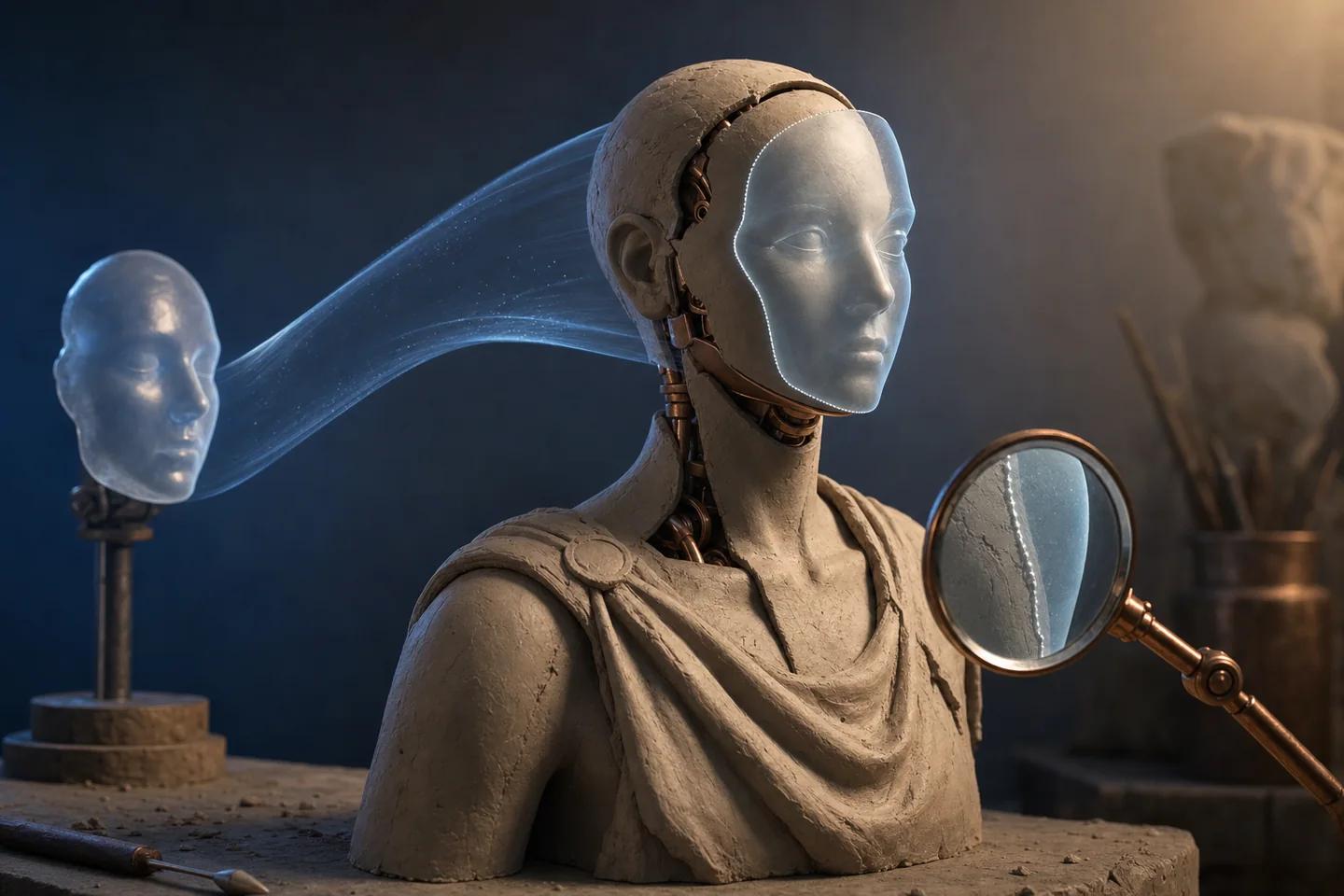
A video deepfake is a moving image that a machine learning model has generated or altered so that it misrepresents who appears, what they say, or what happened. The EU AI Act's definition of a deep fake covers AI-generated or manipulated video that resembles real people, places or events and would falsely appear authentic. Most video deepfakes still start from real footage and change one element, usually the face or the mouth. A growing share are generated from a text prompt with no source footage at all.
Video is the hardest format to fake well and the most persuasive when it works. A forger has to keep identity, lighting, head pose, expression and speech consistent across hundreds of frames, and every frame is a chance to slip. That same temporal dimension is what gives defenders more to work with than they have with a single photograph.
What Are the Main Types of Video Deepfakes?
The techniques differ in what they replace, and each leaves different traces. The FaceForensics++ benchmark, published by Andreas Rössler and colleagues in January 2019, organised the early field around four methods: DeepFakes and FaceSwap, which replace identity, and Face2Face and NeuralTextures, which change expressions on the original face. Its database contains more than 1.8 million manipulated images.
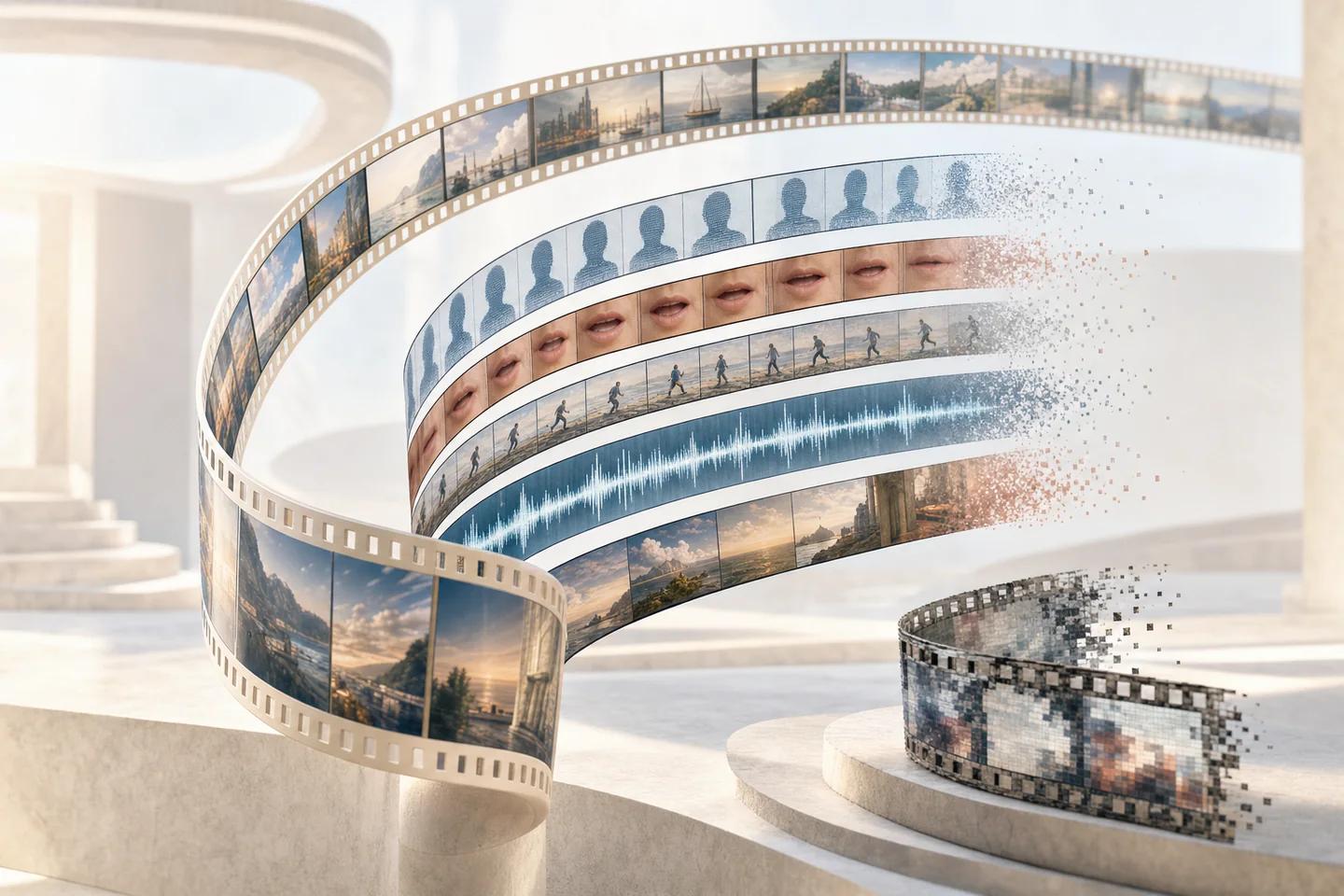
Newer generators add two forms. Lip-sync models rewrite only the mouth region to match new audio, which makes dubbing, and fake statements, cheap. Text-to-video models generate entire clips, including people, from a written prompt, and real-time tools now run face swaps live on a webcam feed during a call.
| Type | What changes | Typical misuse | Where traces appear |
|---|---|---|---|
| Face swap | The identity of the face | Impostor on a video call or in a selfie video | Blending boundary, skin texture, identity drift across frames |
| Facial reenactment | Expressions and head pose on the real face | Making a real person appear to react or nod | Inner mouth, teeth, eye region, unnatural motion |
| Lip-sync | Mouth movement to match new audio | Putting new words in a real speaker's mouth | Phoneme to mouth-shape mismatch, mouth region texture |
| Text-to-video | The entire scene | Fabricated event or invented spokesperson | Physics, object permanence, generator fingerprints |
| Real-time swap | Identity, live | Remote hiring and payment approval calls | Occlusion failures, lag, profile views |
Where Have Video Deepfakes Been Used Against Organizations?
The best-documented loss came from a live video call. In January 2024 a finance employee at Arup in Hong Kong joined a meeting with what appeared to be the chief financial officer and other colleagues. Hong Kong police later said every other participant was a deepfake recreation, and the employee made 15 transfers totalling HK$200 million, about US$25.6 million. Arup confirmed the case to CNN in May 2024.
Remote hiring is another target. On 28 June 2022 the FBI's Internet Crime Complaint Center reported complaints about applicants using deepfakes and stolen identities in interviews for remote IT and software roles, some with access to customer and financial data. Interviewers noticed that lip movements and actions did not fully match the audio, and that coughs and sneezes were out of step with the picture.
How Are Video Deepfakes Detected?
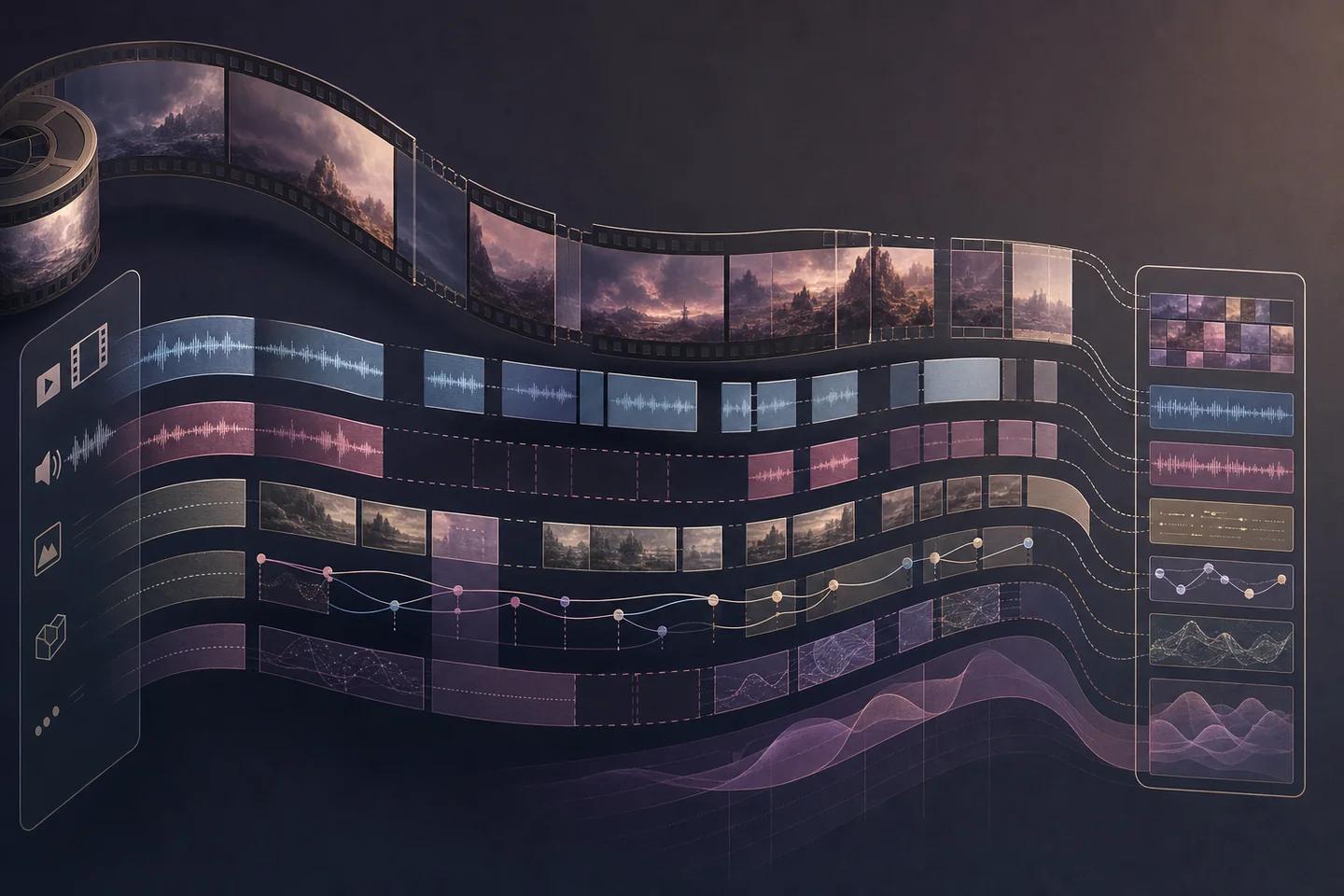
Video detection combines frame-level and time-level evidence. Frame-level analysis treats each frame as an image and looks for blending edges, texture that a camera sensor would not produce, and the frequency patterns that generators leave behind. Time-level analysis asks whether the sequence behaves like reality: identity should stay stable when the head turns, shadows should move with the light, and lips should form the shapes the audio requires.
Physiological signals are a video-only check. Umur Aybars Ciftci and Ilke Demir's FakeCatcher measured subtle colour changes caused by blood flow under the skin and reported 96% accuracy on FaceForensics, 94.65% on FaceForensics++ and 91.50% on Celeb-DF. Those signals need clean, well-lit frontal frames, so they weaken on short, dark or heavily compressed clips.
Datasets drive what detectors learn. Celeb-DF (2019) collected 5,639 higher-quality celebrity deepfakes because earlier sets looked unlike the fakes circulating online. The DeepFake Detection Challenge dataset released by Facebook AI researchers in 2020 added more than 100,000 clips sourced from 3,426 paid actors.
What Makes Video Deepfakes Hard to Detect?
Compression erases evidence. Social platforms and messaging apps re-encode uploads, video calls drop resolution when bandwidth falls, and each pass smooths away the fine pixel traces frame-level detectors rely on. Genuine calls glitch too, so a sync error or a smeared edge is weak evidence on its own.
New generators also outrun training data. A detector trained mostly on face swaps may not recognise a fully generated clip, and text-to-video output has none of the blending boundaries that older methods targeted. Attackers add their own noise by re-recording a screen, applying filters or cropping tight to remove the face boundary.
A detection result describes the clip, not the circumstances. It cannot show who made the video, why, or whether a request made in it is legitimate. For calls that ask for money or access, the decisive control remains a callback on a known number and a second approver.
How Does Neural Defend Detect Video Deepfakes?
For automated decisions, NeuroVerify accepts a face video in one API call and returns one unified risk score with signal-level evidence from six signals, including Face Manipulation Detection, Live Presence Verification and AI Generative Model Analysis. That suits selfie-video onboarding, account recovery and claims, where the policy owner sets what each score band triggers.
For investigations, NeuroDetect places a video in a case and keeps the model and version context. Explainability heatmaps and attention views show the frames and regions that drove the finding, and audio segments are analysed alongside. An LLM-assisted summary links its statements to that evidence; the analyst makes the final call and exports a forensic report with observations, uncertainty, provenance and analyst notes.
Both run on ARCAS 1B, Neural Defend's proprietary detection model, and deploy as a managed cloud API, in a private cloud or VPC, as a secure container, on premises or air-gapped. Neural Defend holds ISO/IEC 27001, ISO/IEC 27701, ISO/IEC 42001 and SOC 2 Type II certifications.
Evidence boundary
Limitations
- Heavy compression, low light, short clips and screen re-recordings remove much of the evidence video detectors depend on.
- Detectors trained on one family of manipulation, such as face swaps, can miss fully generated text-to-video content.
- Published accuracy figures, such as FakeCatcher's, were measured on research datasets and should not be read as performance on live calls or social media video.
- A result describes the clip; it cannot identify the creator or validate a request made in the video.
Source record
Sources and references
- arXivFaceForensics++: Learning to Detect Manipulated Facial ImagesPublished January 25, 2019. Verified October 19, 2026.
- arXivCeleb-DF: A Large-scale Challenging Dataset for DeepFake ForensicsPublished September 27, 2019. Verified October 19, 2026.
- arXivThe DeepFake Detection Challenge (DFDC) DatasetPublished June 12, 2020. Verified October 19, 2026.
- arXivFakeCatcher: Detection of Synthetic Portrait Videos using Biological SignalsPublished January 8, 2019. Verified October 19, 2026.
- arXivDeepfake-Eval-2024: A Multi-Modal In-the-Wild Benchmark of Deepfakes Circulated in 2024Published March 4, 2025. Verified October 19, 2026.
- CNNArup revealed as victim of $25 million deepfake scam involving Hong Kong employeePublished May 16, 2024. Verified October 19, 2026.
- FBI Internet Crime Complaint CenterDeepfakes and Stolen PII Utilized to Apply for Remote Work Positions (I-062822-PSA)Published June 28, 2022. Verified October 19, 2026.
- Future of Life Institute (EU AI Act Explorer)EU AI Act Article 3: DefinitionsVerified October 19, 2026.