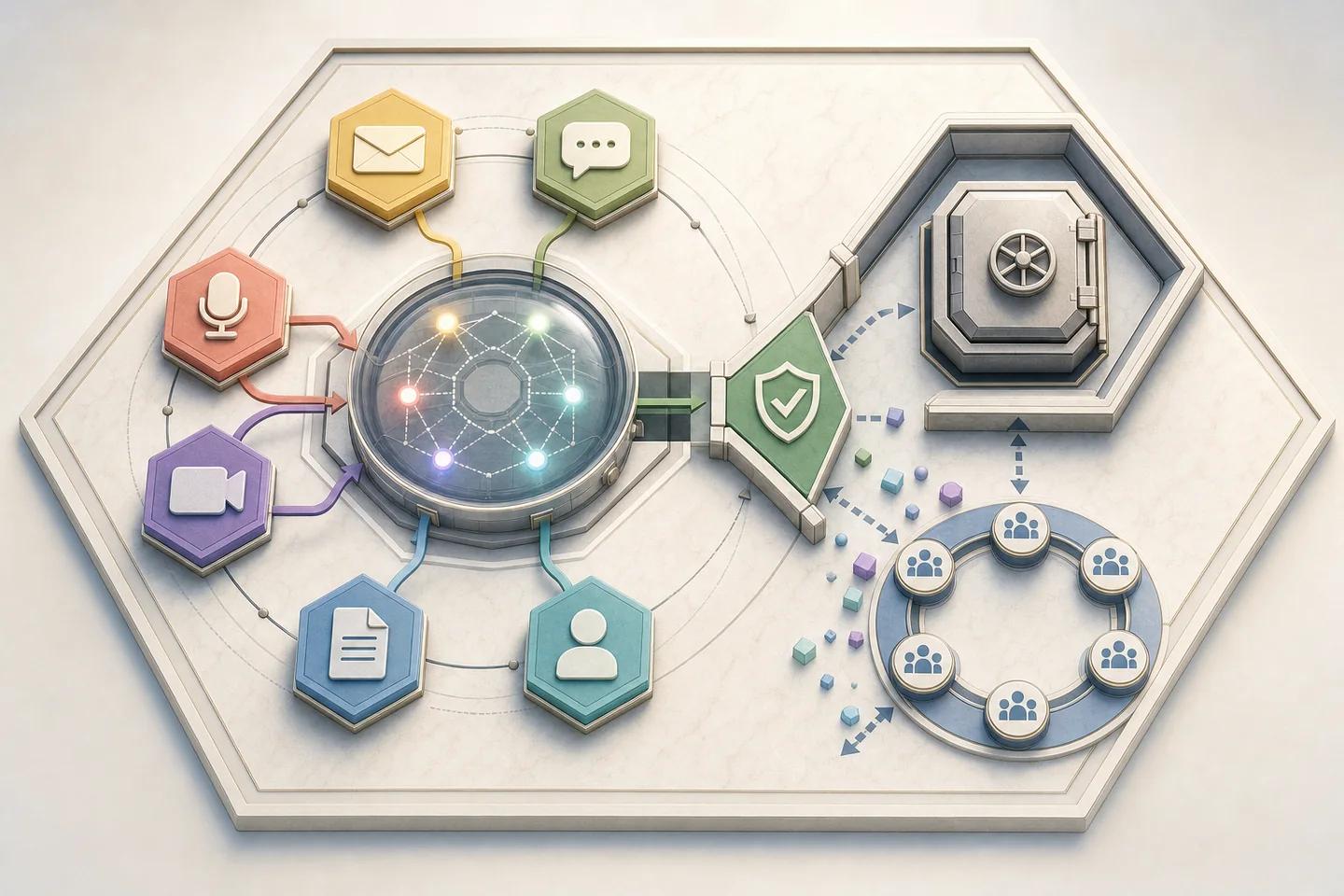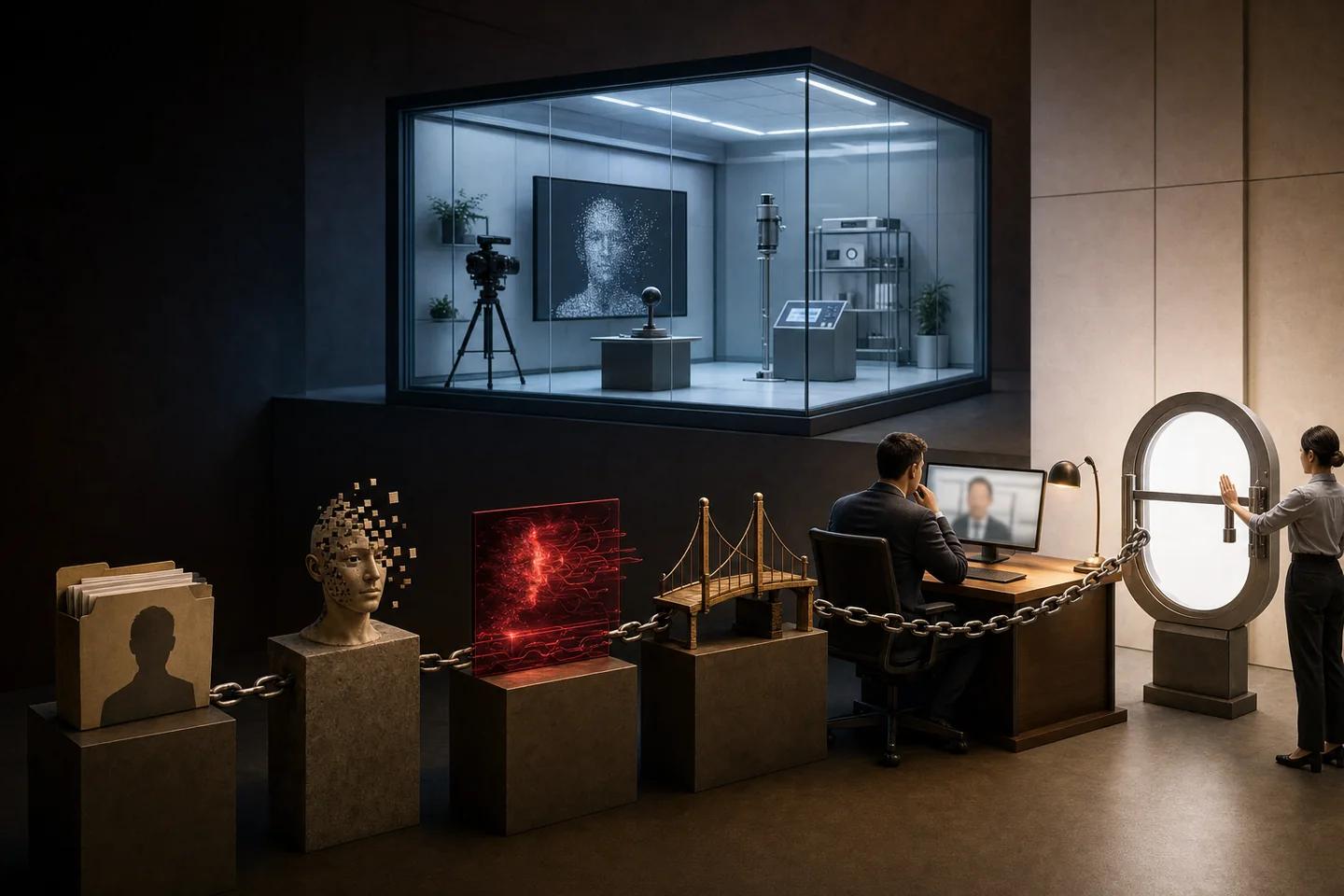

How do deepfake impersonation attacks work?
Deepfake impersonation attacks work by combining classic social engineering with synthetic copies of a trusted person's voice or face. The attacker's goal is a single action from the victim. Everything before that action, including the research, the story and the media, exists to make the request feel routine or too urgent to question.
Breaking the operation into stages shows where defenders can intervene. Some stages happen before the victim is contacted and leave traces such as scraped profiles or lookalike domains. Others happen in conversation, where policy can force a pause. The final stage, turning access or money into profit, can often be interrupted by payment and account controls even after the victim has been fooled.
| Stage | What the attacker does | Where deepfakes appear | Control |
|---|---|---|---|
| Reconnaissance | Maps org charts, approval chains, schedules and public media of leaders | Collects voice and video samples | Limit public detail on approvers; monitor lookalike domains |
| Pretext | Chooses a story: confidential deal, lost device, urgent audit | None yet | Train staff on common pretexts with real examples |
| Media preparation | Clones a voice, builds a face swap or fake profile | Synthetic audio, video or images | Detection on inbound media where feasible |
| Contact | Reaches the victim by email, chat, phone or video, often several at once | Voice notes, calls, video meetings | Verify identity through known contacts when channels change |
| Request | Asks for a payment, code, reset, file or software install | Live voice or video pressure | Action-based rules: callbacks and two-person approval |
| Exploitation | Moves funds, uses access, impersonates the victim to others | Reuses media on new targets | Payment holds, session revocation, rapid warnings |

Reconnaissance and pretext building
Attackers start with what the organisation publishes. Company websites, social profiles, conference talks, earnings calls and press releases reveal who approves payments, who reports to whom, which vendors are used and when executives are travelling. The same sources supply audio and video for cloning. The Scattered Spider advisory from CISA and the FBI describes calls enriched with personal data from social media, open sources and data leaks, plus early calls made only to learn how internal reset procedures work.
The pretext is chosen to fit those findings: a confidential acquisition that explains secrecy, a vendor bank change timed with a real invoice cycle, an executive locked out before a board meeting. A good pretext gives the victim a reason not to follow the normal process, which is why policy should treat "skip the usual steps" as a warning in itself.

How are deepfakes reinventing social engineering?
Deepfakes are reinventing social engineering by removing the cues that used to expose an impostor. A phishing email could be checked by calling the sender; a phone scammer had the wrong voice; a stranger could not appear on video as your CFO. Cloned voices and real-time face swaps now let the attacker pass the very checks people were trained to perform.
The FBI's Internet Crime Complaint Center reported on 3 December 2024 that criminals use short voice clips to impersonate relatives in fake emergencies and to access bank accounts, generated images for fake profiles and identity documents, and real-time video chats posing as company executives, law enforcement or other authority figures. In the Arup case in Hong Kong, confirmed by the company in May 2024, a video call in which several colleagues appeared to be present led to 15 transfers totalling HK$200 million.
Scale is the other change. Generative tools let one operator produce convincing messages, voices and personas for many targets at once, and the FBI notes AI can also correct the human errors that once gave scams away.


How do social engineers exploit workplace culture?
Social engineers exploit workplace culture by turning normal, valued behaviour into a vulnerability. Deference to seniority makes it hard to question a CEO's urgent request. Helpfulness makes a help-desk agent want to solve a locked-out caller's problem. Pressure to close deals or hit deadlines makes delay feel costly. Remote and hybrid work means approvals often happen over chat or video with no one in the room to compare notes.
Attackers also use the organisation's own language. A compromised mailbox or a scraped intranet page teaches them project names, internal acronyms and the tone executives use, which makes a fake message sound like a colleague. Secrecy requests, such as "do not discuss this deal with anyone", isolate the victim from the colleagues most likely to spot the fraud.
The fix is cultural as much as technical. Leaders should state publicly that they will never ask anyone to skip verification and that staff who pause a request to check will be backed. Recognising people who report attempts, including false alarms, makes reporting normal.


Multichannel contact and the request
Most deepfake-assisted attacks use more than one channel. An email sets up the request, a voice note or call confirms it, and a short video meeting supplies a face. FinCEN's alert of 13 November 2024 reports criminals using generative AI to impersonate an executive or trusted employee and instruct victims to transfer large sums, and lists attempts to change communication methods during verification as a red flag.
The request is the most controllable moment. Rules tied to the action requested, whatever the requester sounds or looks like, hold up: any payment change needs a callback to a known number and a second approver, any reset needs a registered authenticator, any file or software request outside normal systems goes to security.

How NeuroDetect supports investigation across the lifecycle
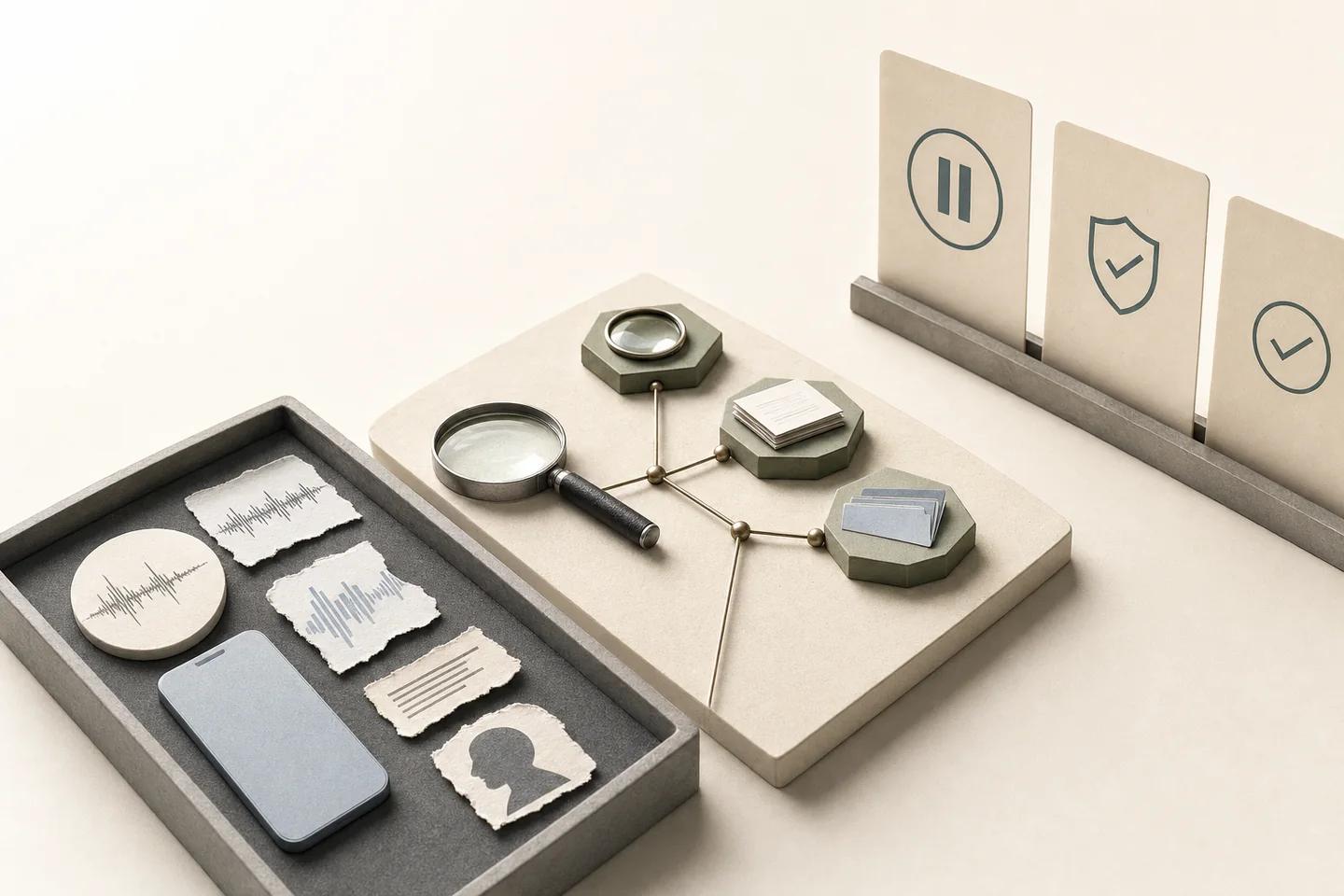
After an attempt, security and fraud teams need to know what the attacker sent and whether it was synthetic. NeuroDetect, Neural Defend's forensic media workspace, takes authorized voice notes, call recordings, meeting captures, profile images and documents into one case. Analysts review evidence down to audio segments, frames and regions, with explainability heatmaps, an LLM-assisted summary linked to the evidence and a downloadable forensic report recording observations, uncertainty and the model version.
Grouping media from several stages in one case helps link a campaign: the same cloned voice across calls, or the same generated face across profiles. For inline checks on selfies, video and audio in identity flows, NeuroVerify scores media with six signals in one API call, and live voice detection is the focus of NeuroCall, currently in Beta. Detection informs the decision; the action-based controls above do the stopping.

Evidence boundary
Limitations
- Public incident reporting rarely details every lifecycle stage, so the model here is a composite of documented tactics.
- Detection of short, compressed calls and voice notes is less reliable than analysis of high-quality files.
- Cultural factors vary by organisation; controls should be adapted to local approval structures.
Source record
Sources and references
- FBI Internet Crime Complaint CenterCriminals Use Generative Artificial Intelligence to Facilitate Financial FraudPublished December 3, 2024. Verified October 19, 2026.
- Cybersecurity and Infrastructure Security AgencyScattered Spider (Cybersecurity Advisory AA23-320A)Published November 16, 2023. Verified October 19, 2026.
- Financial Crimes Enforcement NetworkFinCEN Alert on Fraud Schemes Involving Deepfake Media Targeting Financial Institutions (FIN-2024-Alert004)Published November 13, 2024. Verified October 19, 2026.
- Insurance Business AsiaDeepfake video conference sees criminals escape with HK$200 millionPublished May 20, 2024. Verified October 19, 2026.
- Federal Bureau of InvestigationSenior U.S. Officials Continue To Be Impersonated in Malicious Messaging CampaignVerified August 7, 2026.