Cheapfake vs deepfake: what is the difference?
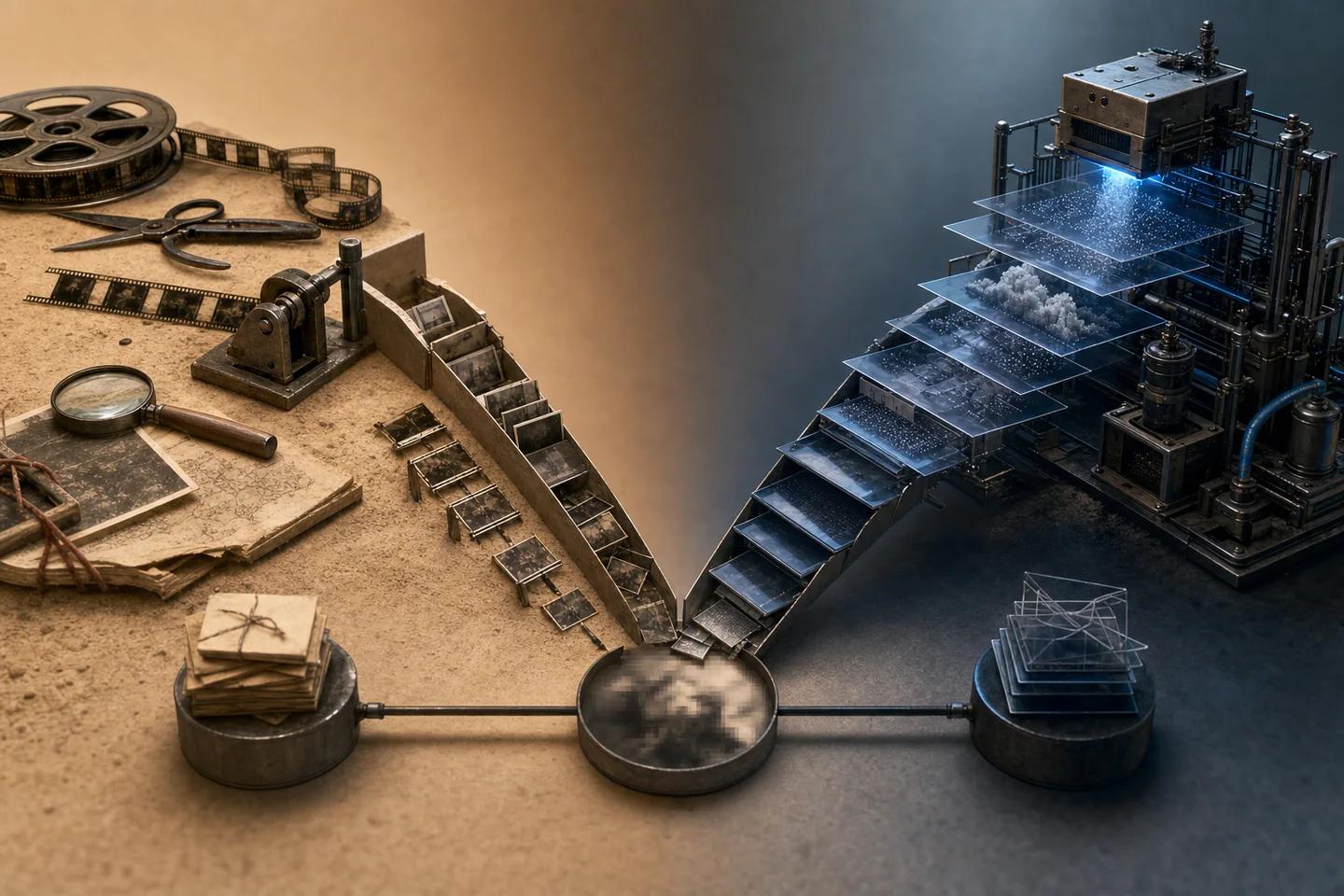
A cheapfake is real media that has been edited with ordinary tools or placed in a false context. A deepfake is media in which a machine learning model has generated or changed a face, voice, body or scene. The distinction is about method. It says nothing about harm, and a cheapfake can do as much damage as the most advanced deepfake.
Researchers Britt Paris and Joan Donovan described this spectrum in Deepfakes and Cheap Fakes, published by Data & Society on 18 September 2019. Their point was that audiovisual manipulation is old and that simple techniques, such as speeding up, slowing down or recontextualising footage, often do the work that people fear from AI.
The practical consequence is about which evidence answers the question. A cheapfake is usually exposed by finding the original. A deepfake can be fully original in the sense that no source exists to compare against, so analysis of the media itself becomes necessary.
| Aspect | Cheapfake | Deepfake |
|---|---|---|
| How it is made | Conventional editing or false context applied to real media | AI models generate or alter faces, voices or scenes |
| Typical examples | Cropped speech, slowed or looped clip, old photo with a new caption, mirrored video | Face swap, lip-sync to new audio, cloned voice, fully generated image or video |
| Skill and cost | Low; any phone editor | Falling fast; consumer apps and open models |
| Best first evidence | Earliest upload, full recording, original date and place | Forensic analysis of the file, plus source checks |
| What a detector says | Often no synthetic signal, even when the claim is false | Can flag generated or manipulated regions, frames or audio |
Common cheapfake techniques
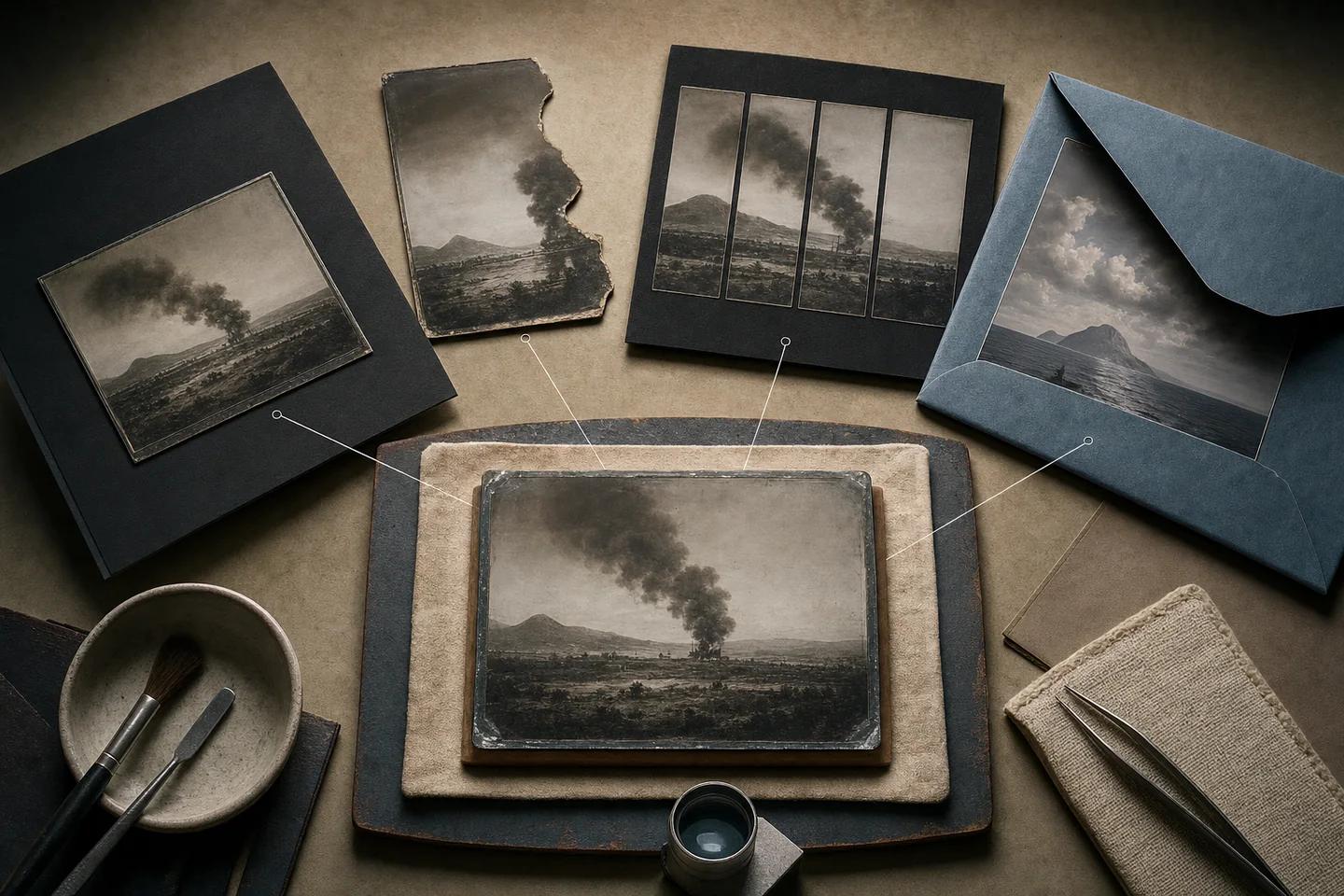
Most cheapfakes fall into a few patterns. Selective editing removes a qualifier from a sentence or cuts a reply away from the question it answered. Speed changes make a person seem drunk or confused when slowed, or aggressive when sped up. Loops repeat a moment until an ordinary gesture looks sinister. Mirroring or cropping hides a sign, a logo or a person that would reveal the real context.
The largest group needs no editing at all. An old photo of a flood, a protest or a military convoy is shared as if it happened today, or a real video from one country is captioned as another. Subtitles that mistranslate speech and dubbed audio over real footage sit between the two categories.
What the Oversight Board's Biden video case shows
A clear cheapfake reached Meta's Oversight Board in 2023. Genuine footage from October 2022 showed President Biden placing an "I Voted" sticker on his granddaughter and kissing her cheek. A clip posted months later looped the moment his hand touched her chest so that it looked inappropriate. No AI was involved.
On 5 February 2024 the Board upheld Meta's decision to leave the post up, because the policy then covered only AI-made video of people saying things they did not say, and the loop was an obvious alteration. The Board also called the manipulated media policy incoherent and inappropriately focused on how content was created rather than the harm it causes, and recommended covering audio, people doing things they did not do, and content regardless of how it was made.
The case is a useful lesson for any trust and safety or communications team. A rule written around AI will miss the cheapest and most common manipulations.
How to verify cheapfakes and misleading context
To verify a cheapfake, find the original and compare. Start with the earliest upload you can locate through reverse image or video search, the original broadcaster or the account that first posted it. Get the full recording or transcript rather than the clip. Then check date and place against independent records such as event schedules, weather, landmarks, shadows and news reports from the time.
Keep every version you find, because the chain of changes often explains how the claim was built. Do not infer intent from editing alone; a shortened clip can be ordinary production work. Report the specific change, such as footage from an earlier year, a missing next sentence or a wrong location, rather than calling everything a deepfake. Precise corrections are harder to dispute.
- Locate the earliest upload and the original source account or broadcaster.
- Obtain the full recording or transcript and compare it with the clip.
- Confirm date and place with independent records.
- Preserve each version and note what changed between them.
- Run forensic analysis only for questions that context cannot answer.
When forensic deepfake analysis is the right tool
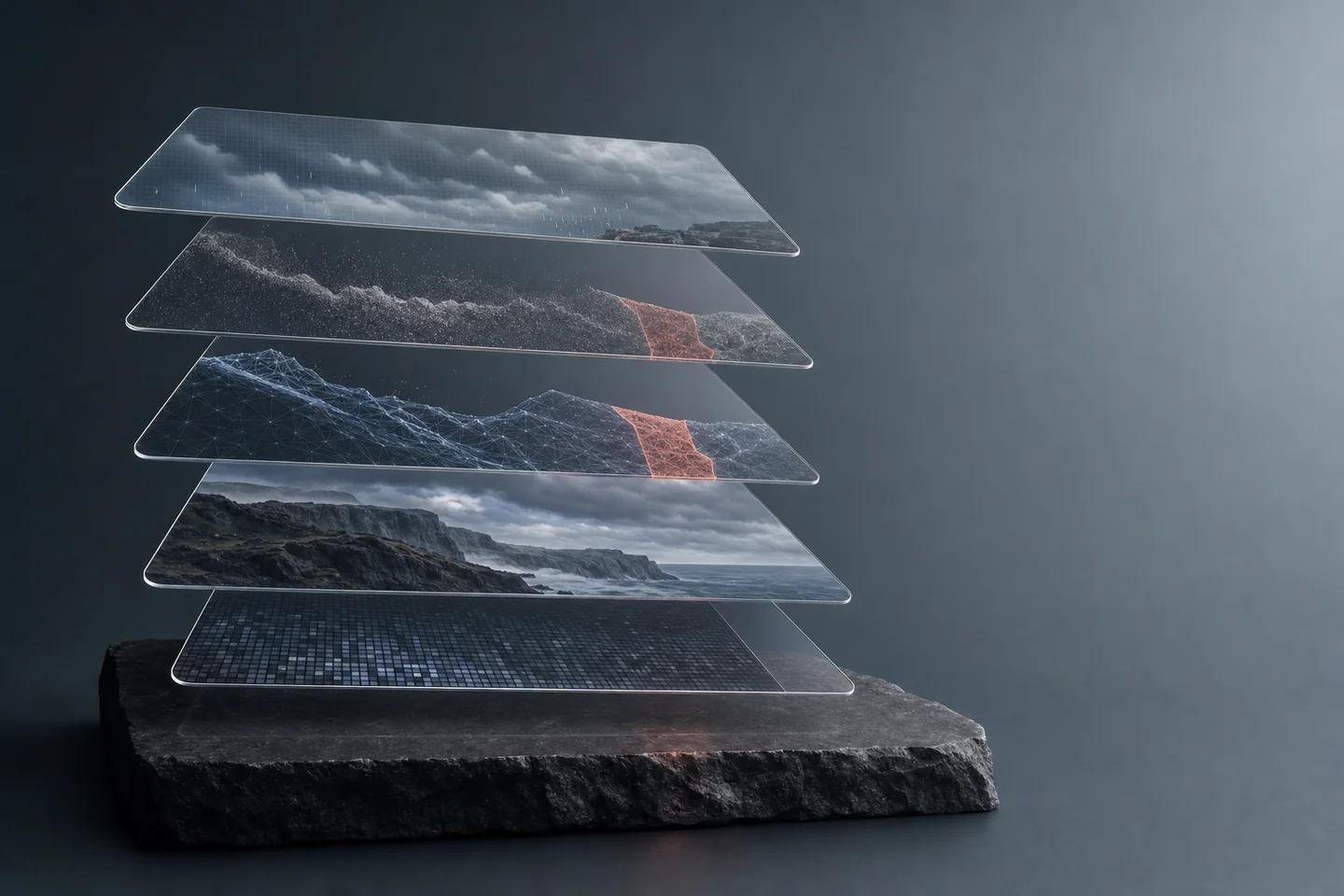
Forensic analysis is the right tool when no original exists to compare against, when the question is whether a face or voice was synthesised, or when a genuine clip may contain a generated region or replaced audio. It also matters when the result has to stand up later in a dispute, a newsroom correction or a legal process.
Neural Defend's NeuroDetect is built for that work. Investigators upload the authorized image, video, audio or document into a case and see explainability heatmaps and attention views down to regions, frames and audio segments. A plain-language summary links each statement to the evidence, the analyst makes the final call, and the downloadable report records observations, uncertainty, provenance and model context, which is what a correction or legal team needs.
The models behind it come from ARCAS 1B, Neural Defend's own detection model, with pooled accuracy reported in the ARCAS paper of 99.99% on GenImage and 97.65% on OpenFake. A clean result on a cheapfake is expected and correct: it means the pixels were not generated, not that the caption is true.
Mixed cases and how to describe them
Real incidents often combine methods. A genuine video can carry a cloned voice track, an authentic photo can include one generated object, and a fully AI-generated image can circulate with a false caption that names a real place and date. Describe each part separately: which component changed, how, and whether that change affects the claim being made.
Bounded language keeps findings defensible. Statements such as "the available copy contains an altered region" or "the footage predates the claimed event by three years" can be checked and corrected if a better original appears. Labels such as fake or real, applied to a whole asset, usually cannot.
Evidence boundary
Limitations
- There is no single formal definition of cheapfake across institutions; usage varies.
- Context checks can fail when the original has been deleted or never published.
- ARCAS accuracy figures are pooled results on public datasets reported by Neural Defend and may not reflect every real-world case.
Source record
Sources and references
- Data & SocietyDeepfakes and Cheap Fakes: The Manipulation of Audio and Visual EvidenceVerified October 19, 2026.
- Oversight BoardOversight Board Upholds Meta's Decision in Altered Video of President Biden CaseVerified October 19, 2026.
- Cybersecurity and Infrastructure Security AgencyTactics of DisinformationVerified August 7, 2026.
- U.S. Department of Homeland SecurityThe Increasing Threat of Digital ForgeriesVerified August 7, 2026.
- Scientific Working Group on Digital EvidenceBest Practices for Digital Video AuthenticationVerified August 7, 2026.
- arXivBenchmarking Neural Defend ARCAS 1B: A Foundational Multimodal Deepfake Detection ModelVerified October 19, 2026.