What is media laundering?
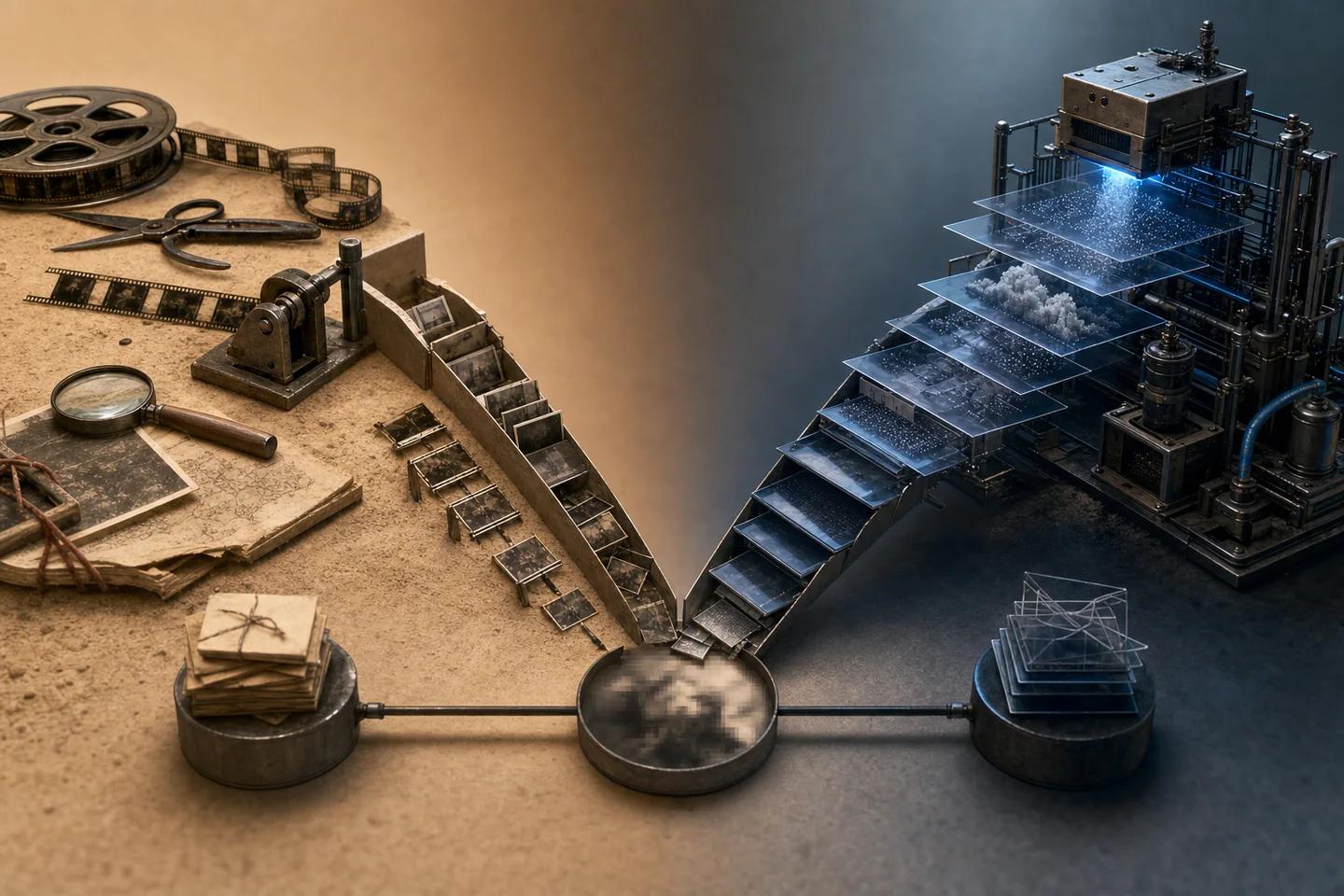
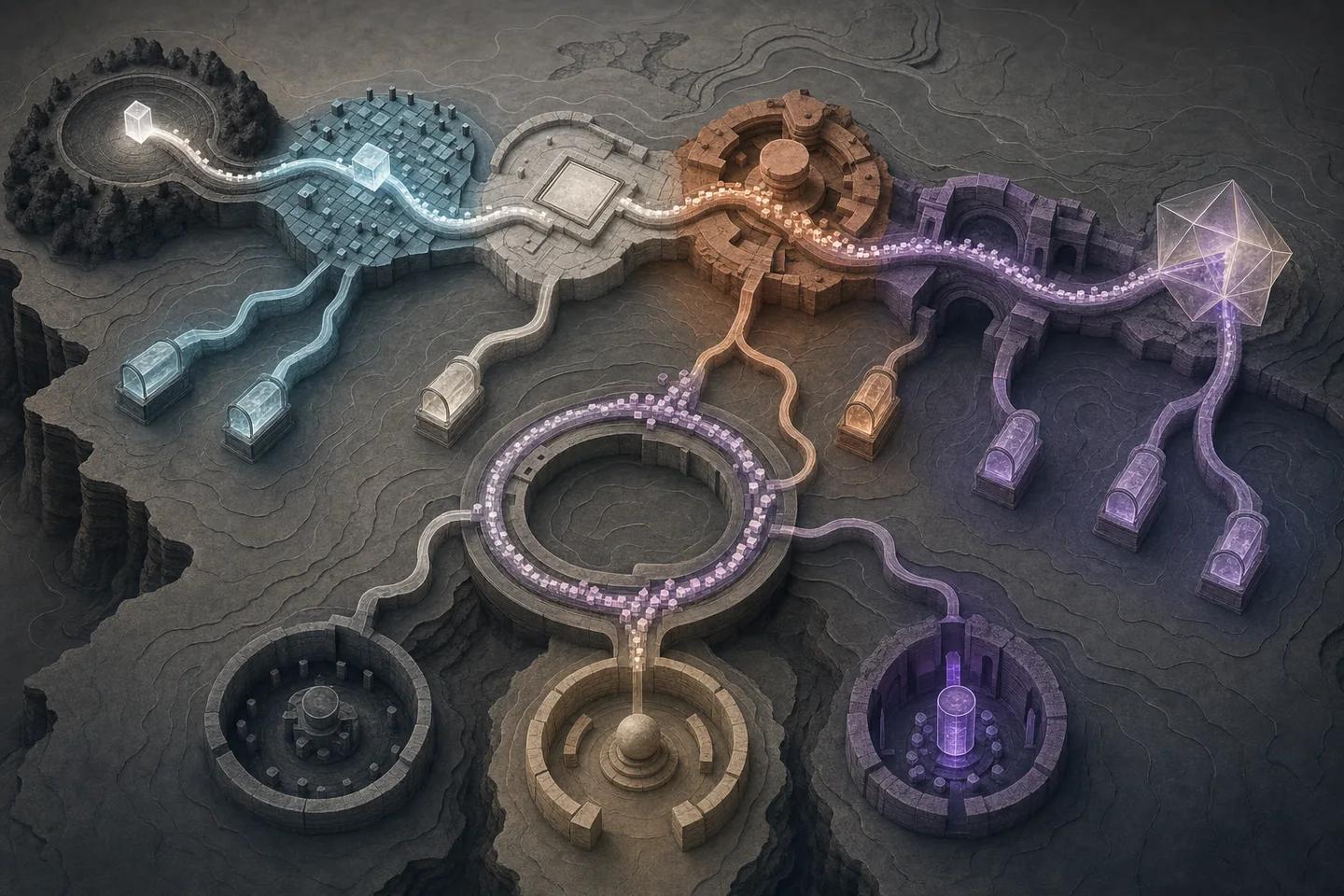
Media laundering is the process of moving a piece of content, or a claim about it, through a series of accounts, websites and outlets until its true origin is hidden and it appears to come from a credible or neutral source. The content may be a deepfake, a real photo with a false caption, or a fabricated document. The laundering is in the distribution, not the pixels.
A typical chain starts with an anonymous or throwaway account, moves to a small website that presents itself as news, gets picked up by aggregators and influencers, and finally reaches mainstream audiences who see it attributed to "reports" rather than to the original anonymous post. Each step adds apparent legitimacy and removes context.
False attribution is a close cousin: content is labelled as coming from a real outlet, agency or person who never published it, often with a cloned logo or a lookalike domain.
How a laundering network works at scale
The Pravda network, also called Portal Kombat, is a documented example. NewsGuard's special report of 6 March 2025 says the network launched in April 2022, was first identified in February 2024 by VIGINUM, the French government agency that monitors foreign disinformation, and had grown to target 49 countries in dozens of languages across about 150 domains.
According to NewsGuard, the network does not produce original content. It aggregates material from Russian state media, pro-Kremlin influencers and officials and republishes it at volume; the report cites the American Sunlight Project's estimate of 3.6 million articles in 2024. NewsGuard tested 10 leading AI chatbots with 15 false narratives spread by the network and found they repeated the false claims 33% of the time.
That last finding shows why laundering matters beyond social media. Content that is repeated across enough sites can be absorbed into search results and AI training or retrieval data, where it loses every sign of where it came from.
How to trace media laundering and false attribution
Start from the version you have and work backwards. Run reverse image search across several engines, extract key frames from video and search those, and search distinctive phrases from captions in quotation marks. Check web archives such as the Wayback Machine for earlier captures of pages that may since have changed or been deleted.
Record every version you find with its URL, account, timestamp and what changed: crop, caption, resolution, watermark, language or added audio. Order them by time. The earliest version is not always the origin, but the sequence shows where context was added or removed and which account introduced the claim that matters.
For false attribution, go to the claimed source directly. Check the outlet's own website and verified accounts, look at the exact domain spelling, and ask the organization if needed. A cloned page on a lookalike domain often gives itself away through registration dates or a hosting provider the real outlet does not use.
- Reverse search the image or key video frames on more than one engine.
- Search exact caption phrases and check web archives for earlier captures.
- Log every version with URL, account, time and what changed.
- Check claimed sources on their own verified channels and domains.
- Test whether the cited sources are independent or cite each other.
Spotting citation loops and false corroboration
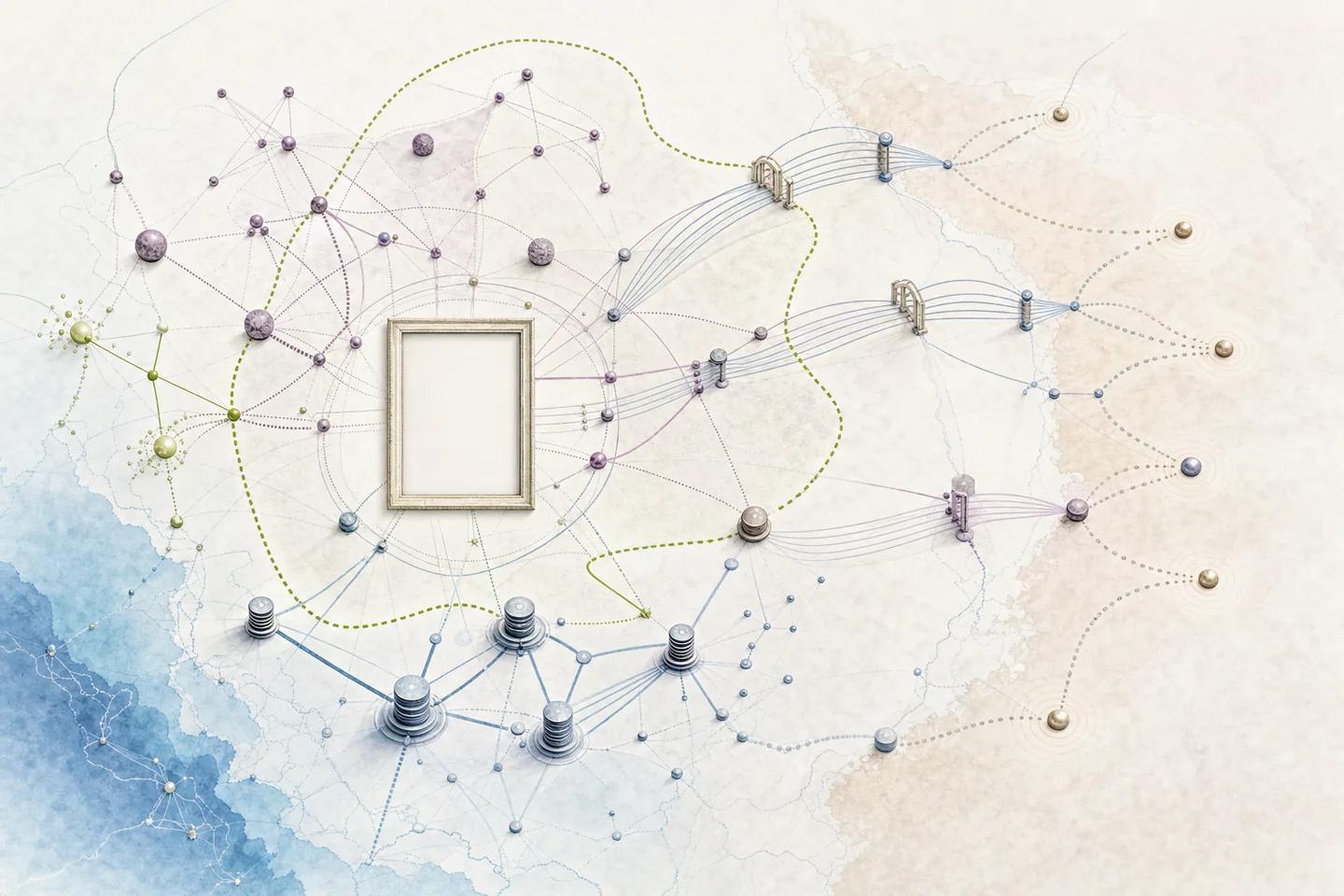
Laundering creates the illusion of several sources. Site A cites site B, B cites a social post, and the post links back to A. Or ten websites carry the same article word for word under different bylines. Count origins, not mentions: if every path leads back to one anonymous account, there is one source.
Signs of a loop include identical wording across outlets, the same images with the same crops, sites registered recently or in batches, and articles that cite each other but never a primary document or named witness. Mapping the links as a simple graph often makes the loop obvious.
| Feature | Independent corroboration | Laundered repetition |
|---|---|---|
| Origin | Separate witnesses, cameras or documents | One original post or file |
| Wording and media | Different angles, wording and detail | Identical text, crops or watermarks |
| Citations | Point to primary records or named people | Point to each other or to unnamed reports |
| Outlet history | Established, with a traceable track record | Recent, batch-registered or anonymous |
Using provenance and forensic analysis
Provenance data can shortcut the trace when it exists. A file signed under the C2PA specification carries a manifest recording who created it and what edits were applied; validating it confirms those claims were not altered since signing. Most social platforms strip such data, and most content has none, so a missing manifest is neutral.
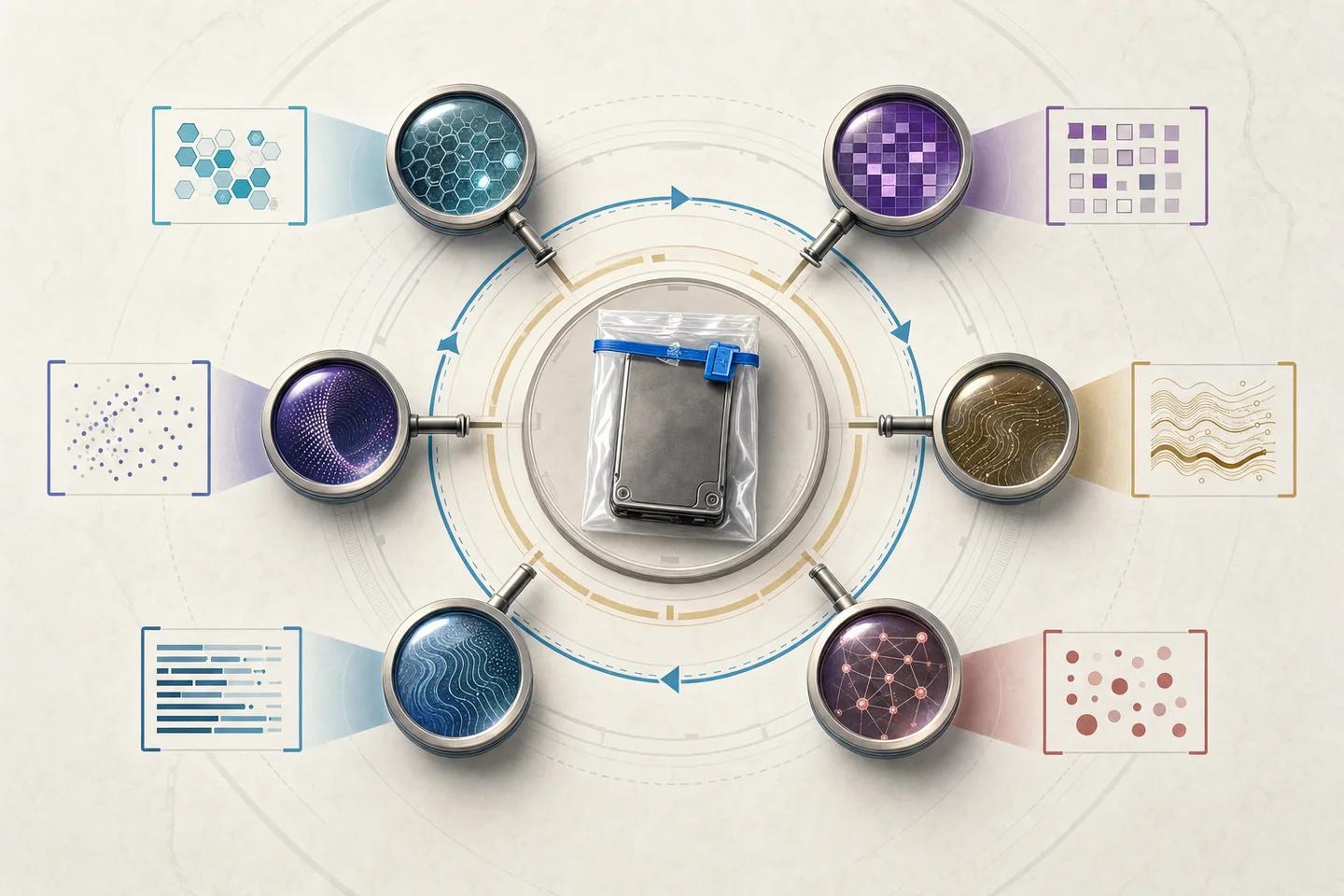
Forensic analysis answers a different question: was the file itself generated or manipulated. Neural Defend's NeuroDetect lets investigators upload each version they collect into one case, so analyses sit side by side with model and version context. Heatmaps and attention views show findings down to regions, frames and audio segments, an LLM-assisted summary links statements to evidence, and the analyst makes the final call. The forensic report records observations, uncertainty and provenance for each version, which is useful when one copy shows edits that earlier ones do not.
Neither tool identifies who is behind a network. Attribution to a specific actor needs infrastructure, financial and behavioural evidence, usually from platforms, researchers or government agencies.
Correcting laundered claims without amplifying them
Corrections can spread the content they correct. Lead with the accurate information and the true origin, describe the false claim briefly, and avoid embedding the original media where a labelled still or a description will do. Link to primary sources rather than to the laundering sites.
Name the specific problem: the image is from a different year, the outlet never published the article, or the quoted source does not exist. Specific findings are harder to dismiss and easier for others to verify. Share the trace with platforms and fact-checkers so they can act on the whole network, not just the copy you found.
Evidence boundary
Limitations
- The earliest copy found is not always the true origin; deleted or private posts may predate it.
- Figures on the Pravda network come from NewsGuard and the American Sunlight Project and describe one network, not all laundering.
- Forensic analysis and provenance checks do not identify the people behind a network.
Source record
Sources and references
- NewsGuardA well-funded Moscow-based global "news" network has infected Western artificial intelligence tools worldwide with Russian propagandaVerified October 19, 2026.
- Cybersecurity and Infrastructure Security AgencyTactics of DisinformationVerified August 7, 2026.
- Cybersecurity and Infrastructure Security AgencyRisk in Focus: Generative AI and the 2024 Election CycleVerified August 7, 2026.
- Coalition for Content Provenance and AuthenticityC2PA Technical Specification 2.4Verified October 19, 2026.
- UN Office of the High Commissioner for Human RightsBerkeley Protocol on Digital Open Source InvestigationsVerified October 19, 2026.