What Is Forensic Deepfake Detection?
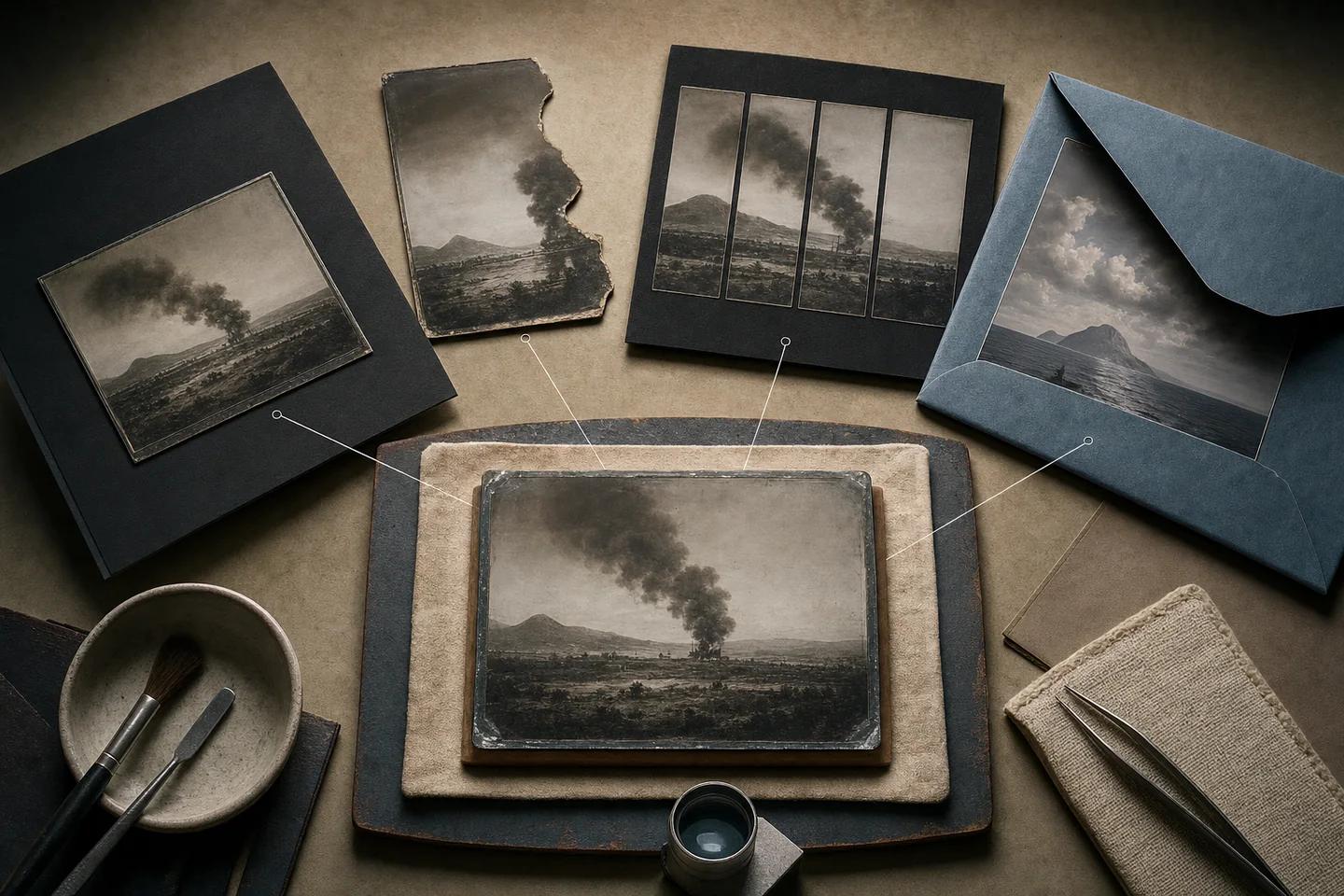
Forensic deepfake detection is the detailed analysis of a specific media file to establish whether, where and how it was generated or altered, documented well enough that another expert could check the work. It sits at the investigative end of a spectrum that starts with automated screening.
Screening asks a quick question about many files: should this selfie or upload be trusted, stepped up or reviewed? Forensic analysis asks a slower question about one file: what does the evidence in this recording show, how confident can we be, and what are the limits? Fraud investigators, newsrooms, insurers, law enforcement and litigation teams need the second kind of answer, because their conclusions will be challenged.
| Aspect | Automated screening | Forensic detection |
|---|---|---|
| Volume | Thousands or millions of files | One file or a small set per case |
| Speed | Milliseconds to seconds | Minutes to days |
| Output | Score and decision under a policy | Documented findings with evidence and uncertainty |
| Who acts | A workflow or reviewer | An analyst who signs the conclusion |
| Records kept | Score, signals, model version | Original file, hashes, tools, versions, notes, chain of custody |
Which Methods Do Forensic Analysts Use?
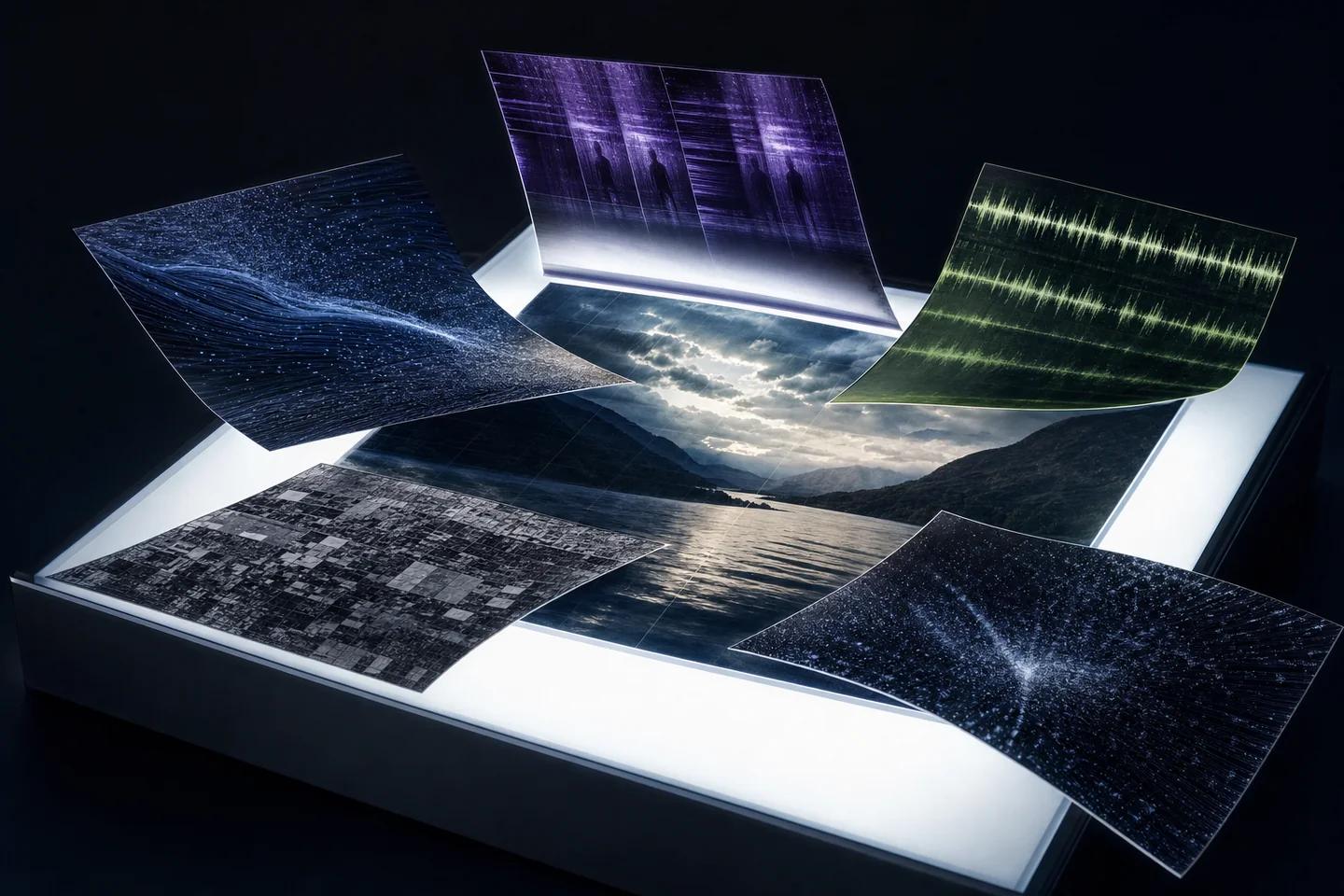
Forensic analysts use several families of method because each reads a different layer of the file and fails in different conditions. Agreement between independent methods is what makes a finding strong.
Pixel and noise analysis looks for traces of editing in the image itself: blending seams around a swapped face, inconsistent sensor noise between regions, and resampling patterns left when part of an image was resized. Frequency analysis transforms the image to show its spectral make-up. Joel Frank and colleagues showed at ICML 2020 that GAN-generated images carry strong artefacts in frequency space, caused by the upsampling operations in GAN architectures and visible across different networks, datasets and resolutions.
Physiological analysis checks whether a face behaves like a living one. FakeCatcher, by Umur Aybars Ciftci and Ilke Demir, treated biological signals hidden in portrait video as a marker of authenticity and reported 94.65% accuracy on FaceForensics++ and 91.50% on Celeb-DF. Analysts also check lighting and shadow direction, reflections in the eyes, head pose against body motion, and lip movement against speech.
Audio analysis examines spectral features, breathing, room acoustics and the artefacts of neural vocoders. File and container analysis reads metadata, encoding history, editing software tags and any provenance manifest such as C2PA Content Credentials, while remembering that metadata is easy to strip or forge.
What Does a Forensic Deepfake Examination Involve?
A defensible examination follows a fixed sequence so that the findings can be reproduced and the evidence was not changed along the way:
The written conclusion should use graded language, such as strong support, moderate support or inconclusive, rather than a bare real-or-fake label, and it should state what the analysis did not cover.
- Acquire the earliest available copy of the file and record where, when and from whom it came.
- Compute a cryptographic hash, store the original unchanged, and work only on copies.
- Record the file's technical properties and known history: format, resolution, duration, codec, forwards and conversions.
- Run several independent analyses, noting each tool, model and version, and the settings used.
- Compare findings with the claim the media supports and with independent evidence about the event or identity.
- Write up observations, the level of support, uncertainty and limitations, and keep notes that another analyst could follow.
How Do Automated Tools Compare With Forensic Analysts?
Automated tools are fast and consistent, and trained analysts still catch things they miss. The Deepfake-Eval-2024 study, which collected 45 hours of video, 56.5 hours of audio and 1,975 images that circulated online in 2024, found that open-source detectors lost about 45% to 50% of their AUC compared with older benchmarks, and that commercial detectors performed better but did not yet reach the accuracy of deepfake forensic analysts.
The practical answer is to combine them. Tools that point an analyst to the regions, frames and audio segments driving a result shorten the examination and make the reasoning visible, while the analyst brings context, source checks and judgment about whether the evidence supports the claim. NIST's AI 100-4 report, published in November 2024, discusses human-assisted detection in the same terms, with people helping to resolve uncertain cases.
What Can Forensic Deepfake Detection Not Tell You?
Forensic detection describes a file. It can show that a face region was replaced or that an image carries generative-model artefacts. It cannot say who made the file, why, whether the person depicted consented, or whether the event it shows took place. Those questions need investigation beyond the media.
It also weakens on poor inputs. Heavy compression, very short clips and screen recordings remove the fine detail many methods read, so an inconclusive result on a degraded copy should prompt a search for a better one. And genuine footage used with a false caption passes every forensic test, because nothing in it was manipulated.
How NeuroDetect Supports Forensic Deepfake Detection
Neural Defend's NeuroDetect is a forensic media workspace. An analyst uploads an authorised image, audio file, video or document into a case. Every analysis keeps its model and version context, and the detailed views show the original beside explainability heatmaps and attention views down to individual regions, frames and audio segments.
An LLM-assisted summary explains the findings in plain language and links each statement to the underlying evidence, while the analyst makes the final call. The case exports as a downloadable forensic report covering observations, uncertainty, provenance, model context and analyst notes, plus structured results for case management systems.
NeuroDetect runs on ARCAS 1B, Neural Defend's proprietary detection model. On the public VendorBench-100 benchmark of 100 adversarial still images, Neural Defend ranked first of 36 systems with an MCC of 0.876 against 0.646 for the next vendor; one VendorBench author also co-wrote the ARCAS 1B paper, and the benchmark covers still images only. Teams with sensitive evidence can deploy on-premises or air-gapped, and Neural Defend holds ISO/IEC 27001, ISO/IEC 27701, ISO/IEC 42001 and SOC 2 Type II.
Evidence boundary
Limitations
- Research accuracy figures for FakeCatcher and other methods come from specific datasets and older generators and do not transfer directly to current media.
- Forensic findings describe a file and cannot identify the creator, prove intent or confirm an event.
- VendorBench-100 covers 100 still images and one author also co-wrote the ARCAS 1B paper.
Source record
Sources and references
- arXivLeveraging Frequency Analysis for Deep Fake Image Recognition (Frank et al., ICML 2020)Published March 19, 2020. Verified October 19, 2026.
- arXivFakeCatcher: Detection of Synthetic Portrait Videos using Biological Signals (Ciftci and Demir)Published January 8, 2019. Verified October 19, 2026.
- arXivDeepfake-Eval-2024: A Multi-Modal In-the-Wild Benchmark of Deepfakes Circulated in 2024Published March 4, 2025. Verified October 19, 2026.
- National Institute of Standards and TechnologyNIST AI 100-4: Reducing Risks Posed by Synthetic ContentPublished November 20, 2024. Verified October 19, 2026.
- U.S. Department of Homeland SecurityThe Increasing Threat of Digital ForgeriesVerified August 7, 2026.
- arXivVendorBench-100: A Unified Cross-Paradigm Benchmark for Deepfake Image Detection (v2)Published July 29, 2026. Verified October 19, 2026.