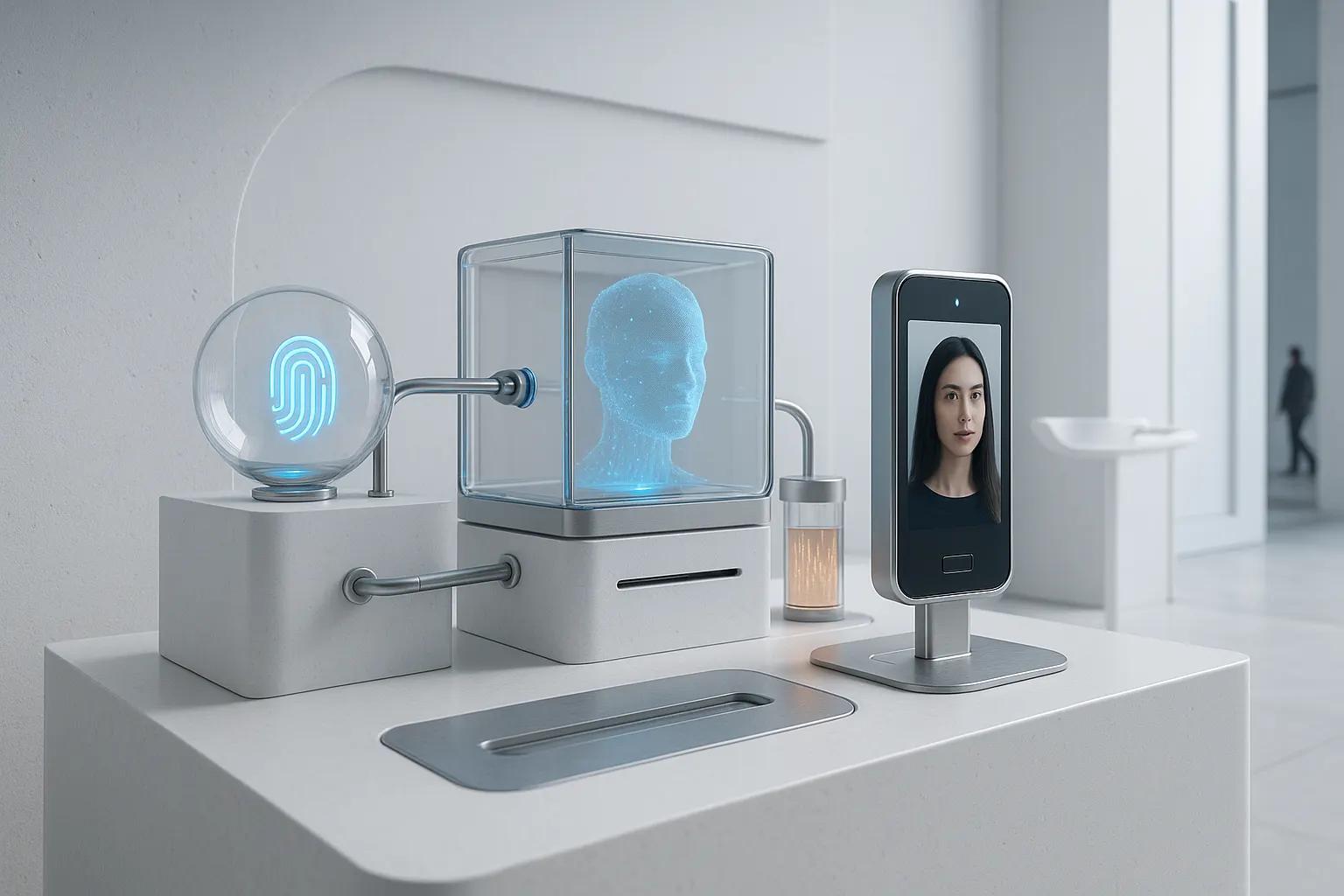

How do you prevent deepfake account recovery fraud?
You prevent deepfake account recovery fraud by making recovery at least as hard to fake as normal sign-in. Map every route back into an account, rank them by what an attacker gains, and require stronger, independent evidence for the high-value ones. Where recovery uses a selfie, video or voice, analyse that media for deepfakes and injection rather than relying on a face or voice match.
Most organisations harden login with passkeys or phishing-resistant MFA, then leave recovery as a support conversation or a self-service selfie flow. Attackers know this. A plausible story about a broken phone, combined with stolen personal data and a face-swapped selfie video, can turn a lockout procedure into an account takeover.
- Inventory every recovery and device-rebinding path, including help-desk and supervisor overrides.
- Tier recovery evidence by account impact: a payout-enabled account needs more than a newsletter login.
- Run deepfake and injection checks on every biometric sample submitted during recovery.
- Notify existing contact channels and restrict sensitive changes after any recovery.

Why attackers target recovery instead of login
Recovery exists for people who cannot pass normal authentication, so it is designed to accept weaker or different evidence. That makes it the cheapest way past strong login controls. The joint Scattered Spider advisory from CISA, the FBI and partner agencies, first published in November 2023 and revised in July 2025, describes the group making early calls to learn a target's reset steps, then calling back with gathered personal data to convince help-desk staff to reset passwords or move MFA tokens to devices the attackers control.
Synthetic media strengthens that playbook. A cloned voice makes a help-desk call more convincing, and a face-swapped or injected video can pass a self-service selfie step. FinCEN's alert of 13 November 2024 notes that people using deepfake identities may claim repeated technical glitches or ask to change communication methods during a live verification, and that some verification tools flag third-party webcam plugins that can display pre-generated video.
How does deepfake detection fit account recovery and high-risk authentication?
Deepfake detection fits account recovery as a check on the media the user submits, placed between capture and the decision. When a user re-verifies with a selfie or short video, the system compares it with the enrolled face and, in parallel, asks whether the sample is a genuine live capture or a manipulated, generated or replayed one. The same check applies to other high-risk moments: adding a payee, raising limits, rebinding a device or approving a large transfer.
NIST SP 800-63A-4, finalised in July 2025, makes this explicit for remote identity proofing. Section 3.14 says providers shall implement controls that increase confidence media came from a genuine sensor, such as detecting virtual cameras, device emulators or jailbroken devices, and shall analyse all submitted digital media for signs of modification, manipulation or forgery, documenting the attack types tested and false negative rates. It also notes that a biometric comparison alone does not prevent these attacks.
| Recovery method | Deepfake exposure | Control to add |
|---|---|---|
| Help-desk phone call | Cloned voice, social engineering with stolen data | Callback to a registered number, no reset on inbound calls alone |
| Self-service selfie or video | Face swap, generated face, injected camera feed | Deepfake detection plus capture-integrity checks |
| Video call with an agent | Real-time face swap and voice conversion | Agent training, random prompts, media analysis on the stream |
| Backup codes or second passkey | Low; theft rather than synthesis | Secure storage guidance, notification on use |
| Email or SMS link | Low synthesis risk; SIM swap and inbox takeover | Treat as weak evidence for high-value accounts |
Test presentation and injection separately
A deepfake can reach a recovery flow in two ways. In a presentation attack, it is shown to the real camera on a screen or printed. In an injection attack, the video is fed in after the camera through a virtual camera, an emulator, a hooked app or a direct API call. Presentation attack detection tested under ISO/IEC 30107-3 addresses the first; it does not see the second, because no physical surface is ever filmed.
Evaluate the whole path: app, camera, device integrity, transport, server, review console and manual override. A strong face-matching model does not help if an attacker can submit a generated video straight to the API, or if a reviewer can approve a failed check without a second sign-off.
Fallback and the first hours after recovery
Automated recovery will fail some genuine users because of poor cameras, disabilities, lighting or model error. The fallback should be slower and better evidenced: a trained reviewer, additional independent evidence, a time delay for high-value accounts, and a record of why the automated path failed. It must not become an informal bypass that any persuasive caller can reach.
After recovery, notify the old and new contact channels, review active sessions, and hold sensitive changes such as payout details, data exports or new recovery factors for a short period. If the recovery turns out to be fraudulent, revoke sessions and newly added authenticators, restore verified contact points, preserve the submitted media under your retention policy and inform the legitimate user through a known channel.
How NeuroVerify supports recovery decisions
NeuroVerify, Neural Defend's deepfake detection API, checks a face image, video or audio sample in one request using six signals: Visual Safety Screening, Live Presence Verification, Face Manipulation Detection, AI Generative Model Analysis, AI Pixel-Level Manipulation and AI Content Compliance. It returns one risk score with signal-level evidence, and your policy engine decides whether to approve, step up or route to review. Eligible image requests complete in under 200 ms p95 under defined test conditions, so the check adds little delay to recovery.
Integration uses SDKs for Android, iOS and Flutter on the capture side and Python, TypeScript, Go or Java on the backend, or the REST API directly. Deployment can be managed cloud, private cloud or VPC, a secure container, on-premises or air-gapped. Neural Defend holds ISO/IEC 27001, ISO/IEC 27701, ISO/IEC 42001 and SOC 2 Type II certifications. NeuroVerify does not analyse ID documents, so document checks stay with your existing provider.
On the public VendorBench-100 benchmark of 100 adversarial still images, including face swaps and avatar composites, Neural Defend ranked first of 36 systems with an MCC of 0.876 against 0.646 for the next vendor. One VendorBench author also co-authored Neural Defend's ARCAS paper; the corpus is public so results can be rerun. VendorBench does not test injection or video, which is why capture-integrity controls remain part of the design.
Evidence boundary
Limitations
- Deepfake detection scores the submitted media; it does not detect emulators or virtual cameras, which need separate device and session integrity checks.
- Threshold choices trade fraud catch against genuine users sent to review and should be tuned on your own traffic.
- Benchmark results describe tested datasets and do not cover injection, live video or voice performance in a specific recovery flow.
Source record
Sources and references
- National Institute of Standards and TechnologySP 800-63A-4 HTML edition, Section 3.14 Digital Injection Prevention and Forged Media DetectionVerified October 19, 2026.
- National Institute of Standards and TechnologySP 800-63A-4, Digital Identity Guidelines: Identity Proofing and EnrollmentPublished July 31, 2025. Verified October 19, 2026.
- Financial Crimes Enforcement NetworkFinCEN Alert on Fraud Schemes Involving Deepfake Media Targeting Financial Institutions (FIN-2024-Alert004)Published November 13, 2024. Verified October 19, 2026.
- Cybersecurity and Infrastructure Security AgencyScattered Spider (Cybersecurity Advisory AA23-320A)Published November 16, 2023. Verified October 19, 2026.
- FIDO AllianceFIDO Face Verification Certification ProgramVerified August 7, 2026.
- arXiv (Deshmukh et al.)VendorBench-100: A Unified Cross-Paradigm Benchmark for Deepfake Image DetectionPublished July 29, 2026. Verified October 19, 2026.