
Your intake
Keep the earliest copy you can get and hash it at collection. Then upload the authorized file into a NeuroDetect case.
Media investigation & verification NeuroDetect
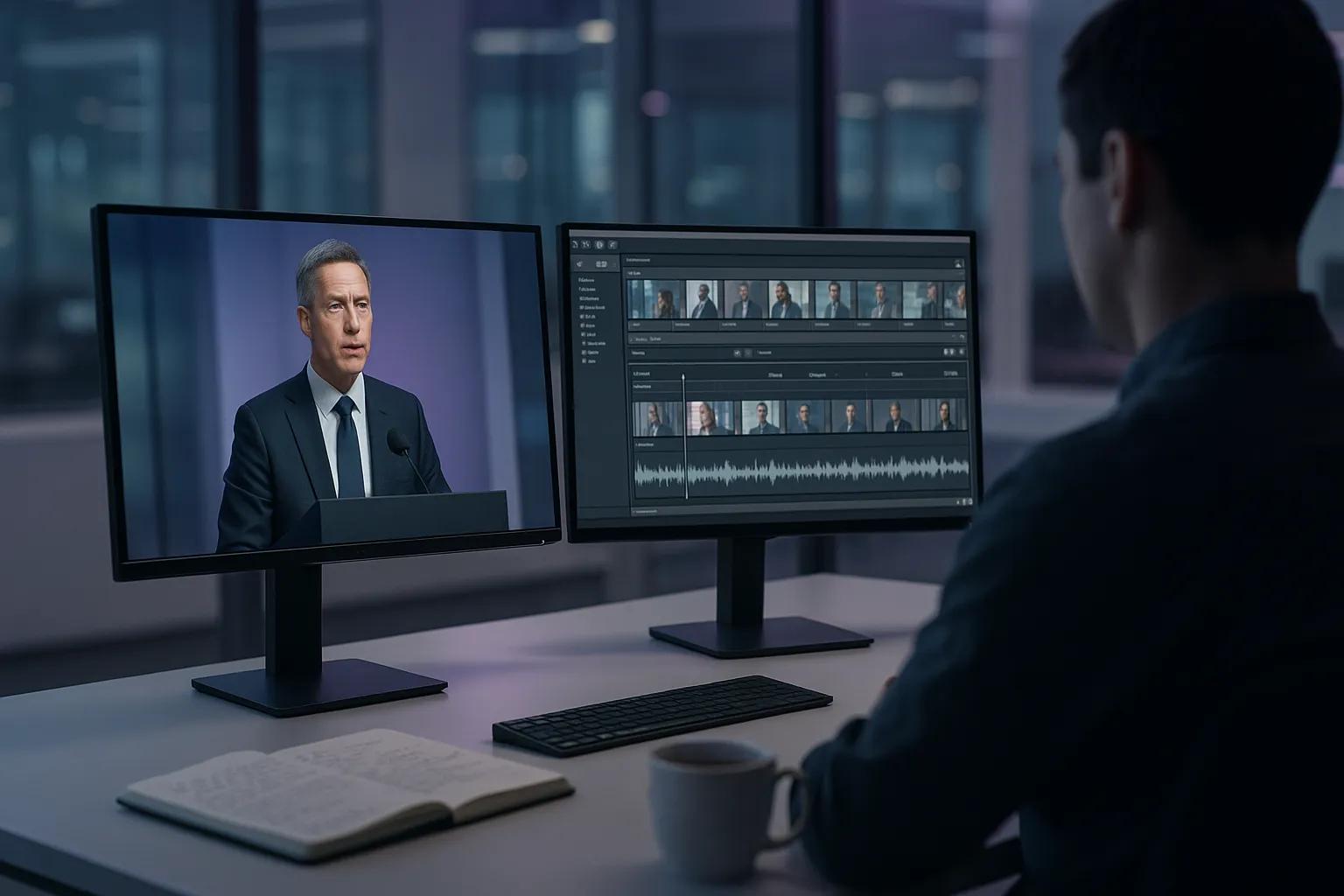
Fakes get published and acted on, and genuine footage gets waved away as fake. NeuroDetect puts the detection signal, the provenance and the analyst’s reasoning into one case record that an editor, a court or a regulator can check.
The problem, in numbers
of people across 48 markets worry about telling what is real from what is fake online.
Reuters Institute Digital News Report 2025AUC for open-source video detectors on deepfakes that circulated in 2024, against older benchmarks. Audio fell 48%, images 45%.
Deepfake-Eval-2024, arXiv 2025accuracy for image detectors facing generators they were not trained on, after compression and resizing.
NIST AI 100-4, Nov 2024, citing a 2023 studyUS federal judges had already faced a deepfake challenge. 82% of the rest would demand an initial showing first.
FJC survey, US Evidence Rules Committee, Oct 2026How doubtful media reaches you
By the time a clip lands on an investigator’s desk, the traces that would settle it have been compressed, stripped or cut off from their source.
A face swap, a cloned voice or eight edited frames. The forgery only has to survive the first look.
Uploaded, screen-recorded, reposted. Each platform transcode re-compresses the pixels and rewrites the metadata to describe the new file, not the original.
It reaches your desk as a forward of a forward. The first upload, the source account and the original caption are already gone.
Someone acts on it. Or someone calls genuine footage fake and the doubt sticks. Chesney and Citron named that the liar’s dividend.
Why one check is not enough
NIST groups the tools into provenance and detection, and treats neither as complete. The gaps only close when the answers sit in one record.
What does the file say about itself?
Platforms strip and rewrite it on upload. Its absence proves nothing, and anyone who copies the file can edit it.
Was this signed, and has it changed since?
Whether the scene is true. A signature notarises a claim; it does not check it. Unsigned media, or media whose manifest was stripped, gets no answer.
Where else has this appeared, and when?
Whether the pixels or the audio were altered. The earliest copy you find can still be the fake.
Does a model see manipulation?
Where, why, and how sure on this degraded file. A single number cannot be cross-examined.
What do signal, provenance and context show together?
Heatmap regions, frames, audio segments, provenance gaps and analyst notes in one report, with the model and version recorded.
Where NeuroDetect fits
Every finding attaches to the exact region, frame or second it came from. The report says what is known, what is missing and who made the call.
Keep the earliest copy you can get and hash it at collection. Then upload the authorized file into a NeuroDetect case.
Original, heatmap and attention views down to regions, frames and audio segments, with model and version context kept.
A plain-language summary links each point to the evidence. The analyst writes the determination and exports the report.
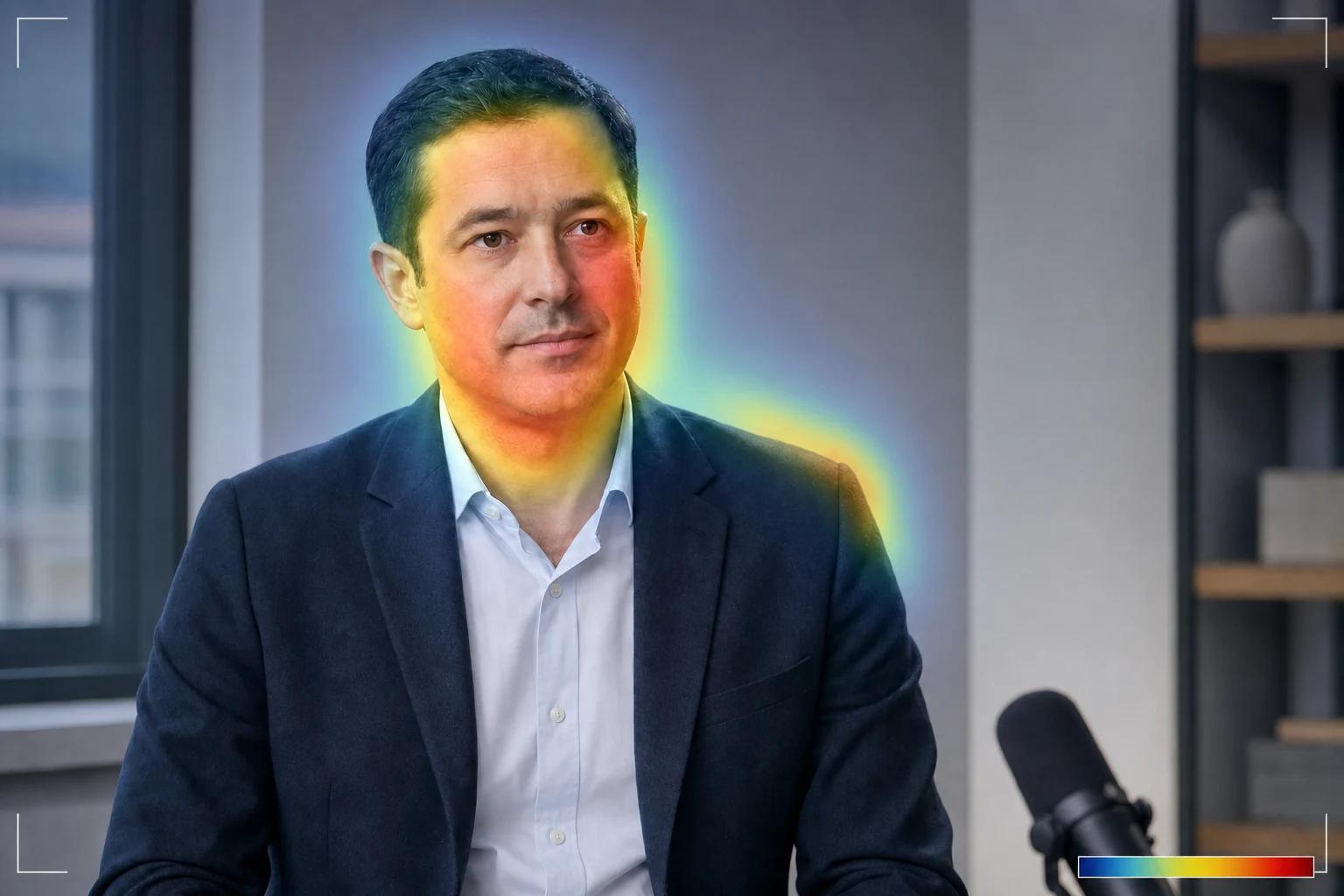
The heatmap localises the model response to the lower face. Logged as an observation, not a verdict.
The edge between face and neck shifts across eight frames. Linked to the frame view for review.
A three-second span flagged in the audio view. Checked against the room tone either side.
Metadata was rewritten by a platform transcode. The first upload has not been located.
What to do with the result
A good record makes any of these defensible. Proving footage is real takes the same discipline as proving it is fake.
Signals localise to a region, frame or segment, and nothing in provenance or context explains them.
Cite the views and the model version in the report. Keep looking for the earliest copy before you publish, charge or act.
No localised signal, and an early copy and independent context agree.
Record it with the same rigour. When someone cries deepfake at real footage, this record is your answer.
Heavy re-encoding, missing provenance or signals that disagree.
Say inconclusive and say why. Do not force a yes or no the file cannot carry.
The dispute is about the event, the caption or the speaker’s intent.
Route it to reporting or investigation. A clean file can still carry a false claim.
Who it’s for
The challenge comes from an editor, a defence lawyer, a regulator or a user appeal. See how the review runs in your setting.
Deployment
Web app, private cloud or VPC, secure container, on-premises or air-gapped.
Upload the authorized image, audio, video or document into a case workspace.
Original, heatmap and attention views, down to regions, frames and audio segments.
A forensic report and structured results, with the analyst’s notes and call.
ISO/IEC 27001 · 27701 · 42001 · SOC 2 Type II. Screening faces at volume rather than building cases? NeuroVerify runs the face checks as one API call; send what it flags to NeuroDetect.
Sources
Third-party publications. None of them evaluates or endorses Neural Defend.
Jun 2025. 58% worry about what is real and fake online; 48 markets.
arXiv, 2025. In-the-wild deepfakes from 88 sites; open-source detector AUC drops 45–50%.
Nov 2024. Metadata is often stripped when shared; signatures notarise, they do not verify.
Oct 2026. Draft Rule 901(c) on deepfakes; FJC judge survey; proposed Rule 707 withdrawn for study.
2022. Hash at collection; platforms transcode uploads, so metadata reflects the new file.
May 2025. Validates signed provenance claims; makes no judgement on whether they are good or bad.
2019. Defines the liar’s dividend: doubt invoked against authentic evidence.
2022, revised 2024. Calls a transparent chain of custody for digital evidence essential.
Apr 2023. Huang v. Tesla: the judge ordered Musk deposed on which recordings were his.
It shows where and how its models see signs of manipulation, in views you can inspect frame by frame. The determination stays with your analyst. Detectors lose accuracy on new generators and re-encoded files, so a finding built on signal, provenance and context holds better than any single score.
Every upload re-compresses the file. Lossy compression discards fine detail first, and that detail is what detectors read. NIST reports detector accuracy falling after compression and resizing. The Berkeley Protocol tells investigators to collect the most reliable version they can while still hunting for earlier or better ones.
No. Signing is opt-in, and many platforms strip metadata on upload. Missing credentials are a gap to record, not a sign of forgery. Valid credentials show the file has not changed since signing. They do not show that the scene is true.
Yes. That is the liar’s dividend. In Huang v. Tesla, the company suggested recordings of Elon Musk might be deepfakes, and the judge ordered him deposed on which ones were authentic. A documented record of no localised signal, matched to an early copy and independent context, is evidence too.
No tool can promise that. Courts decide. The US Evidence Rules Committee is studying a Rule 901(c) under which, once a deepfake challenge is credible, the side offering the media must show it is more likely than not authentic. NeuroDetect’s report records observations, uncertainty, provenance, model context and analyst notes, so a qualified examiner can explain how the finding was reached.
Your choice: web app, private cloud or VPC, a secure container, on-premises or air-gapped. Neural Defend holds ISO/IEC 27001, 27701 and 42001 certifications and a SOC 2 Type II report.
Test it on a real case
Pick a case your team closed as inconclusive, or one open now. Run it through NeuroDetect with us and see the views, the report and what the record still cannot answer.