
Why Can Insurers No Longer Take Claim Photos at Face Value?
Digital claims run on customer-supplied media. Motor, property, travel, gadget and health claims increasingly settle from photos, short videos and scanned receipts taken on the claimant's phone, often without an adjuster visit. That model assumed a photo showed what was in front of the camera. Consumer editing apps and image generators broke the assumption: a claimant can add a dent, a crack, water staining or smoke damage to a genuine photo, or generate a receipt, in less time than it takes to fill in the claim form.
The stakes are large. The Coalition Against Insurance Fraud states that insurance fraud steals at least $308.6 billion every year from American consumers. FinCEN's alert FIN-2024-Alert004 (November 2024) describes GenAI being used to alter or generate identity images, and the same tools apply to the photos and documents that support a claim. The FBI's December 2024 PSA I-120324 warns that criminals use generative AI to create realistic images and fake documents for fraud.

How Can Insurers Detect AI-Edited Damage Photos?
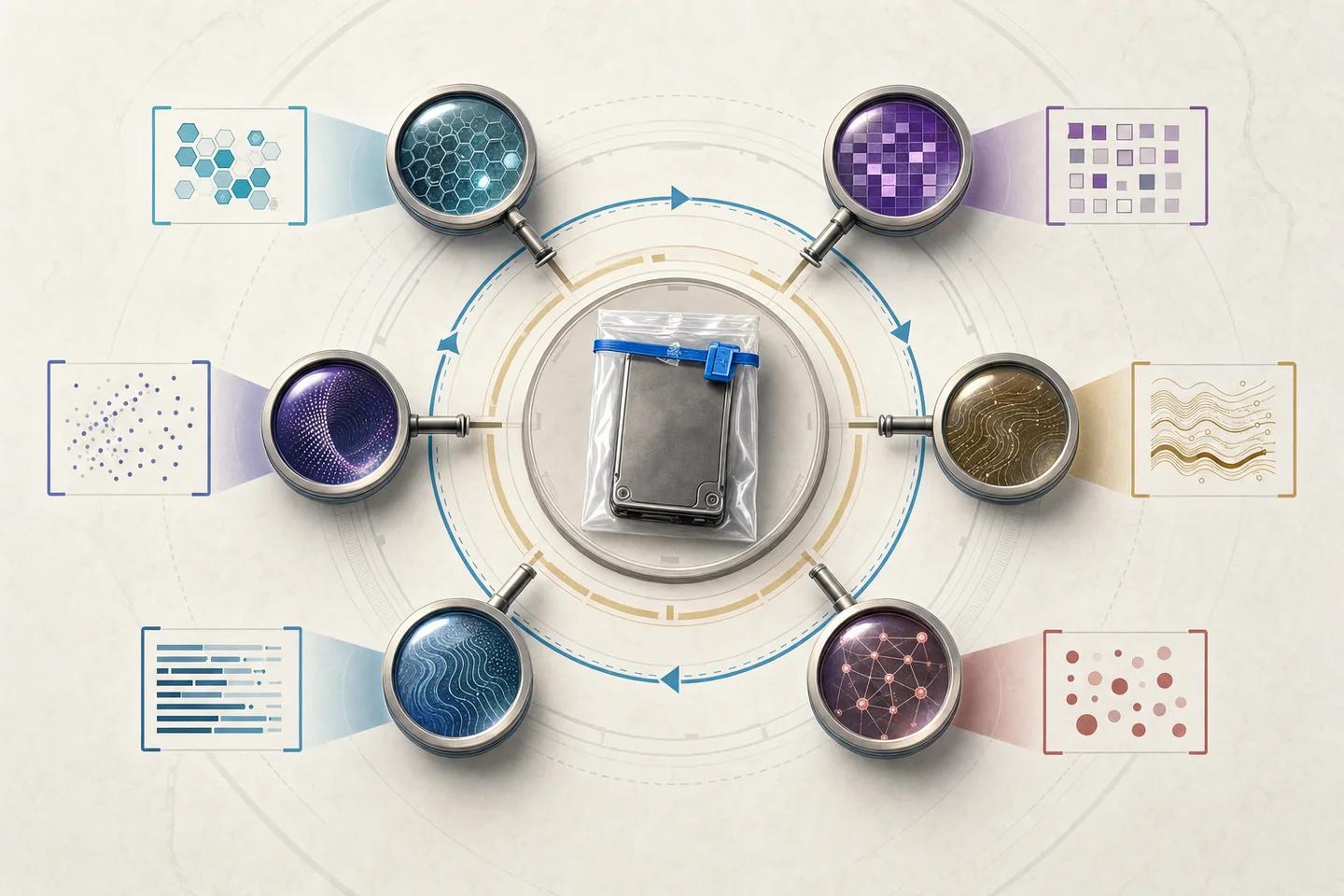
Use several independent checks, because each catches a different kind of fake. Pixel-level manipulation analysis looks for regions whose noise, compression or texture differs from the rest of the image, which is where an inserted dent or stain usually sits. Generative-model analysis looks for statistical traces left by diffusion and GAN generators across the whole frame. Explainability heatmaps then show the adjuster where the suspicious region is, so the finding can be compared with the claimed damage.
Context checks complete the picture. Reverse image search catches stock or recycled photos and images reused from earlier claims. Metadata can show an editing application or a capture date that contradicts the loss date, though missing metadata proves nothing because many apps strip it. Comparing photos within the claim, and against other claims from the same device or address, catches repeated backgrounds and staged scenes.
| Check | Catches | Limits |
|---|---|---|
| Pixel-level manipulation analysis | Inserted or removed damage, spliced regions | Heavy compression weakens signal |
| Generative-model analysis | Fully AI-generated images | New generators need model updates |
| Reverse image search | Stock, recycled or reused photos | Misses newly created fakes |
| Metadata review | Editing software, date inconsistencies | Absent metadata is common and not proof |
| Cross-claim comparison | Same scene or device across claims | Needs a searchable claims history |
How Does Deepfake Detection Fit Insurance and Financial Claims Workflows?
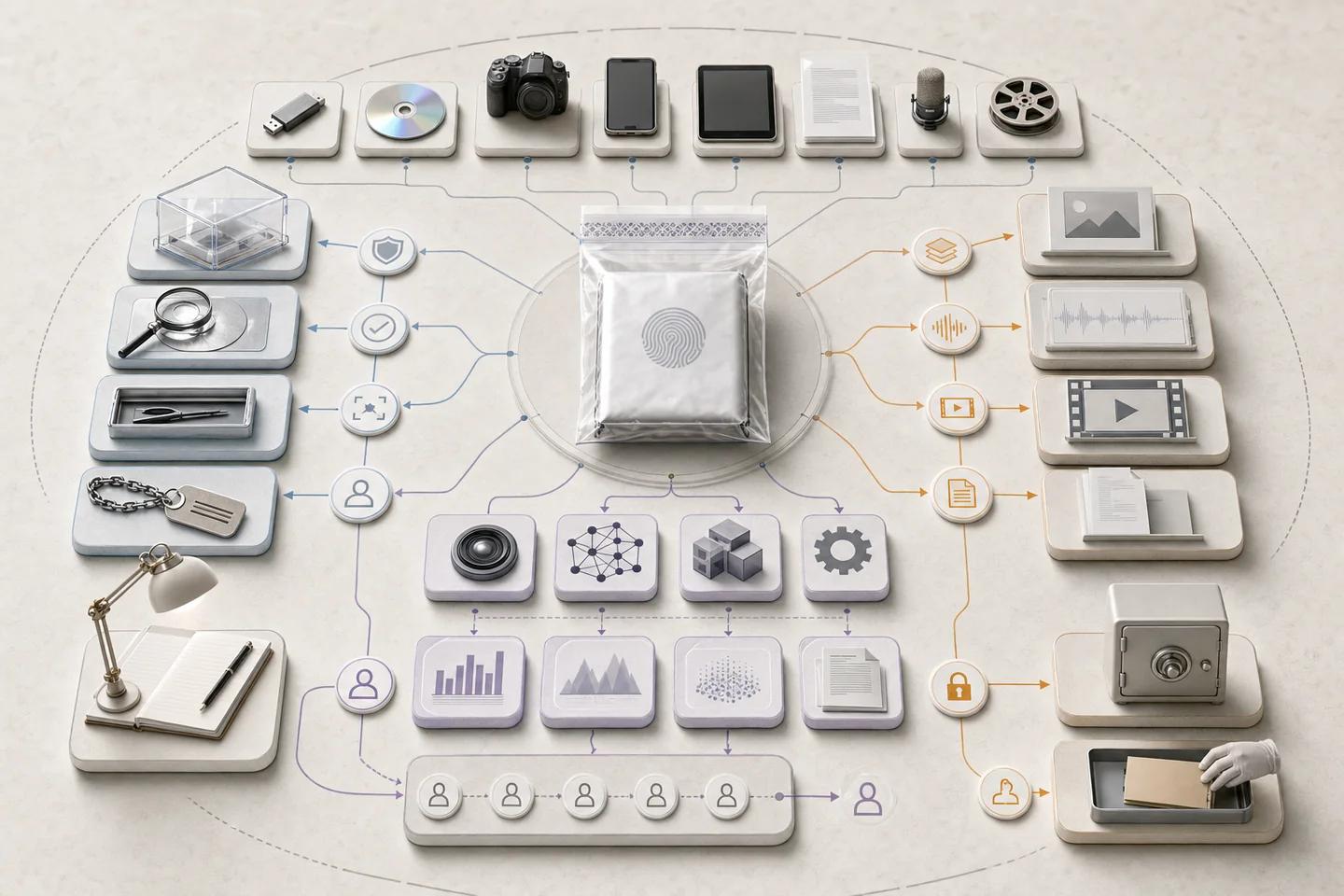
Put an automated screen at first notice of loss and a forensic review behind it. Every uploaded file gets a manipulation score as it arrives. Low-risk claims continue on the straight-through path, medium-risk claims get an adjuster look, and high-risk claims, or claims above a value threshold with any flag, go to the special investigations unit with the evidence attached.
The same pattern applies beyond insurance. Refund claims, card disputes and account recovery requests also arrive with customer-supplied photos, screenshots and documents. Treat the media screen as one feature in the existing fraud score rather than a separate gate, so a moderate media flag on an otherwise normal claim does not delay an honest customer.
- Capture media in the insurer's own app where possible, rather than accepting email attachments.
- Preserve the original file and its hash before any processing.
- Score every image, video and document at intake and store the model version.
- Route by combined risk: media score, claim value, policy age and claim history.
- Give SIU analysts heatmaps and a report they can attach to the file.
Video Inspections, Recorded Statements and Claimant Identity
Remote video inspections and recorded statements replace site visits for many claims, and they carry the same risks as video banking: a pre-recorded walk-through presented as live, a face swap on a recorded statement, or a third party posing as the policyholder. Ask for live, varied actions during the inspection (show the serial number, pan to a named corner of the room) and keep the session inside the insurer's app.
Payout is a second identity moment. Before money goes to a new bank account, confirm that the person claiming is the policyholder, for example with a selfie compared with the onboarding record and screened for manipulation, and treat a late change of payout account as a high-risk event.
Where Neural Defend Fits in Claims Review
NeuroDetect is the investigator's tool. An analyst uploads an authorised claim photo, video, audio file or document into a case; the analysis records model and version; and the views go down to regions, frames and audio segments, with explainability heatmaps over the original. An LLM-assisted plain-language summary links to the evidence, the analyst makes the final call, and the case exports a downloadable forensic report with observations, uncertainty, provenance, model context and analyst notes, plus structured results for the claims system.
For high-volume intake and claimant identity checks, NeuroVerify scores images, video and audio in one API call with six signals, including AI Pixel-Level Manipulation and AI Generative Model Analysis, in under 200 ms at p95 on eligible image requests. Both rest on ARCAS 1B, whose arXiv paper reports pooled accuracy of 99.99% on GenImage and 99.09% on AIGIBench. Neural Defend ranked first of 36 systems on the public VendorBench-100 still-image benchmark, MCC 0.876 against 0.646 for the next vendor; one VendorBench author co-wrote the ARCAS paper, and the corpus is public. Insurers that cannot send claim media outside their environment can deploy on-premises or in a private cloud.
What a Manipulation Finding Does and Does Not Prove
A finding says a file was probably edited or generated. It does not say the claim is fraudulent: claimants brighten dark photos, crop them, or add arrows to show where the damage is, and those edits can raise a score. It also cannot show that genuine, unedited damage was caused by the insured event. Adjusters should read the heatmap against the claimed damage and ask whether the edited region matters to the claim.
Record everything the decision relied on: the original file and hash, scores and model versions, analyst observations, inspection results and the final decision with reasons. NIST's report AI 100-4 (November 2024) surveys detection, provenance and watermarking as complementary approaches, which is a reminder that no single check settles authenticity.
Evidence boundary
Limitations
- A manipulation finding is not a fraud determination; benign edits can raise scores and genuine photos can show damage from a different cause.
- Heavy compression and screenshots weaken the signals detectors rely on.
- VendorBench-100 covers still images only and shares an author with the ARCAS 1B paper; document and video performance should be tested on your own claims.
- The $308.6 billion figure is the Coalition Against Insurance Fraud's estimate; its page does not state the underlying study year.
Source record
Sources and references
- Coalition Against Insurance FraudFraud StatsVerified October 19, 2026.
- Financial Crimes Enforcement NetworkFinCEN Alert on Fraud Schemes Involving Deepfake Media Targeting Financial Institutions (FIN-2024-Alert004)Published November 13, 2024. Verified October 19, 2026.
- FBI Internet Crime Complaint CenterCriminals Use Generative Artificial Intelligence to Facilitate Financial Fraud (PSA I-120324)Published December 3, 2024. Verified October 19, 2026.
- National Institute of Standards and TechnologyReducing Risks Posed by Synthetic Content: An Overview of Technical Approaches to Digital Content Transparency (NIST AI 100-4)Published November 20, 2024. Verified October 19, 2026.
- arXivVendorBench-100: A Unified Cross-Paradigm Benchmark for Deepfake Image DetectionPublished July 7, 2026. Verified October 19, 2026.
- arXivBenchmarking Neural Defend ARCAS 1B: A Foundational Multimodal Deepfake Detection ModelPublished September 21, 2026. Verified October 19, 2026.