
How Can Insurers Detect Deepfakes in Onboarding and Claims?
Insurers detect deepfakes in two lanes. In the onboarding lane, the selfie or video a customer submits to buy a policy or open an online account is scored for face manipulation, generative-model traces and liveness while the customer waits. In the claims lane, each photo, video and document attached to a first notification of loss is checked for AI generation and pixel-level editing before the claim reaches a handler, and anything flagged goes to investigators.
The two lanes need different speeds. Onboarding checks run inline and must return in well under a second so they do not lose sales. Claims checks can run asynchronously, in batch, because a claim takes hours or days to settle and the evidence matters more than the wait. Investigators then need more than a score: they need to see which region of a photo or which frames of a video drove the result, so they can explain a decision to the customer or a court.

How Are Deepfakes Used in Insurance Claims Fraud?
Deepfakes and AI editing tools are used in claims fraud to invent or exaggerate damage, reuse one incident for several claims, and fabricate the documents that support a claim. Most cases so far are edits of real photos rather than fully generated scenes, which the industry calls shallowfakes.
Allianz UK said in an April 2024 release that cases where apps were used to distort real-life images, videos and documents had increased by 300%; a footnote ties the figure to its data on contrived motor accidents. Admiral reported in 2026 that it detected £86.8 million in fraudulent motor, home and travel claims in 2025, up 71% from £50.9 million in 2024. Its claims handlers described an AI filter used to make a designer watch look damaged, a damaged car edited with a different number plate so it could be claimed twice, and damage added to photos of a vehicle and of designer shoes. Admiral also cited Association of British Insurers figures of £1.16 billion in fraudulent general insurance claims detected in 2024.
Voice and video deepfakes appear at the edges of the claims process too. The FBI warned in December 2024 that criminals use cloned voices to impersonate account holders, and the same technique can be used on an insurer's phone line to change a payout bank account or file a claim in someone else's name.
| Claim type | Manipulation | What detection looks for |
|---|---|---|
| Motor damage | Damage added to a photo, number plate swapped to claim the same damage twice | Pixel-level editing traces, inconsistent texture and lighting in the edited region |
| Home and contents | Generated images of damaged property or stolen items | Generative-model signatures across the whole image |
| Travel and personal items | Stock or internet photos of damaged luggage submitted as the claimant's own | Reverse image matches and missing capture metadata, alongside detection |
| Supporting documents | Edited invoices, repair estimates or medical letters | Forensic document review in an investigation workspace |
| Claims by phone | Cloned voice changing payout details | Voice deepfake scoring and callback to a verified number |
Where Do Deepfakes Enter Insurance Onboarding?
At onboarding, deepfakes are used to buy policies under false or borrowed identities and to take over existing policyholder accounts. A synthetic or face-swapped selfie can pass a face match against a doctored ID photo, giving a fraudster a policy they intend to claim on soon after, or an account where they can change the bank details that receive payouts.
The control is the same one banks use: score the selfie or video for manipulation and generation, combine the result with liveness, document and device checks, and keep the evidence. Policy changes that redirect money, such as a new payout account or beneficiary, deserve a fresh capture and check rather than reliance on the original onboarding.

How Should Insurers Build Detection Into Claims Triage?
Insurers should check claim media automatically at upload and give investigators the tools to examine what gets flagged. A workable sequence looks like this:
Keep the threshold for automatic action high. Many genuine photos are cropped, filtered or compressed by phones and messaging apps, and a claimant who sent a filtered picture of real damage has not necessarily committed fraud. Detection should speed up the decision about which claims need a closer look, not deny claims by itself.
- Ask for photos and video through your own app or upload link rather than email, so files arrive with less recompression and their original metadata.
- Score every image and video for AI generation and editing as soon as it arrives, and store the original file unchanged.
- Run reverse image searches on high-value claims to catch internet photos submitted as the claimant's own.
- Send high and uncertain scores to the special investigations unit with the evidence view attached, and fast-track clean, low-value claims.
- Record the score, model version and investigator decision with the claim so outcomes can be explained and thresholds tuned.
Can Deepfake Detection Stop All Insurance Fraud?
No. Detection finds media that has been generated or edited. It cannot see a staged accident photographed honestly, real damage from an earlier incident, or a genuine photo of someone else's loss. Those still need claims history, cross-insurer data, inspections and investigator judgment.
NIST's November 2024 report on synthetic content, AI 100-4, notes that detectors often perform best on content from the generators they were trained on, and that evaluations should include benign distortions such as compression and resizing. Insurers should plan for false positives on heavily processed phone images and for new editing tools that detectors have not yet seen.
How Neural Defend Helps Insurers
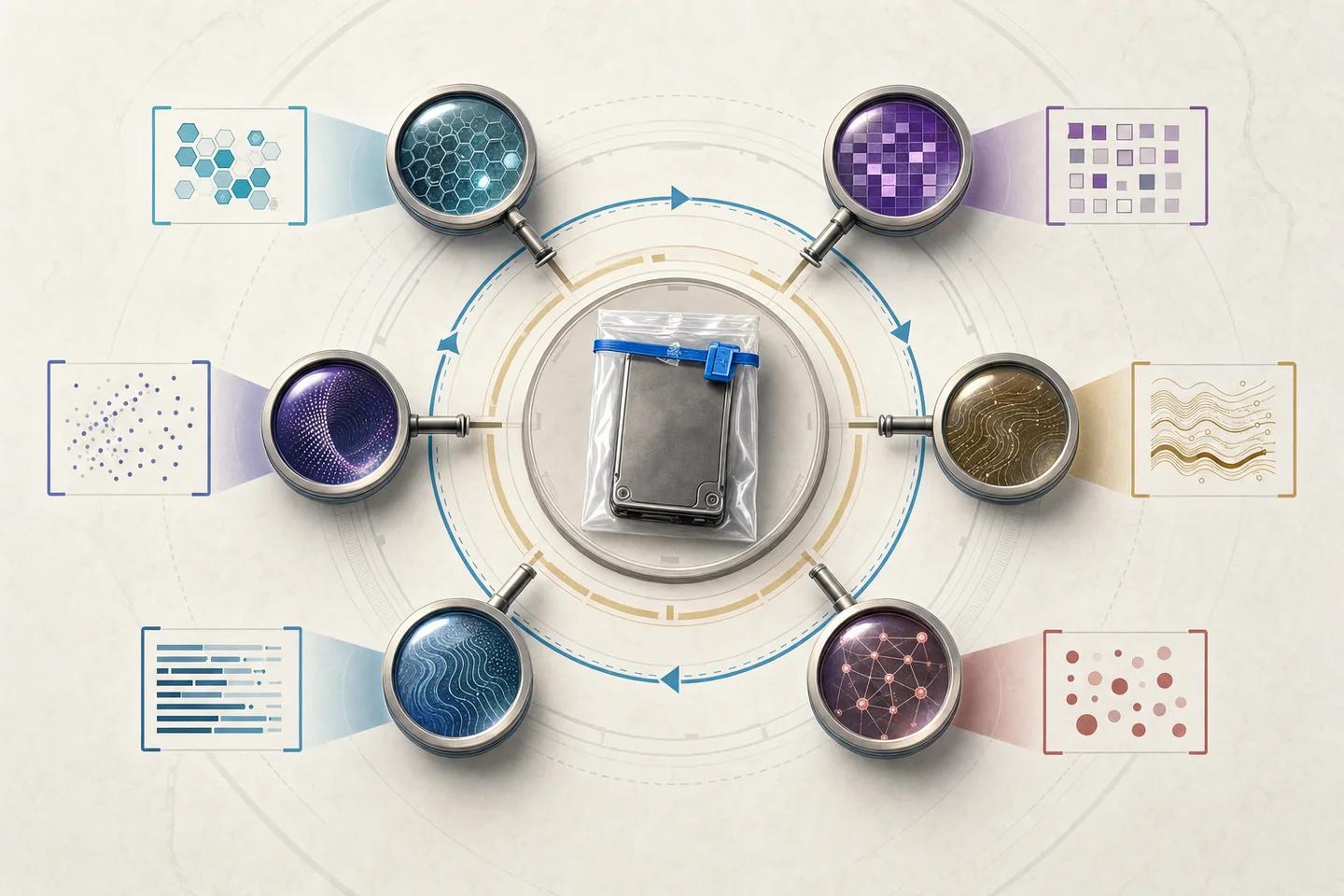
Neural Defend's NeuroVerify checks a face image, video or audio clip in one API call and returns one risk score with evidence from six signals, including face manipulation detection, AI generative model analysis, AI pixel-level manipulation and live presence verification. Eligible image requests return in under 200 ms at p95 under defined test conditions, so it fits inline at online policy purchase and account changes. It does not analyse ID documents.
For claims investigation, NeuroDetect gives the special investigations unit a forensic workspace. Investigators upload an authorised image, video, audio file or document into a case and see the original beside explainability heatmaps down to regions, frames and audio segments, with model and version recorded. An LLM-assisted summary links each statement to the evidence, the analyst makes the final call, and the case exports as a forensic report with observations, uncertainty and provenance.
On the public VendorBench-100 benchmark of 100 adversarial still images, Neural Defend ranked first of 36 systems with an MCC of 0.876 against 0.646 for the next vendor; the benchmark includes AI photo edits and covers still images only, and one author also co-wrote Neural Defend's ARCAS 1B paper. Deployment options run from managed cloud to on-premises and air-gapped, and Neural Defend holds ISO/IEC 27001, ISO/IEC 27701, ISO/IEC 42001 and SOC 2 Type II.
Evidence boundary
Limitations
- The Allianz 300% figure is footnoted to motor claims data and the Admiral figures cover all detected fraud, not only AI-manipulated claims.
- Detection does not prove that a loss happened or that an unedited photo shows the claimant's own property.
- VendorBench-100 covers 100 still images only and one author also co-wrote the ARCAS 1B paper; document and video performance must be tested on your own claims.
- NeuroVerify does not analyse ID documents, and NeuroCall is in Beta.
Source record
Sources and references
- Allianz UK (via Business Wire, republished by Silicon UK)Allianz prevents 29% more fraud and announces partnership with ClearspeedPublished April 23, 2024. Verified October 19, 2026.
- AdmiralThe white lie effect: 1 in 8 admit exaggerating insurance claims as untruths and AI riseVerified October 19, 2026.
- FBI Internet Crime Complaint CenterCriminals Use Generative Artificial Intelligence to Facilitate Financial Fraud (I-120324-PSA)Published December 3, 2024. Verified October 19, 2026.
- National Institute of Standards and TechnologyNIST AI 100-4: Reducing Risks Posed by Synthetic ContentPublished November 20, 2024. Verified October 19, 2026.
- arXivVendorBench-100: A Unified Cross-Paradigm Benchmark for Deepfake Image Detection (v2)Published July 29, 2026. Verified October 19, 2026.