
Where Does Fake Media Enter Chargebacks and Transfer Disputes?
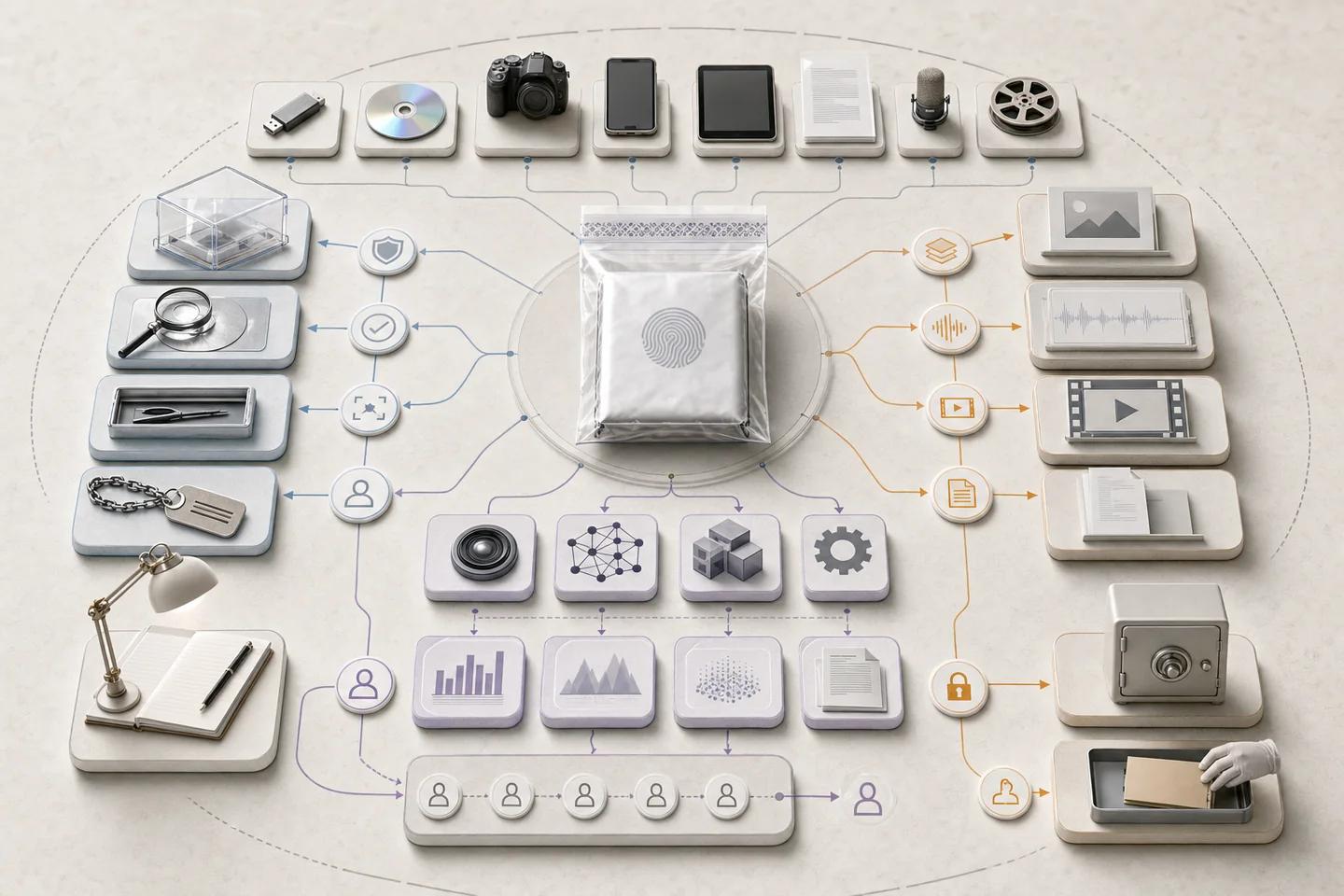
Disputes are decided on documents, and most of them are now digital files supplied by the parties. A cardholder claiming an item arrived broken sends a photo; a merchant defending a chargeback sends a delivery photo, a signed receipt or a screenshot of a chat; a customer disputing a transfer sends screenshots of a scam conversation. Each of those files can be edited or generated in minutes with consumer tools.
Fraud rings use disputes deliberately. FinCEN's alert FIN-2024-Alert004 (13 November 2024) describes accounts opened with GenAI-altered identity documents and lists, among its red flags, a newly opened account with little history that shows high volumes of chargebacks or rejected payments. In those schemes the dispute is a cash-out step, and the evidence submitted can be as synthetic as the identity behind the account.
| Evidence | Submitted by | How it is faked | Cross-check |
|---|---|---|---|
| Photo of damaged or wrong item | Cardholder | AI edit adds damage or swaps the item | Order details, earlier photos, manipulation screen |
| Delivery photo or proof of delivery | Merchant | Recycled or edited photo | Carrier tracking data, image reuse search |
| Chat or email screenshot | Either party | Edited or fully fabricated screenshot | Platform records, message metadata |
| Receipt or invoice | Either party | Generated or altered document | Merchant system records, document forensics |
| Selfie or step-up video at purchase | Issuer records | Face swap or injected video at authentication | Authentication logs, deepfake screen of the stored capture |
Unauthorized Transfer Disputes Under Regulation E
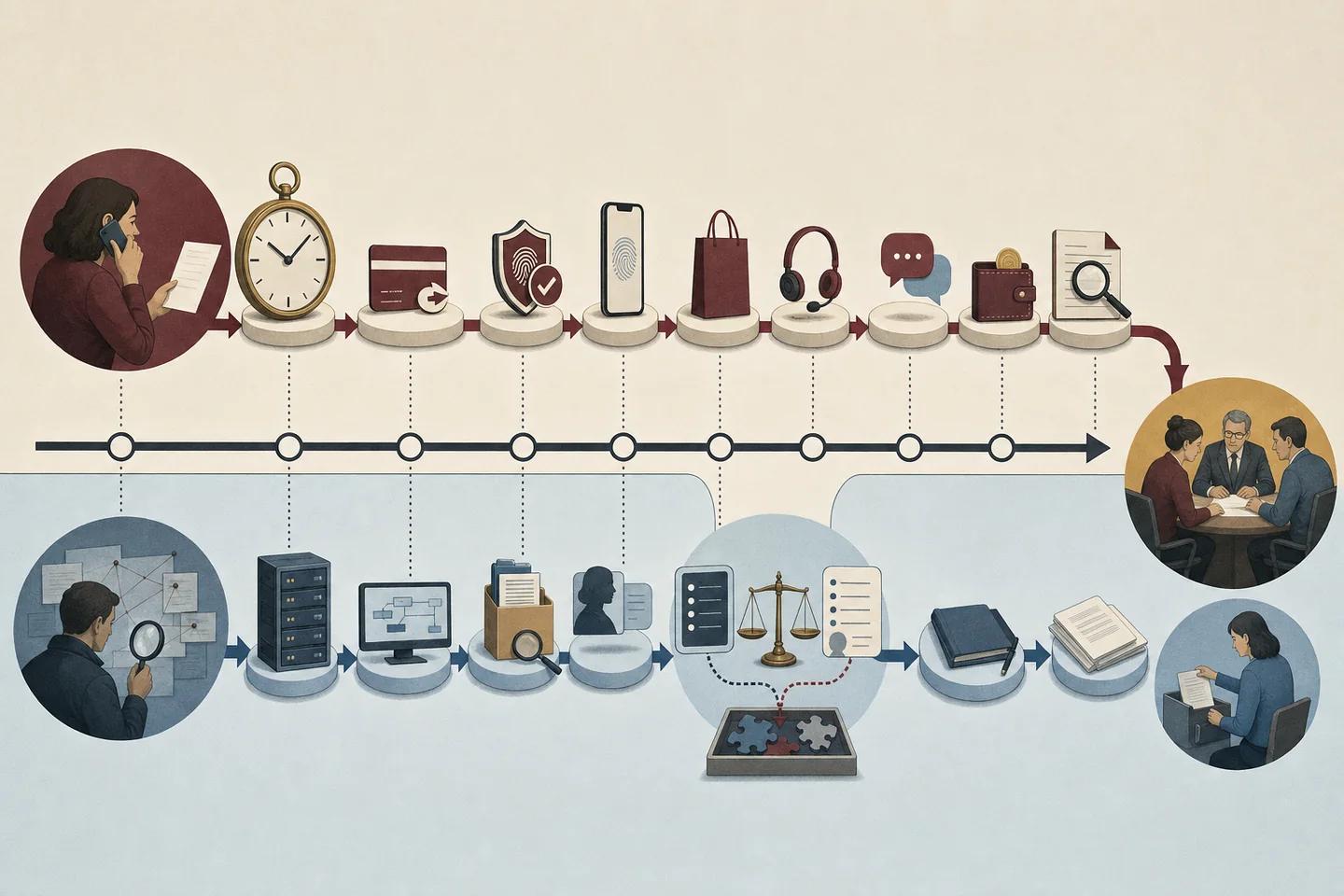
For consumer electronic fund transfers in the US, Regulation E, 12 CFR 1005.11, sets the clock. The institution must act on a notice of error received within 60 days of sending the statement that shows it, decide within 10 business days whether an error occurred, and report results within three business days of finishing. If it needs longer, it may take up to 45 days, but only if it provisionally credits the account within the 10 business days. The 45 days become 90 for transfers not initiated within a state, point-of-sale debit card transactions, and transfers within 30 days of the account's first deposit, where the 10 business days also become 20.
Deadlines leave little room for slow forensic work, so media review has to be built into the timeline. Screen submitted files when the claim is opened, and reserve deeper review for claims where the media could change the outcome. A suspected deepfake does not pause the regulatory clock.
Card Disputes and Visa Compelling Evidence 3.0
Card schemes set their own rules. For card-absent fraud disputes under Visa dispute condition 10.4, Compelling Evidence 3.0 took effect on 15 April 2023. Visa's merchant readiness document says a merchant can establish a historical footprint by sharing two prior transactions from the same merchant that are 120 to 365 days old, have no active fraud report or dispute, and match the disputed transaction on at least two of four data elements (user ID, IP address, shipping address, device ID or fingerprint), one of which must be the IP address or device ID.
That data-based approach is harder to fake than a photo, which is the point. Where media still matters, such as photos of goods or delivery, treat it as one strand of evidence and test it against data the other party cannot easily edit.
A Chargeback Evidence and Deepfake Review Routine
Keep the dispute decision and the fraud investigation in separate lanes that share evidence. The dispute lane meets the regulatory or scheme deadline on the information available; the fraud lane looks at patterns across accounts and can take longer.
When a submitted file is flagged, write down what the finding shows and its uncertainty, and what other evidence supports or contradicts it. A heatmap showing an edited region on a damage photo carries more weight when the order record shows a different item was shipped.
- Log the claim, start the clock and record the applicable timeline.
- Preserve every submitted file in its original form with a hash.
- Screen images, screenshots and documents for manipulation at intake.
- Compare media with transaction, device, authentication and delivery records.
- Route flagged files that could change the outcome to forensic review.
- Record the decision, the evidence relied on and any media findings with model versions.
Where Neural Defend Fits in Dispute Evidence Review
NeuroVerify returns a unified risk score with signal-level evidence on images, video or audio in one API call, using six signals including AI Pixel-Level Manipulation and AI Generative Model Analysis. Eligible image requests complete in under 200 ms at p95 under defined test conditions, so every file can be screened at claim intake without slowing the queue. It can also re-check a stored step-up selfie when a cardholder claims they never authorised a transaction.
For contested files, NeuroDetect takes the authorised image, document, audio or video into a case with explainability heatmaps down to regions and frames, an LLM-assisted summary linked to the evidence, and a downloadable forensic report recording observations, uncertainty and model context. The analyst makes the final call. Neural Defend ranked first of 36 systems on the public VendorBench-100 still-image benchmark (MCC 0.876 against 0.646); one VendorBench author co-wrote Neural Defend's ARCAS 1B paper, and the benchmark does not test documents or screenshots.
Limits of Media Review in Disputes
Media screening can show that a file was probably edited. It cannot show who edited it, whether the edit was meant to deceive, or whether the underlying claim is true. Customers crop and annotate photos innocently, and merchants compress images for upload. Decisions should rest on the whole record, with media findings described as observations rather than conclusions, and customers given a fair chance to explain.
The opposite failure matters too. Visa describes Compelling Evidence 3.0 as part of its work on friendly fraud, or first-party misuse, where the genuine cardholder disputes a purchase they made. Media screening rarely helps there, because the cardholder's claim is usually a statement rather than a file; device and purchase history carry those cases. Use media review where files are actually doing the persuading.
Evidence boundary
Limitations
- Media findings indicate possible manipulation; they do not establish who altered a file or whether a dispute is valid.
- Regulatory and scheme deadlines continue to run while media is reviewed; forensic review must fit the timeline.
- VendorBench-100 covers still images only, not screenshots or documents, and shares an author with the ARCAS 1B paper.
- Card scheme rules change frequently; confirm current requirements with your acquirer or scheme documentation. This page is not legal advice.
Source record
Sources and references
- Consumer Financial Protection BureauRegulation E, 12 CFR 1005.11: Procedures for resolving errorsVerified October 19, 2026.
- VisaCompelling Evidence 3.0 Merchant ReadinessVerified October 19, 2026.
- Financial Crimes Enforcement NetworkFinCEN Alert on Fraud Schemes Involving Deepfake Media Targeting Financial Institutions (FIN-2024-Alert004)Published November 13, 2024. Verified October 19, 2026.
- National Institute of Standards and TechnologyReducing Risks Posed by Synthetic Content: An Overview of Technical Approaches to Digital Content Transparency (NIST AI 100-4)Published November 20, 2024. Verified October 19, 2026.
- arXivVendorBench-100: A Unified Cross-Paradigm Benchmark for Deepfake Image DetectionPublished July 7, 2026. Verified October 19, 2026.