
Neural Defend

Fintech and payments / NeuroVerify

Deepfake Detection API for Fintech and Payment Companies

For wallets, neobanks, BNPL, remittance and payment providers that onboard users in minutes. NeuroVerify checks the onboarding selfie or video for deepfakes and manipulation beyond liveness, so mule and synthetic accounts are caught before they move money.

It fits the selfie step your onboarding already runs: one API call, no extra step for the customer, one unified risk score with signal-level evidence.

NeuroVerify does not replace your KYC, sanctions, transaction monitoring or credit decisions. It adds authenticity evidence for face, video and audio; your risk policy decides.

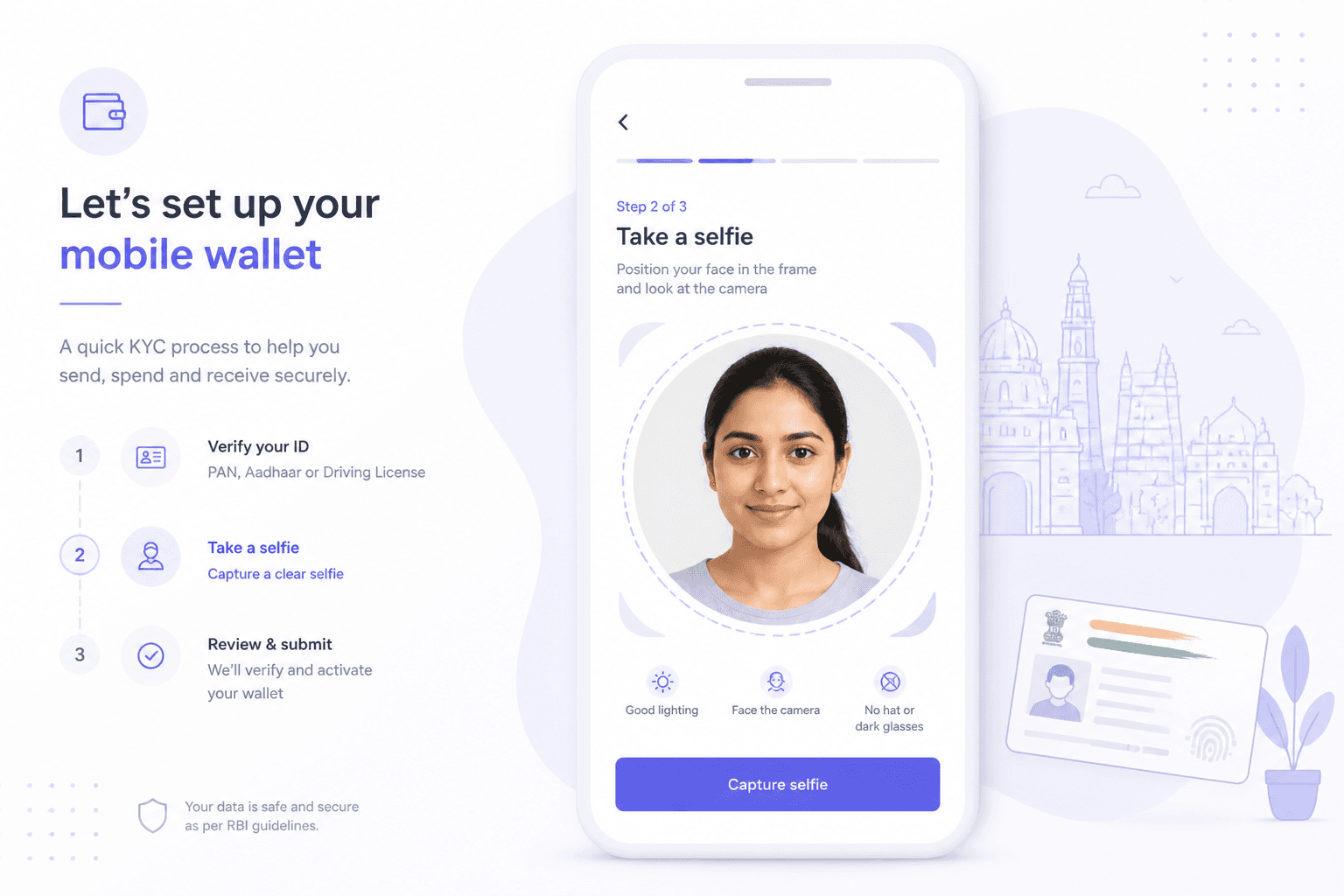
Light editorial illustration of a mobile wallet onboarding screen with a selfie capture step on a light background.
AI-generated conceptual editorial illustration on a light background; not product UI or forensic evidence.
Powered byNeuroVerifyExplore the product
  • #1 of 36on the public VendorBench-100
  • <200 msp95 on eligible image requests
  • 6 → 1six checks, one unified score
  • 0new steps for your customer

The gap

Fast onboarding is exactly what attackers want.

Fintech growth depends on short onboarding: a few taps, a selfie and an account. That speed is the product, and it is also the attack surface. Every extra manual check costs conversion, so the selfie and liveness step carries a lot of weight.

The accounts that matter most to fraudsters are cheap to open and fast to monetise: mule accounts for moving stolen funds, wallets for cash-out, and synthetic identities built to receive credit. A convincing generated or swapped face is now a low-cost tool for opening them at scale.

Where liveness and face match stop

Liveness confirms a prompt was followed. Face match compares the selfie with a document photo. Neither tells you whether the face was generated, swapped or injected through a virtual camera. A synthetic face can match a synthetic document photo and pass both. See deepfake detection vs liveness detection.

Instant fintech onboarding

App download → Phone and email verified → Document or registry check → Selfie and liveness → Account and wallet opened → First funding or transfer

Fraud often shows up only after the first transfer. NeuroVerify moves the authenticity check to the selfie step.

Threats

How deepfakes reach fintech accounts

These are attack techniques, not statements about any specific company.

02

Synthetic identities built for credit limits

A fabricated identity with an AI-generated face is aged, then used to get BNPL or credit lines that are never repaid.

03

Camera injection through emulators

Scripts and virtual cameras feed prepared video into the app, so the selfie never comes from a real lens.

04

Account takeover through face re-verification

A deepfake of the real customer defeats a selfie re-check used for device change, limit increase or recovery.

05

Merchant and agent onboarding with fake principals

A fake owner or beneficial owner appears on video during merchant onboarding to open a collection account.

06

Remittance fraud with impersonated customers

An attacker passes verification as an existing sender, then redirects transfers to accounts they control.

Authorities have flagged deepfakes in financial fraud; see the FinCEN deepfake fraud alert. The pattern applies in any market, from card programmes to instant-payment networks.

For design guidance, see digital wallet enrollment and recovery and merchant onboarding control review.

Where NeuroVerify fits

Where NeuroVerify sits in fintech onboarding

NeuroVerify sits at the selfie and video step, before an account or wallet is opened. Your app sends the media it already collects. NeuroVerify runs six signals in one request and returns a unified risk score with signal-level evidence.

Your risk engine combines that score with device, behaviour and document signals. You choose what happens next. Nothing in your KYC stack is replaced.

NeuroVerify Unified Trust LayerSix parallel analysis layers
  • Visual Safety Screening
  • Live Presence Verification
  • Face Manipulation Detection
  • AI Generative Model Analysis
  • AI Pixel-Level Manipulation
  • AI Content Compliance
01

Send the onboarding selfie

Post the selfie or video from your app to NeuroVerify with the native SDK or REST.

02

Read the unified risk score

Get one score and evidence from each of the six signals.

03

Feed your risk engine

Combine the score with device and behaviour signals. Approve, step up, route to review or decline.

04

Re-use it at high-risk moments

Call the same API for device change, limit increases and account recovery.

What you get

What fintech teams gain

Fewer mule and synthetic accounts

Stop fabricated faces at account opening, before funds move.

Conversion stays high

Customers take the same selfie. The check runs behind it with no added step.

One signal, many journeys

Use the same API at onboarding, recovery and step-up for sensitive actions.

Faster review

Signal-level evidence lets analysts triage flagged cases quickly.

Quick to ship

Native mobile SDKs and backend SDKs. Live in under 24 hours is the target.

Questions

What teams ask before they integrate.

Does this add friction to our onboarding?

No. NeuroVerify fits the selfie or video step your journey already runs. You send the media you already capture in one API call. There is no new step for the end user.

Integration uses native mobile SDKs (Android/Kotlin, iOS/Swift, Flutter), backend SDKs (Python, TypeScript/Node.js, Go, Java) or REST. Two lines of code is the product claim; live in under 24 hours is the target. Native Android, iOS and Flutter SDKs keep the capture experience as it is.

We use a liveness vendor already. Why add this?

Not as a replacement. Liveness asks whether a live person was in front of the camera. NeuroVerify asks whether the media itself is authentic, and it includes a Live Presence Verification signal alongside five others, so it checks beyond liveness. See deepfake detection vs liveness detection.

You can keep your current liveness vendor and send the same selfie or video to NeuroVerify as well. Liveness vendors typically focus on presentation attacks. NeuroVerify adds checks for generated and manipulated media.

Can we use it beyond onboarding?

Yes. Many fintech teams use the same API at account recovery, device change, limit increase and high-value payment authorisation. See deepfake detection for fintech.

Does it check ID documents?

No. NeuroVerify checks face images, video and audio. Document verification stays with your current provider; NeuroVerify protects the selfie and video evidence next to it.

Is it fast enough for instant onboarding?

NeuroVerify returns in under 200 ms p95 on eligible image requests under defined test conditions. The test methodology is available on request, so you can compare it with your own traffic and network path.

Image checks run inside the capture step, so the end user does not see a separate wait. Video and audio take longer because they carry more media; ask us for numbers that match your clip lengths.

Can we run it in our own cloud account?

NeuroVerify runs as a managed cloud API, in a private cloud or your own VPC, as a secure container, on-premises, or air-gapped. The right option depends on your data-residency and security rules.

The same six signals and the same unified risk score are available in each model. Neural Defend holds ISO/IEC 27001, ISO/IEC 27701, ISO/IEC 42001 and SOC 2 Type II; see the Trust Center for details.

How do we tune false positives for growth targets?

NeuroVerify returns one unified risk score plus signal-level evidence, so a reviewer can see which of the six signals raised concern. It does not make the final decision. Your own policy decides whether to approve, step up, route to manual review or decline.

Because thresholds are yours, you can tune them to your own tolerance for false positives and false negatives. See deepfake detection errors.

Can we run a proof of concept on our fraud cases?

Yes. We recommend evaluating on your own media: your real capture conditions, devices and attack samples. Start with a small test set, compare the unified score and signal evidence against your current checks, then set thresholds with your own policy team.

NeuroVerify ranked #1 of 36 systems on VendorBench-100 (detection score MCC 0.876 versus 0.646 for the next-best vendor), but a public benchmark is a starting point. Your own media is the real test. Contact us to set one up.

Evaluate NeuroVerify

Run NeuroVerify on your onboarding selfies

Send selfies and video from real onboarding and from known fraud cases. See how the unified score separates them before you change a single flow.