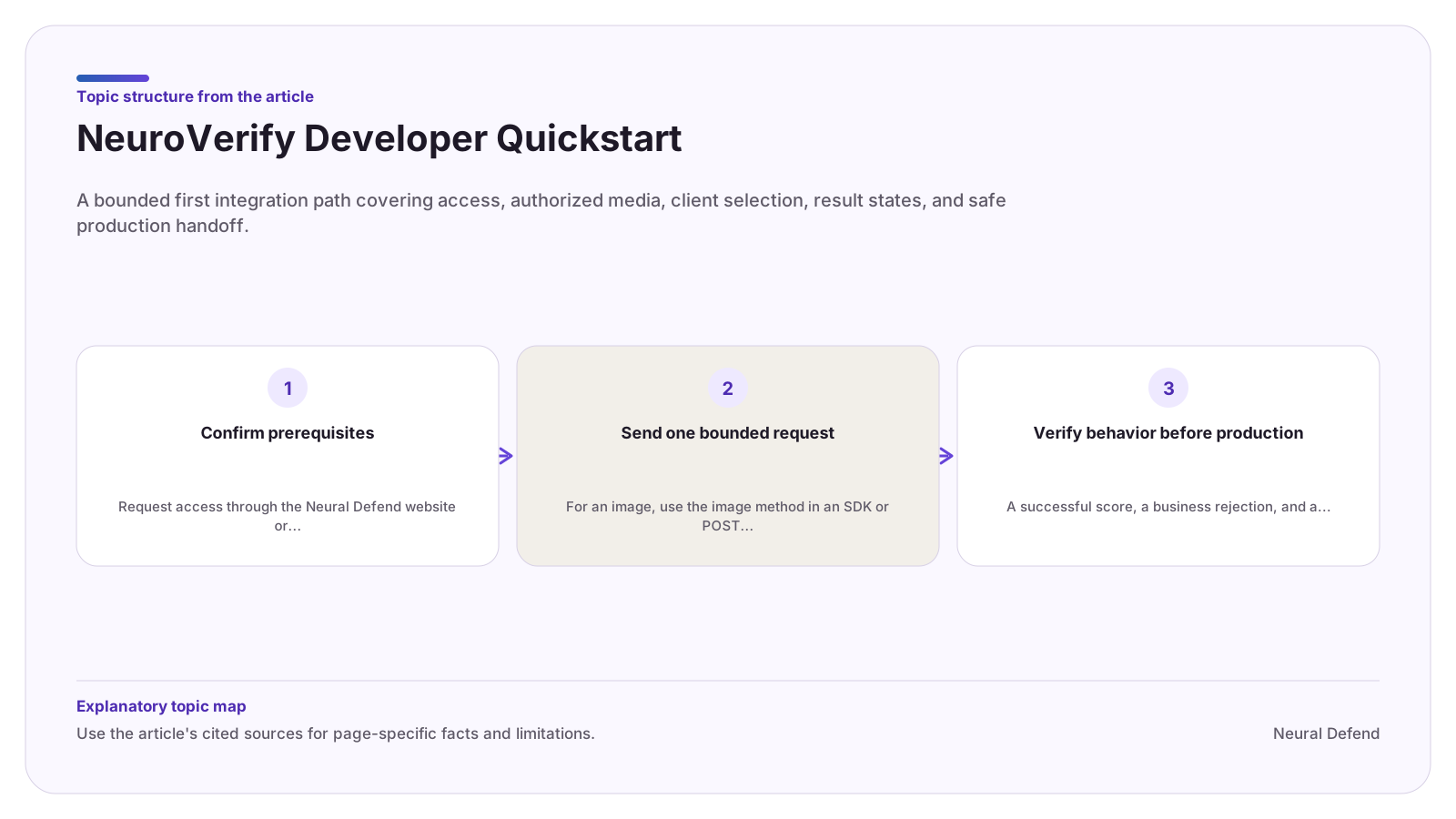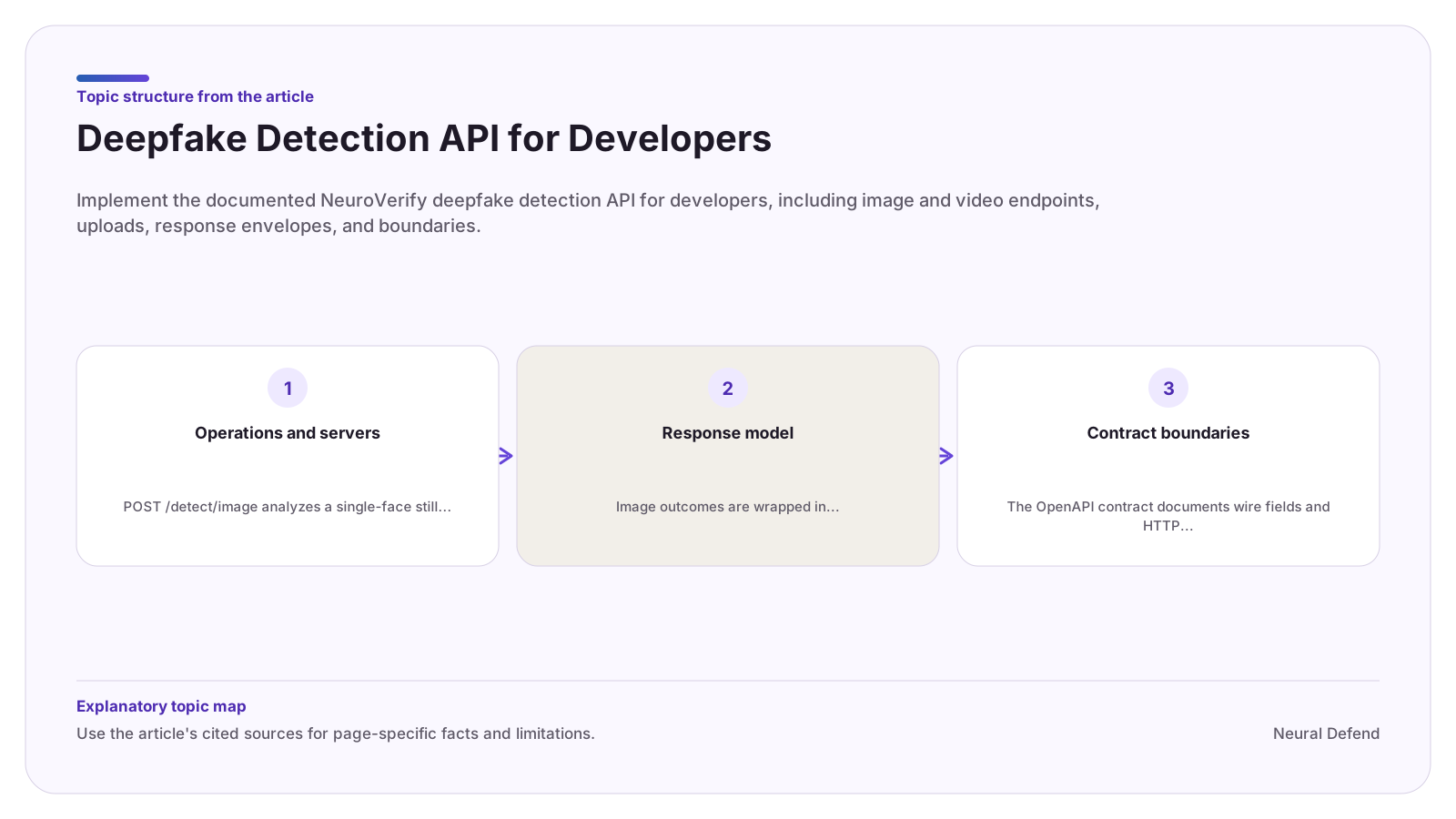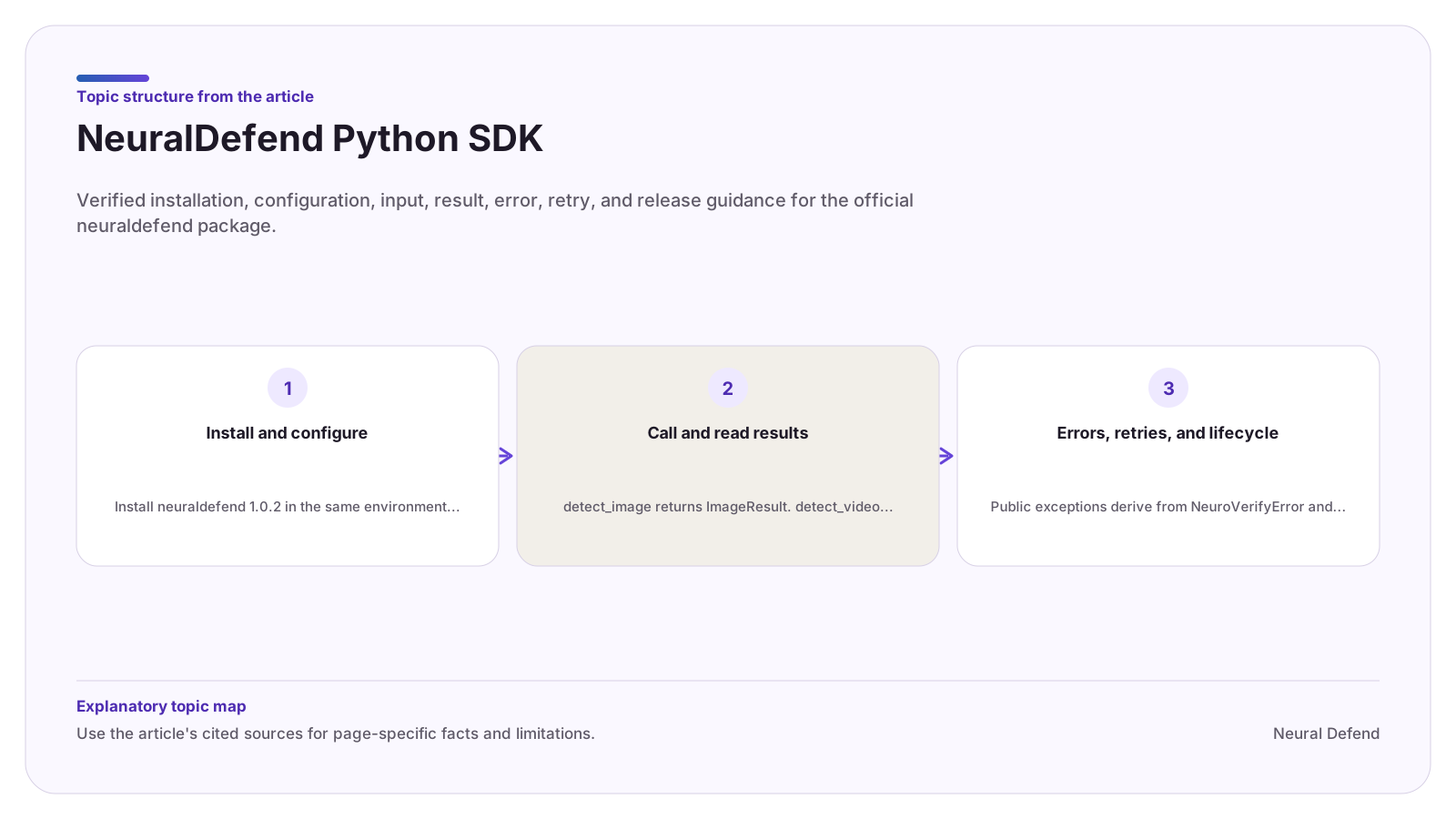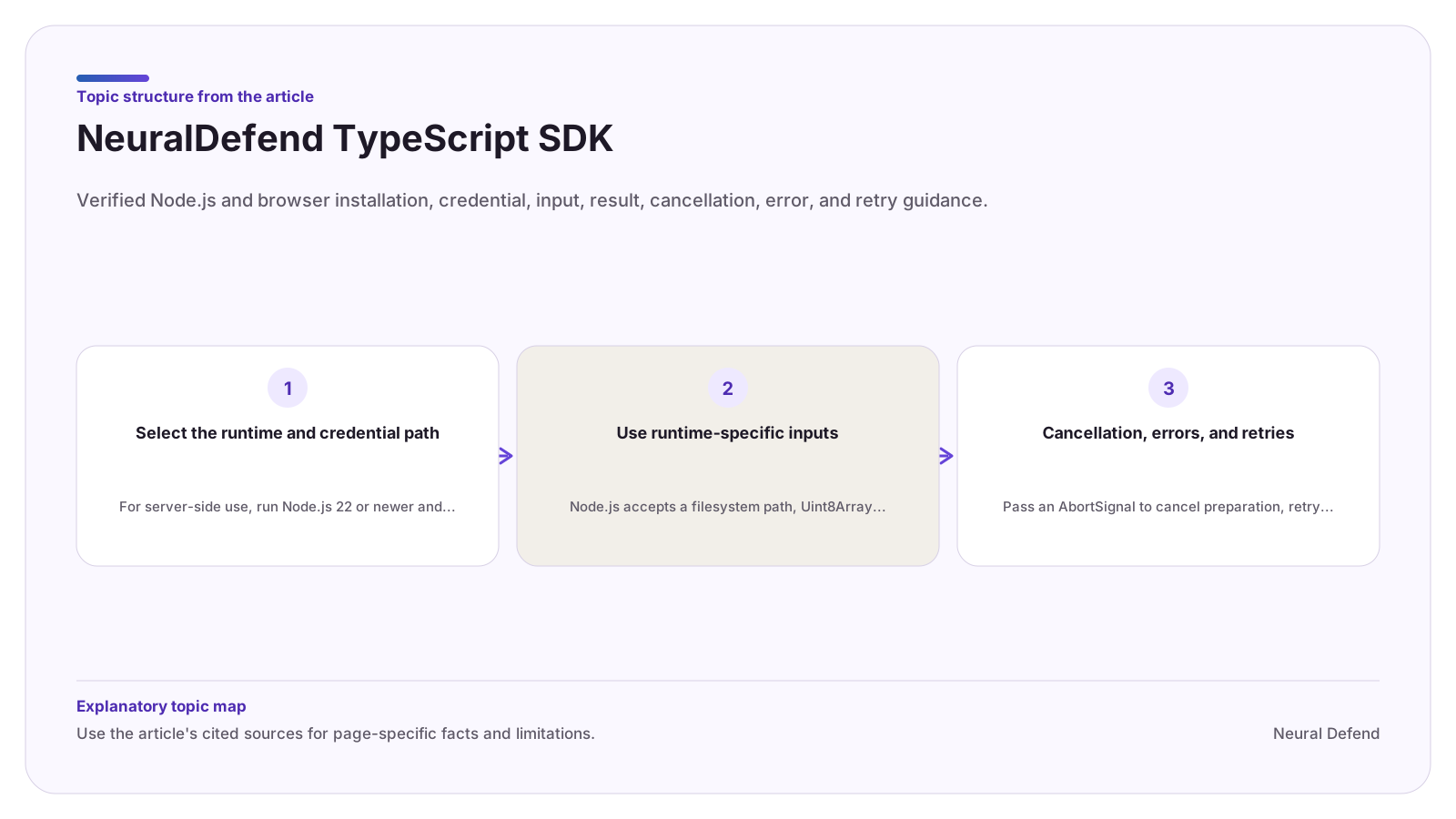
Choose the integration that fits the caller
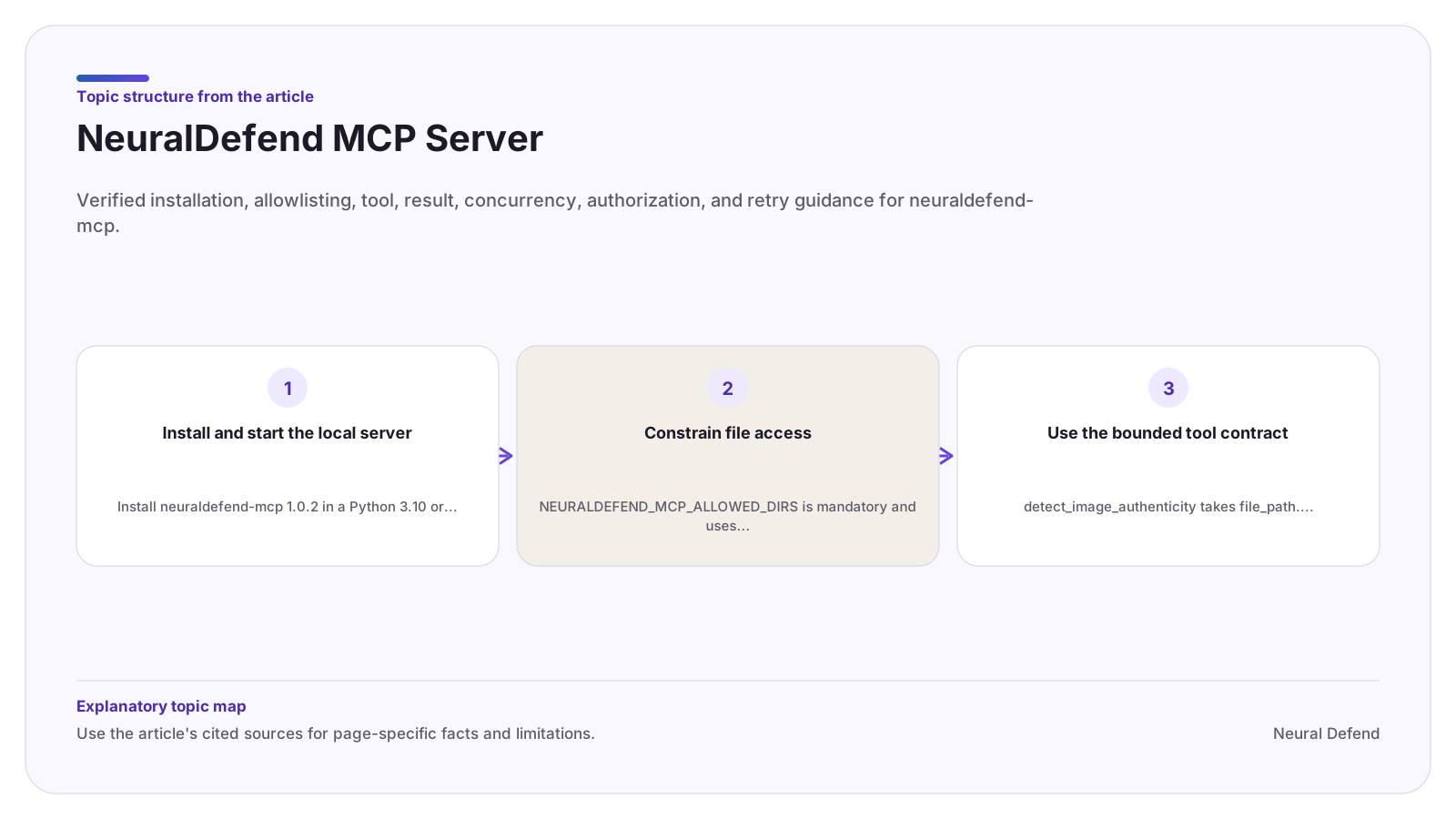
Use the Python or TypeScript SDK for application code that benefits from local validation, normalized results, and bounded retry behavior. Use the wire API when your team needs direct control of multipart requests and response envelopes. Use the MCP server when an MCP-compatible agent needs controlled access to authorized files on a local filesystem.
The published media-authenticity agent skill adds an authorization and interpretation workflow around the MCP tools. It is a distribution artifact, not an API client by itself, and must be installed separately from the MCP package.
- Python SDK: neuraldefend 1.0.2, for Python 3.9 or newer.
- TypeScript SDK: @neuraldefend/sdk 1.0.3, for Node.js 22 or newer and current evergreen browsers.
- MCP server: neuraldefend-mcp 1.0.2, for Python 3.10 or newer.
- Wire API: POST /detect/image and POST /detect/video.
Design the decision before the upload
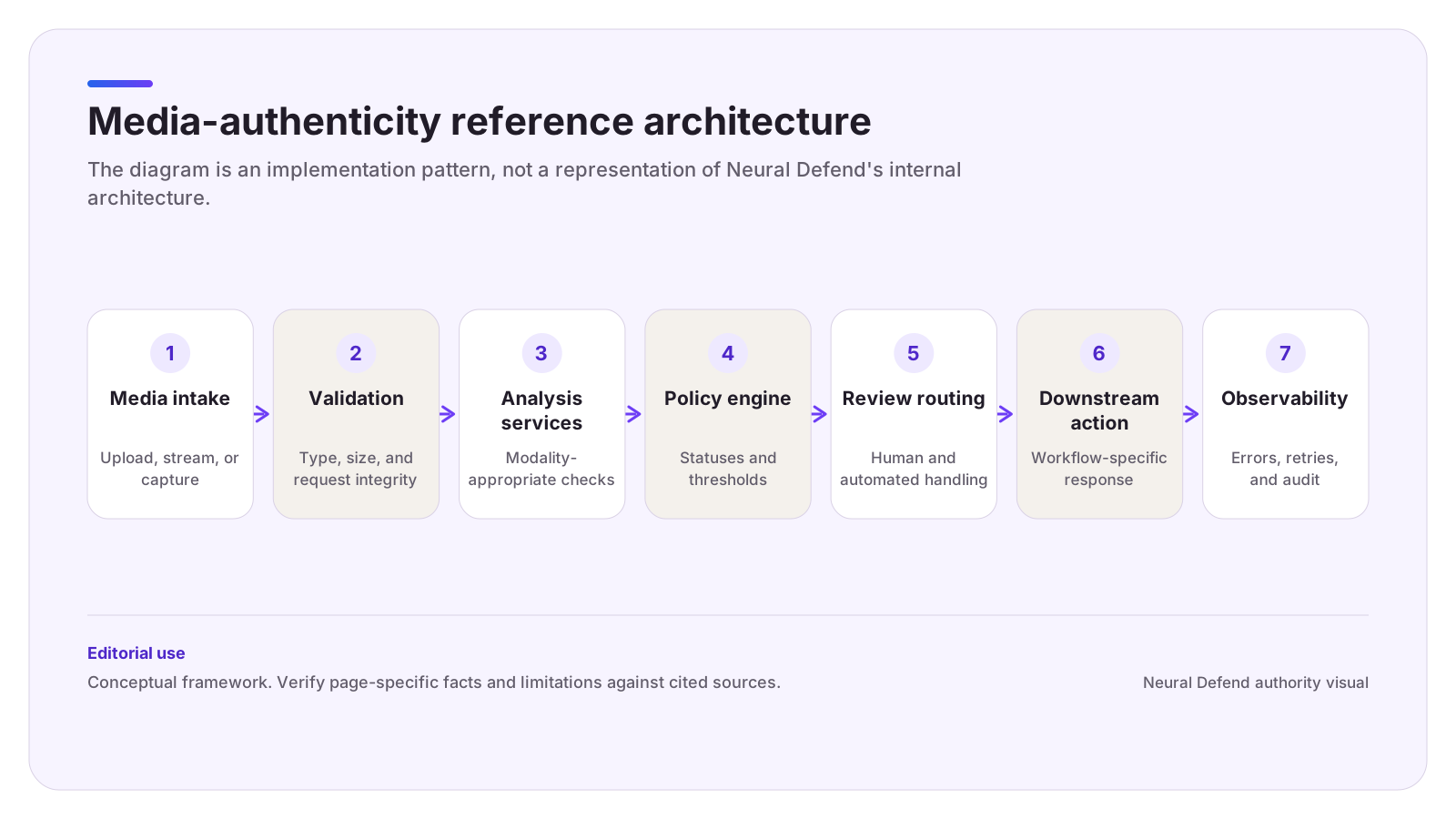
Decide what happens for success, rejection, service error, timeout, and an unknown future result before sending production media. Branch on the documented status field, not on HTTP 200 alone. Some face-policy rejections use HTTP 200 and can be billable even though no risk score is returned.
Keep the transaction identifier for audit correlation. Avoid logging API keys, media bytes, local paths, filenames, raw diagnostic payloads, or response headers unless an approved support process requires sanitized data.
Get access and verify the contract
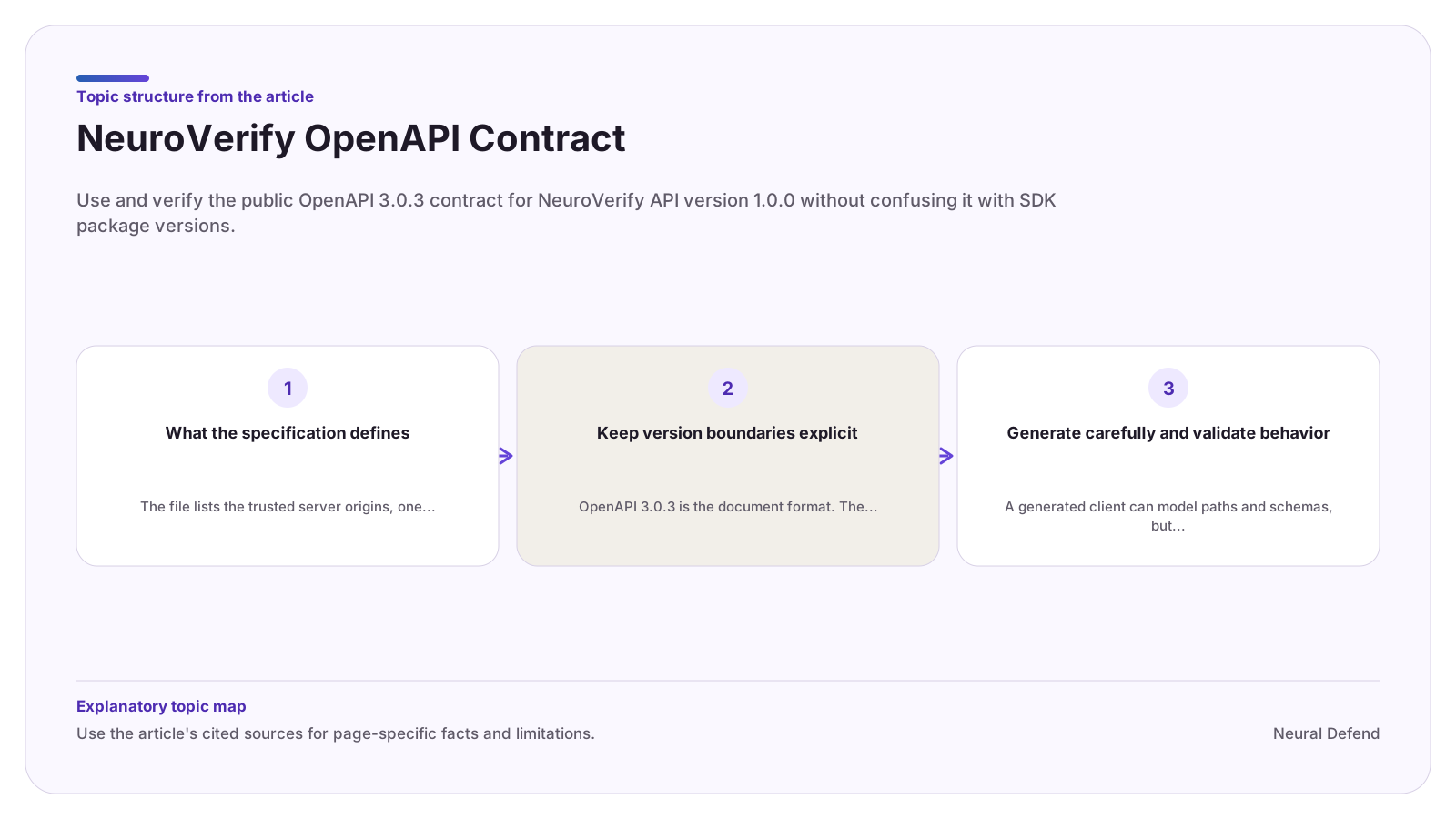
NeuroVerify API keys are issued by Neural Defend after customer onboarding. Existing customers can contact support for staging keys or endpoint scope questions. Store the key in a secret manager or server-side environment and select the credential for the intended production or staging origin.
Before implementation, compare this hub with the current OpenAPI contract, SDK package guide, and registry release. Those sources are the authority for endpoints, fields, runtime requirements, and package versions.
Evidence boundary
Limitations
- This hub does not grant API access or define tenant-specific rate limits, commercial terms, retention terms, residency, or support response times.
Source record