Image inputs
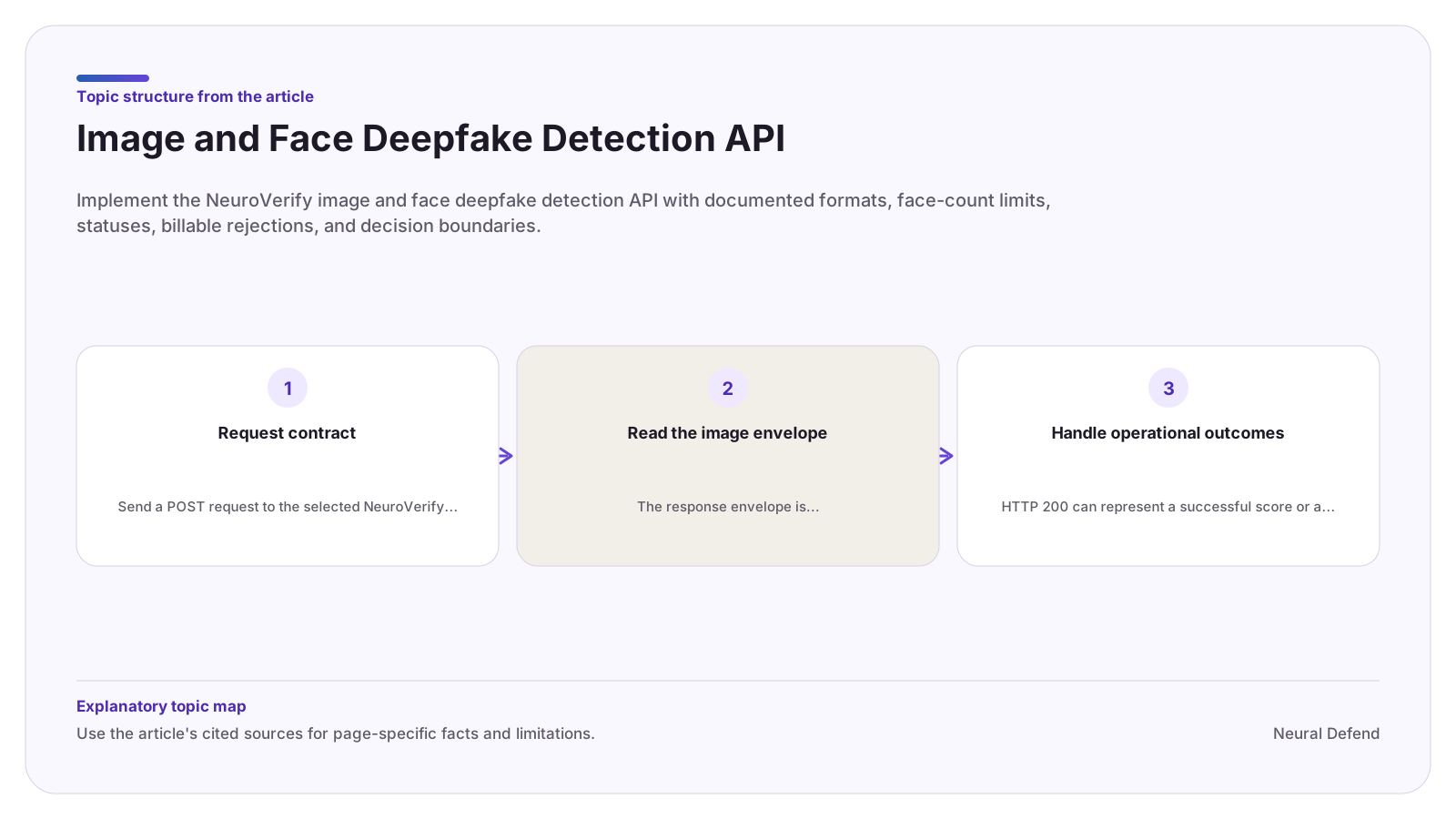
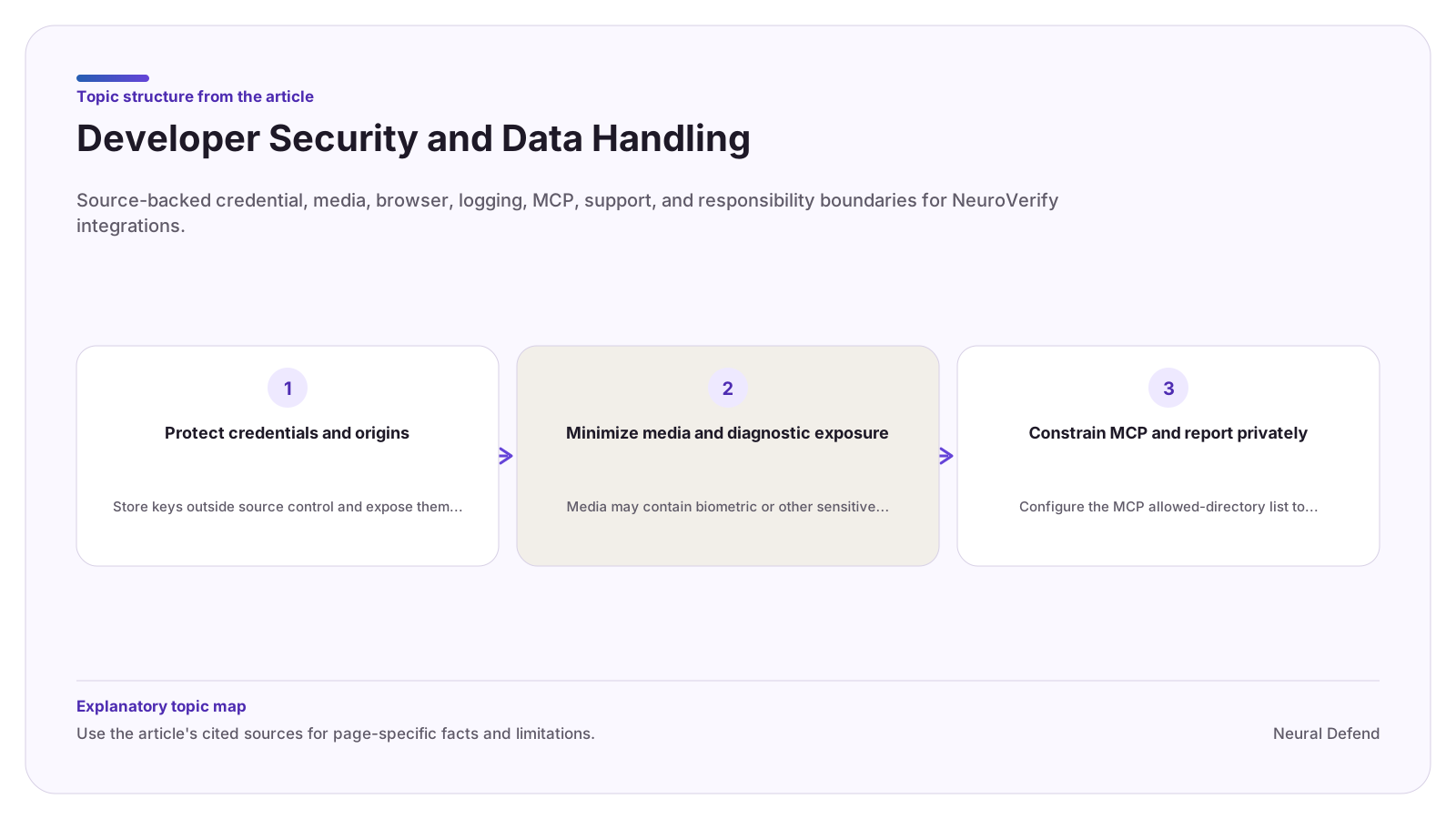
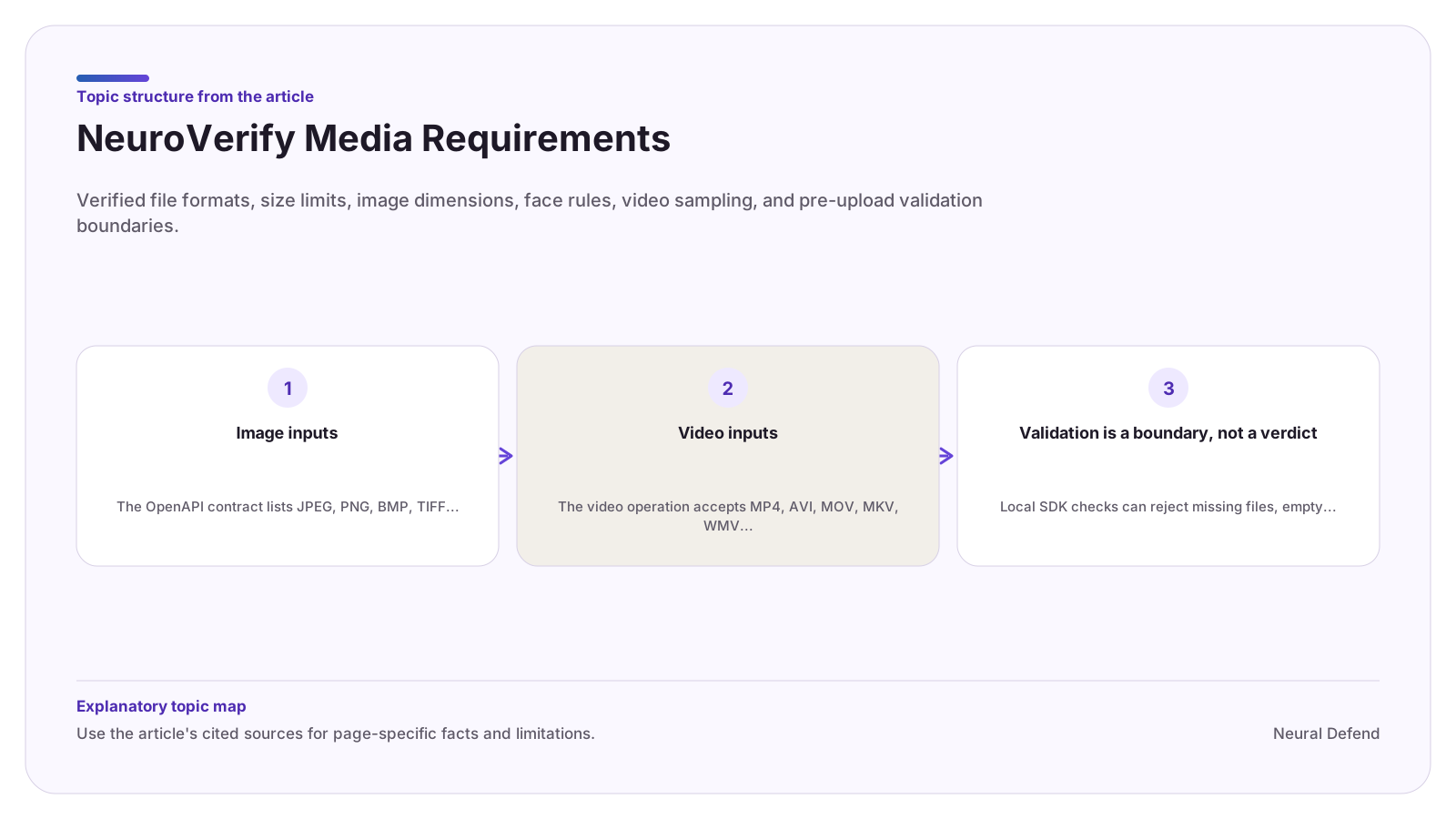
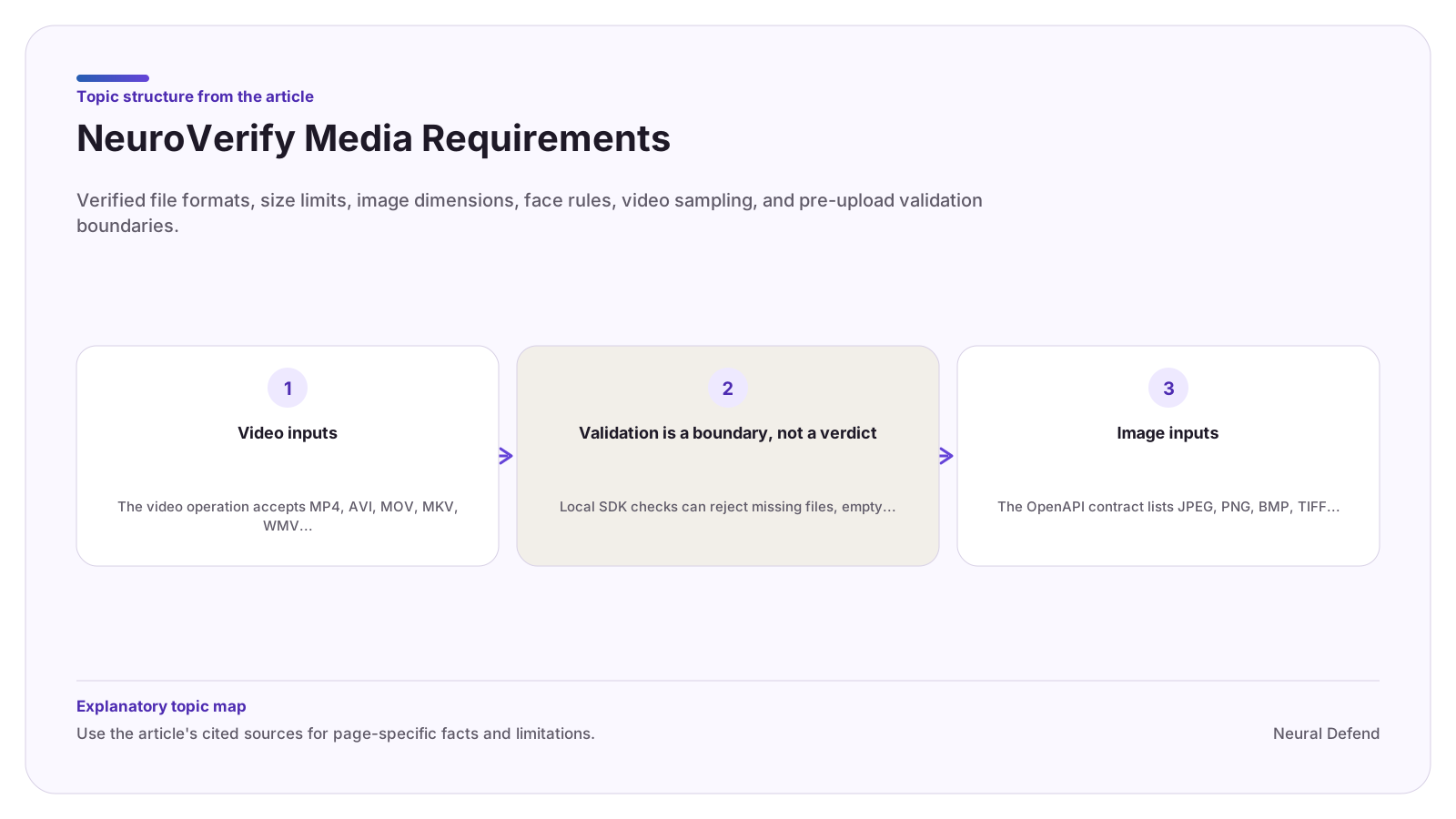
The OpenAPI contract lists JPEG, PNG, BMP, TIFF, WebP, and HEIC for image analysis. The maximum is 10 MB and the minimum resolution is 224 by 224 pixels. Exactly one face is required, and EXIF rotation is corrected automatically.
The repository client documentation also recognizes HEIF in the documented image family. Because the OpenAPI format list and client guides can evolve independently, use the selected client release as the input contract for local validation and the API schema as the wire contract.
Video inputs
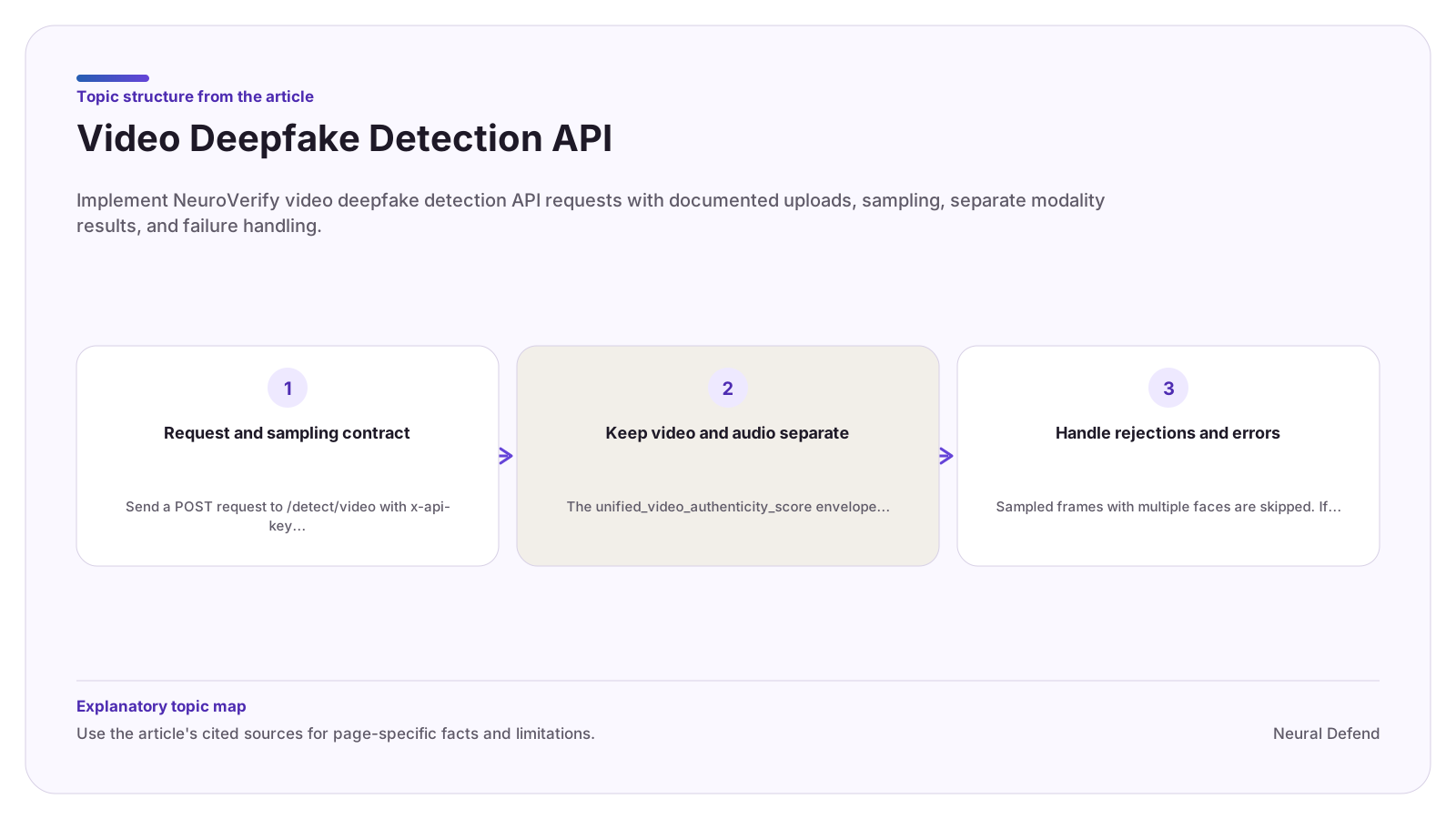
The video operation accepts MP4, AVI, MOV, MKV, WMV, FLV, WebM, OGG, and OGV up to 1.5 GB. It samples frames uniformly, using 12 by default unless max_frames or sample_rate changes the request.
Multi-face sampled frames are skipped. If no sampled frame with exactly one face remains, the API returns an unscored rejection. Audio is not independently returned for that rejected result.
Validation is a boundary, not a verdict
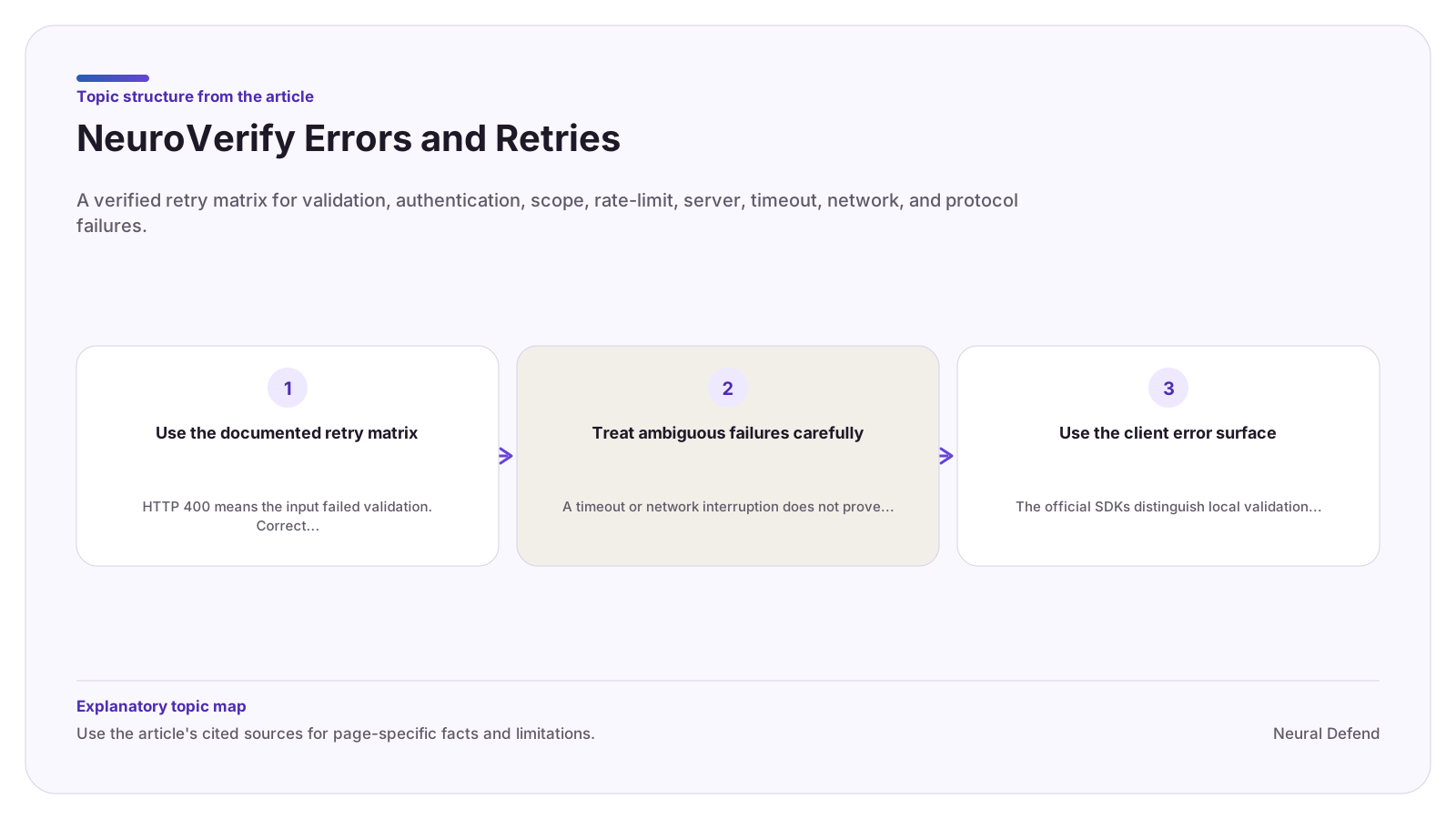
Local SDK checks can reject missing files, empty files, unsupported extensions, excessive size, invalid frame options, and unsafe path conditions before upload. Server-side validation can still reject quality, security, format, dimensions, or face-policy conditions.
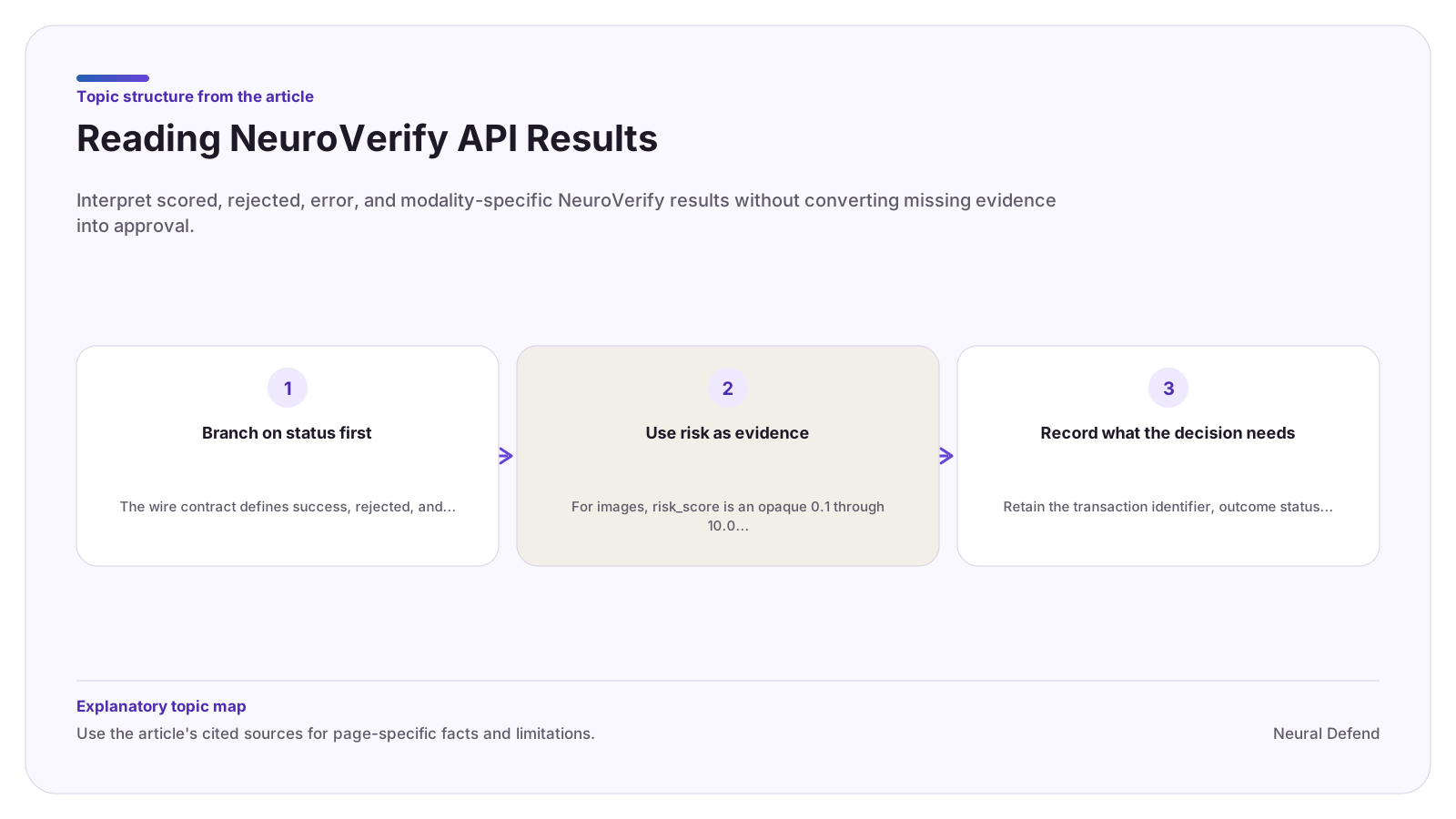
Treat validation messages as recovery guidance. Ask for a corrected, authorized file when appropriate. Do not describe a rejected file as authentic or low risk because no score was produced.
Evidence boundary
Limitations
- Media acceptance depends on the current client and server contracts; this page does not promise acceptance based only on extension, MIME metadata, or nominal dimensions.
Source record