
Why deepfake identity fraud against telecom providers spreads beyond telecom
Telecom identity fraud matters to everyone because a phone number authenticates so much else. The FCC's November 2023 order notes that phone numbers are frequently used to authenticate users at wireless providers, email and social media providers, financial institutions, healthcare providers and retailers. Whoever controls the number receives the one-time codes.
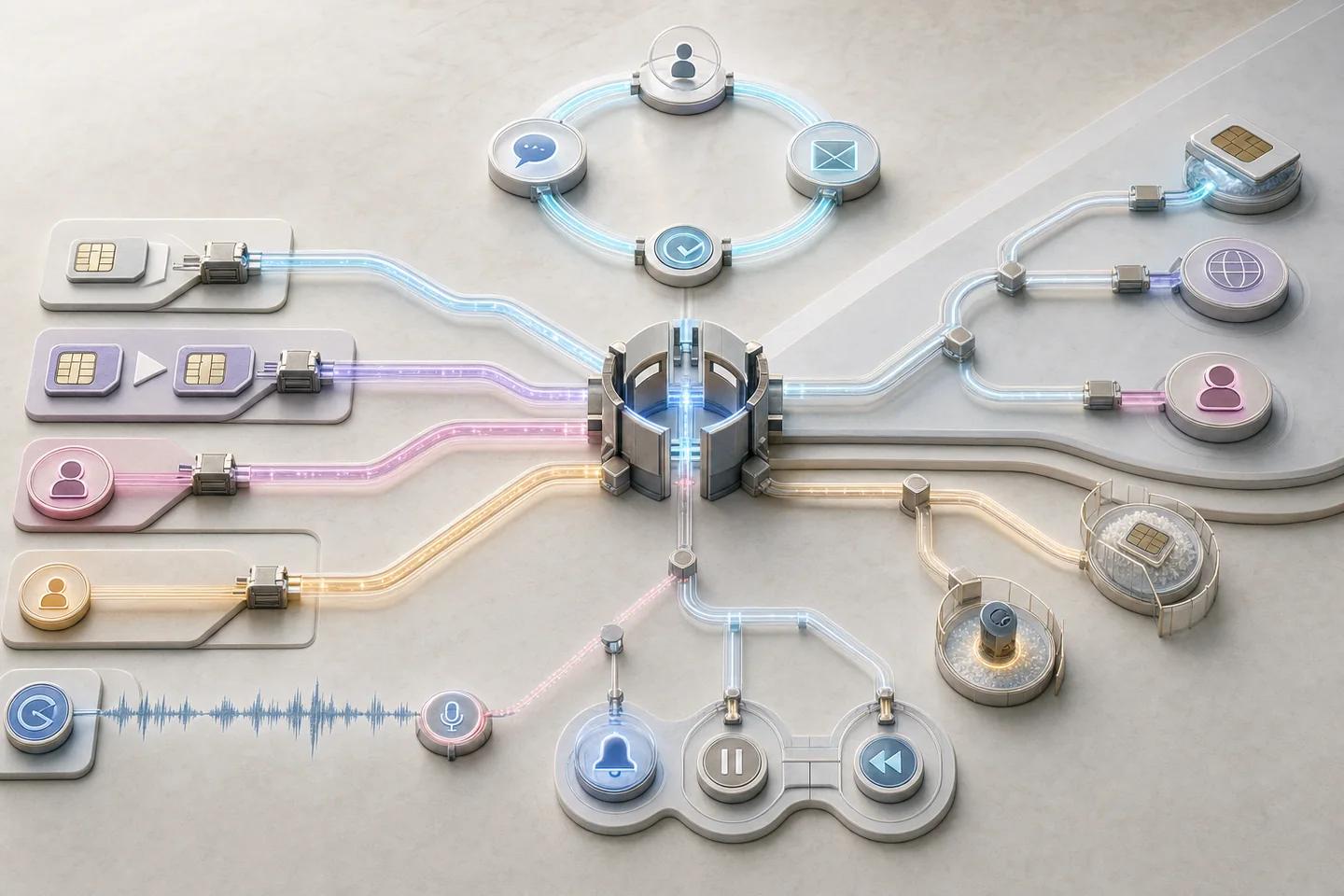
Attackers take control in two ways. In a SIM swap, they convince the victim's own carrier to move service to a SIM they hold. In a port-out, they open an account with another carrier and have the number transferred. Both depend on passing an identity check, and that check increasingly involves a selfie, a video or a phone call.
Generative AI makes each of those checks easier to fake. A face-swapped selfie or replayed video can satisfy an app-based identity step. A cloned voice can satisfy a call centre agent who recognises the customer or a voiceprint system. The FBI's 3 December 2024 announcement describes criminals using AI-generated audio to impersonate people and gain access to bank accounts, and the same technique works on a carrier's support line.

What the FCC requires before a SIM change or number port
In the United States, the FCC's Report and Order FCC 23-95, Protecting Consumers from SIM Swap and Port-Out Fraud, was adopted on 15 November 2023 and released the next day. It revises the Customer Proprietary Network Information and Local Number Portability rules so that wireless providers must adopt secure methods of authenticating a customer before redirecting a phone number to a new device or provider.
The order also requires providers to notify customers immediately whenever a SIM change or port-out request is made on their account, and covers responses to failed authentication attempts, account locks, safeguards on employee access and tracking how well the protections work. The FCC set baseline requirements while leaving providers flexibility to choose the specific fraud protection methods.
That flexibility puts the burden on the carrier to choose methods that hold up against current attacks. A selfie or video step that does not check for manipulation, or a voice check that trusts familiarity, is weaker than the order's intent. The workflow guide on SIM swap and account recovery verification shows how to structure those steps.
Where deepfakes enter telecom workflows
Each customer journey that can move a number or open a line is a target. The table lists the main ones, the fake used and the control that fits.
Registration and takeover carry different harms. Lines registered under synthetic identities become infrastructure for scam calls and messages aimed at other people, while a takeover hits one customer hard and fast. Remote eSIM transfers deserve particular attention because no physical card or store visit is involved, so the video or selfie step may be the only point where a person is checked at all. Carriers that already verify customers in the app can reuse that capture for both cases.
| Journey | Fake used | Risk | Control |
|---|---|---|---|
| New SIM registration (prepaid and postpaid) | Generated ID image with matching synthetic selfie | Lines registered to false identities for scams | Selfie and video manipulation analysis plus document checks |
| In-app or online SIM swap | Face-swapped selfie or replayed video | Number taken over, one-time codes intercepted | Face check bound to the original enrolment, manipulation analysis |
| Port-out request | Victim's identity used at another carrier | Number moved to attacker's account | Port validation fields, customer notification, account locks |
| Call centre account change | Cloned voice of the account holder | Account details changed, SIM swap ordered | Voice deepfake detection, call-back to registered contact |
| eSIM transfer | Deepfake video in a remote verification step | Silent number transfer to a new device | Step-up video analysis and device signals |
How to manage deepfake-enabled identity fraud: controls in order
A workable programme adds detection where it changes outcomes, then layers the non-media controls the FCC order already expects:
- Capture a reference face at registration and compare later SIM swap or eSIM selfies against it, with manipulation analysis on every capture.
- Score each selfie and video for face swaps, generative artifacts and pixel-level edits before approving a number change.
- Treat voice as a weak factor on support lines; add voice deepfake detection and require a call-back or in-app confirmation for number changes.
- Send immediate notifications for every SIM change and port-out request, as FCC 23-95 requires, and offer account locks.
- Correlate detection scores with device age, location, recent password resets and prior failed attempts.
- Review flagged cases and confirmed fraud monthly, and retune thresholds by channel.
What detection does not solve for carriers
Media analysis tells you whether a selfie, video or voice sample shows signs of manipulation or synthesis. It does not stop an insider who swaps a SIM without any customer check, a fraudster who has the real customer's cooperation, or a port-out that never involves a selfie. Those need employee access controls, port validation and customer notification.
It also cannot replace document checks at registration. NeuroVerify analyses faces, video and audio but not ID documents, so carriers still need document authenticity checks for SIM registration flows.
How NeuroVerify and NeuroCall fit telecom identity checks
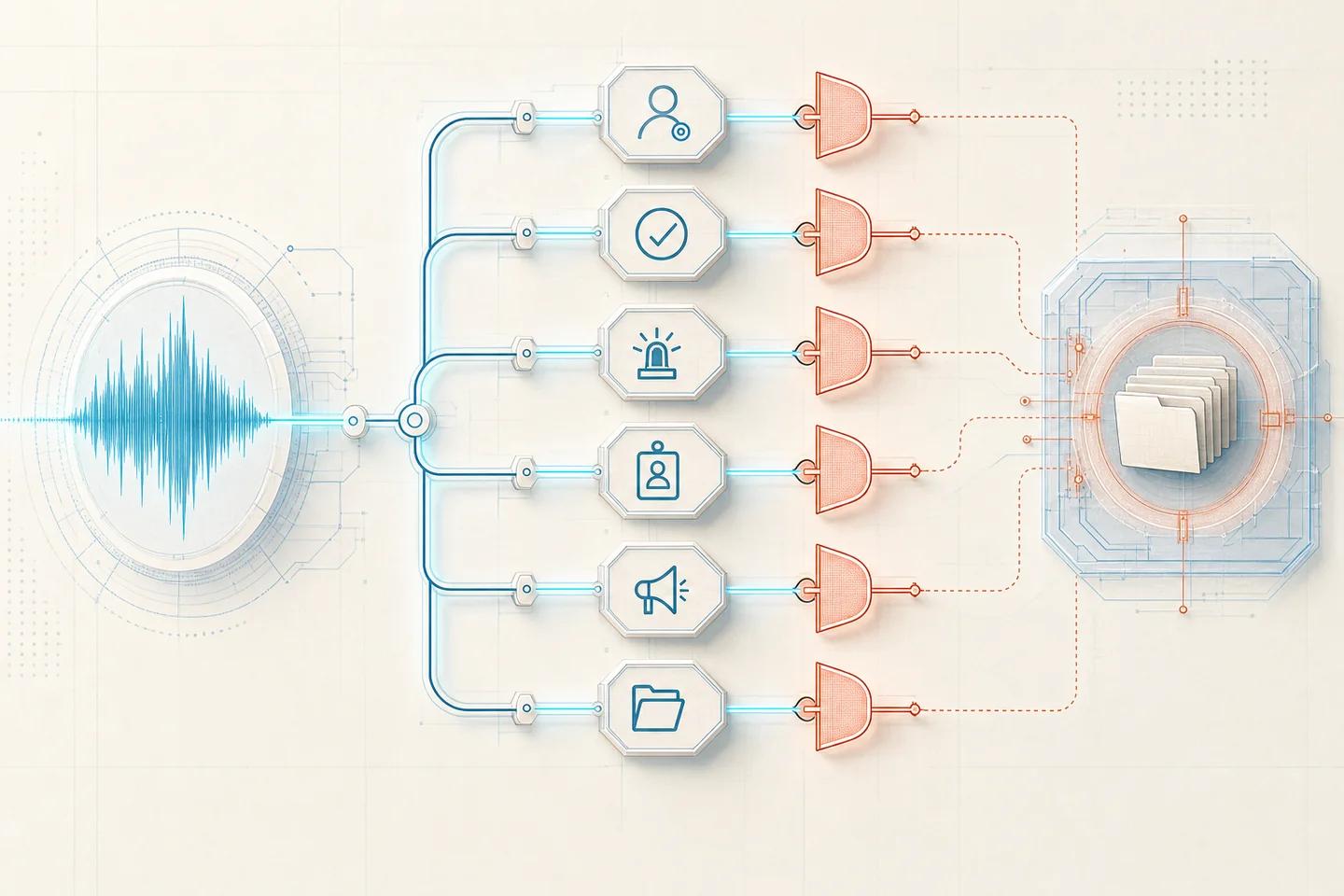
NeuroVerify runs six signals in one request: Visual Safety Screening, Live Presence Verification, Face Manipulation Detection, AI Generative Model Analysis, AI Pixel-Level Manipulation and AI Content Compliance. It accepts a face image, video or audio clip and returns one unified risk score with signal-level evidence, so the carrier's policy decides whether to approve, step up or decline.
Speed matters at the counter and in the app. Eligible image requests complete in under 200 ms p95 under defined test conditions. Mobile SDKs for Android, iOS and Flutter put the check inside the carrier's own app, and backend SDKs for Python, TypeScript, Go and Java connect it to store systems and order management. Neural Defend states integration takes two lines and can be live in under 24 hours.
For calls, NeuroCall is Neural Defend's voice deepfake detection product and is currently in Beta. Carriers with data residency requirements can deploy Neural Defend in a private cloud, on premises or air-gapped.
The detection models build on ARCAS 1B, Neural Defend's foundation model, and Neural Defend ranked first of 36 systems on the public VendorBench-100 still-image benchmark with an MCC of 0.876. That benchmark does not test audio or video, so carriers should run their own voice and video samples during evaluation.
Evidence boundary
Limitations
- FCC 23-95 applies to US wireless providers; carriers in other countries follow their own SIM registration and porting rules.
- NeuroCall is in Beta, and VendorBench-100 does not measure audio or video performance, so voice detection should be validated on the carrier's own call samples.
- NeuroVerify does not analyse ID documents used at SIM registration.
- Detection cannot stop insider-enabled SIM swaps or port-outs that never involve customer media.
Source record
Sources and references
- Federal Communications CommissionFCC 23-95: Protecting Consumers from SIM Swap and Port-Out Fraud, Report and OrderPublished November 16, 2023. Verified October 19, 2026.
- FBI Internet Crime Complaint CenterI-120324-PSA: Criminals Use Generative Artificial Intelligence to Facilitate Financial FraudPublished December 3, 2024. Verified October 19, 2026.
- FBI Internet Crime Complaint CenterI-051525-PSA: Senior US Officials Impersonated in Malicious Messaging CampaignPublished May 15, 2025. Verified October 19, 2026.
- Financial Crimes Enforcement Network (FinCEN)FIN-2024-Alert004: FinCEN Alert on Fraud Schemes Involving Deepfake Media Targeting Financial InstitutionsPublished November 13, 2024. Verified October 19, 2026.
- National Institute of Standards and TechnologySP 800-63A-4, Digital Identity Guidelines: Identity Proofing and EnrollmentPublished July 1, 2025. Verified October 19, 2026.
- arXivVendorBench-100: A Unified Cross-Paradigm Benchmark for Deepfake Image DetectionPublished July 29, 2026. Verified October 19, 2026.