
Caller connects → Voiceprint or passphrase check → Agent confirms details → Request approved
Every check can pass on a synthetic voice. None asked whether the speech was generated.
Voice verification / NeuroVerify
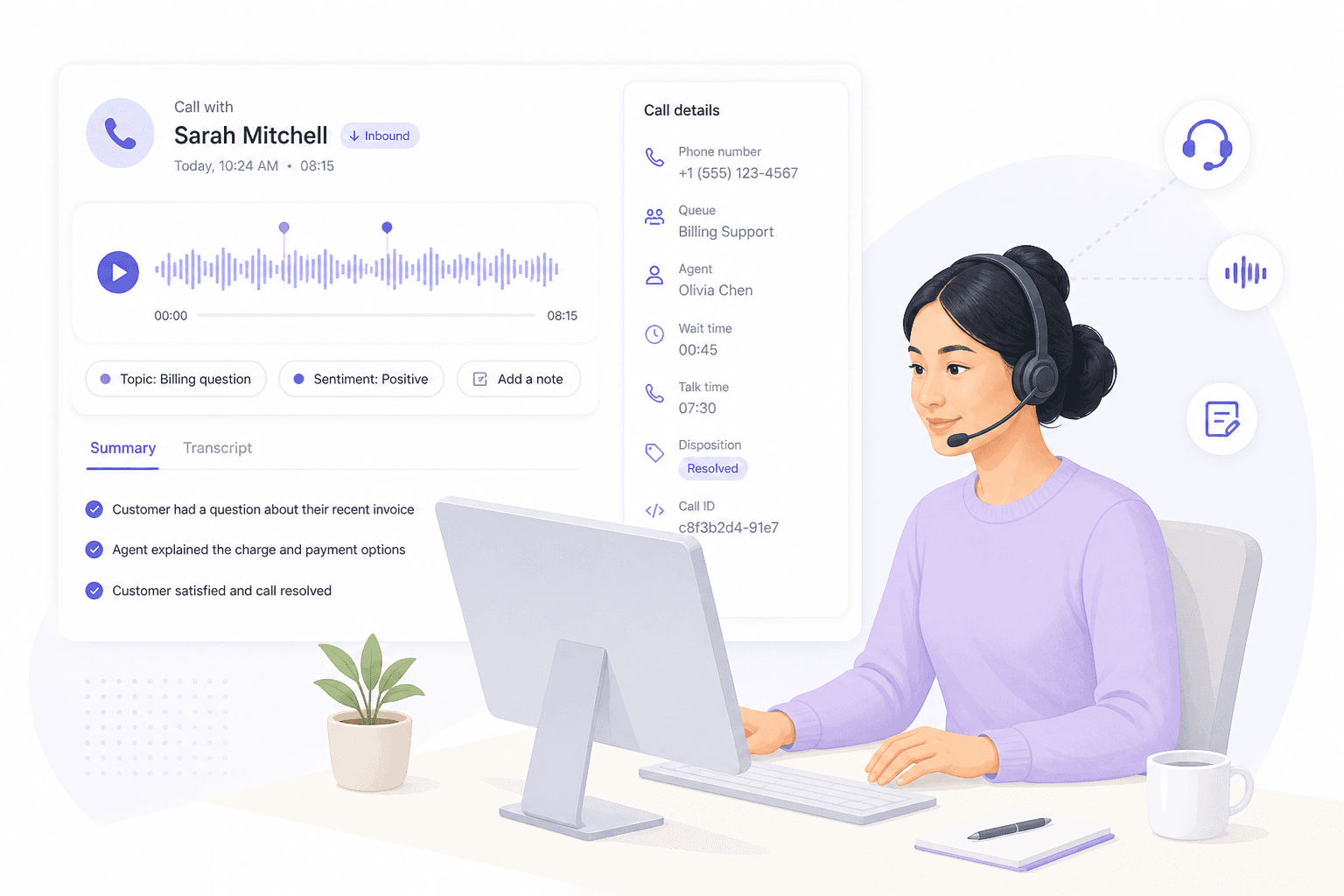
Banks, insurers and service providers verify callers by voice, passphrase or voiceprint. Cloned speech can now pass those checks and fool agents. NeuroVerify checks audio for synthetic or manipulated speech and returns one risk score with signal-level evidence.
It fits the call or voice-capture step you already run, with one API call and no new step for the caller.
NeuroVerify does not match a voiceprint or authenticate the caller; it adds an authenticity signal that your own verification and policy use.
The gap
Voice has become an everyday way to prove identity. Call centres use it to authenticate callers, banks offer voiceprints, and agents rely on a familiar voice or a spoken passphrase. Remote video and phone onboarding add audio to the evidence.
Speech synthesis and voice conversion now reproduce a person from a short sample, in real time, in many languages. Where speech was once a reliable signal, it is now something an attacker can generate on demand.
Voice biometrics compare a voice to an enrolled print. A clone built to sound like the account holder can score as a match, and the check asks whether it matches, not whether it was synthesised.
Knowledge questions can be answered by whoever holds leaked or social-engineered data.
Agents cannot reliably tell clones from real speech, particularly over compressed phone audio.
Liveness for voice is rarely a distinct control, and replayed or generated audio can satisfy simple prompts.
Caller connects → Voiceprint or passphrase check → Agent confirms details → Request approved
Every check can pass on a synthetic voice. None asked whether the speech was generated.
See biometric authentication fails against AI voice cloning for the background.
Threats
These are attack techniques, not claims about any organisation. Each turns synthetic or manipulated audio into trust.
A model trained on a short public sample produces speech that matches an enrolled voiceprint.
The attacker speaks and a conversion tool turns their voice into the target in real time, with natural pacing.
A generated voice requests a password reset, payee change or limit increase, with scripted answers to security questions.
Recorded speech, or segments cut together, is played into a prompt-based check.
In video calls, cloned audio matches a face swap so the whole session feels consistent.
A cloned voice of a known person is used to authorise a payment or extract credentials from staff or relatives.
Regulators are paying attention to synthetic voice. See FCC AI voice ruling and the TCPA and FinCEN deepfake fraud alert for examples.
NeuroVerify supports your controls with evidence; your policy decides what to do.
Where NeuroVerify fits
NeuroVerify sits after your system captures call audio or a voice sample and before the agent or system acts on the caller. It checks audio for deepfakes and manipulation in one request, and returns a unified risk score with evidence.
Caller connects → Voiceprint or passphrase → Agent confirms → Request approved
No authenticity signal for the voice.
Caller connects → Voiceprint or passphrase → NeuroVerify risk score → Agent confirms → Request approved or escalated
Your voice check stays. Authenticity is added beside it.
- Visual Safety Screening - Live Presence Verification - Face Manipulation Detection - AI Generative Model Analysis - AI Pixel-Level Manipulation - AI Content Compliance
For audio-only requests, the signals that apply to the supplied media are used. For video calls, the same request can check the face and audio together.
Use it in contact centres, IVR, voice onboarding, high-risk transaction confirmation and video calls with audio. See financial contact centre identity review and NeuroVerify.
Keep your contact-centre platform, IVR or voice-capture flow as is.
Post call audio or a voice clip to NeuroVerify from your backend or via the REST API or an SDK.
Receive one risk score with signal-level evidence to attach to the call or case record.
Continue, prompt step-up verification, or escalate to a fraud team, using your own thresholds.
What you get
Your voiceprint or passphrase stays. NeuroVerify adds the question it cannot answer: was this speech generated.
Evidence-backed scores replace hunches about whether a voice sounds off.
Screen password resets, payee changes and limit increases before they are approved.
One API handles face images, video and audio, so voice and video channels share a control.
Managed cloud, private cloud, container, on-premises and air-gapped options suit call recording and residency rules.
Questions
No. NeuroVerify does not enrol voiceprints or match speakers. It adds a check that the audio itself is genuine, and your existing voice biometric or verification process continues to decide who the speaker is.
Call it on the audio or voice clip after capture and before the agent or system acts. Send the media you already capture to one REST endpoint, or use a native mobile SDK (Android/Kotlin, iOS/Swift, Flutter) or a backend SDK (Python, TypeScript/Node.js, Go, Java). An MCP server is available for AI agents.
Integration is two lines of code in the common case, and teams can go live in under 24 hours. Your end users see no new step.
NeuroVerify analyses audio you send to the API. Many teams send short segments from a live call as it progresses and a full clip afterwards. We will scope the pattern with you in evaluation. See real-time deepfake detection in call centers.
Compression, background noise and codecs affect every detector. That is why we recommend testing on your own call audio rather than relying on published figures. Share representative recordings in evaluation and we will report results on them.
Neural Defend analyses the media you send and returns a risk score with signal-level evidence. Consent, retention and residency stay under your policy. Neural Defend holds ISO/IEC 27001, ISO/IEC 27701, ISO/IEC 42001 and SOC 2 Type II certifications.
Read the product data handling page and the trust centre for specifics, and ask us for the details your security review needs.
Options include a managed cloud API, private cloud or your own VPC, a secure container, on-premises, and air-gapped environments. The right choice usually follows your data-residency and security-review requirements. See deployment options.
Yes, and it is the only test that counts. Published benchmarks do not reflect your devices, codecs or compression. Neural Defend ranks first of 36 systems on VendorBench-100 (MCC 0.876 against 0.646 for the next-best vendor), but your call recordings is the better yardstick.
Bring representative genuine and suspected-fake samples and your current decision states, and we will run them through the API with you.
Evaluate NeuroVerify
Send genuine and suspected-synthetic call audio through NeuroVerify. We will show the scores and signals and help set escalation thresholds for your contact centre.