
Best voice deepfake detection API for contact centres: the shortlist
Four vendors cover voice deepfakes in contact centres today, each with a different emphasis. The table uses each vendor's own website; none of them is ranked by a shared public benchmark, so treat it as a shortlist and decide with a pilot on your own calls.
| Vendor | What it offers for calls | Integration (vendor-stated) | Deployment (vendor-stated) | Published figures |
|---|---|---|---|---|
| Neural Defend NeuroCall (Beta) | Live voice analysis for synthetic-speech and cloned-voice indicators; AI-caller indicators routed to your queue | Vendor-neutral stream interfaces; backend SDKs, REST, MCP | Managed cloud, private cloud/VPC, secure container, on-premises, air-gapped | None published for voice |
| Pindrop | Pulse for Contact Centers, BotStopper for AI callers, Passport for authentication, Protect for fraud risk | Verizon, Genesys, Five9, Amazon Connect, Cisco, NICE | Not stated on homepage | 99% on known engines, >90% on unseen, <1% false positives (own data) |
| Reality Defender | Audio analysis on live calls; RealCall and AI-caller triage | Results delivered into existing systems | "Tailored to your environment" | None published |
| GetReal | Cloned-voice detection in contact centres; live call identity checks | Not stated on homepage | Not stated on homepage | None published |
How a voice deepfake detection API works on a live call
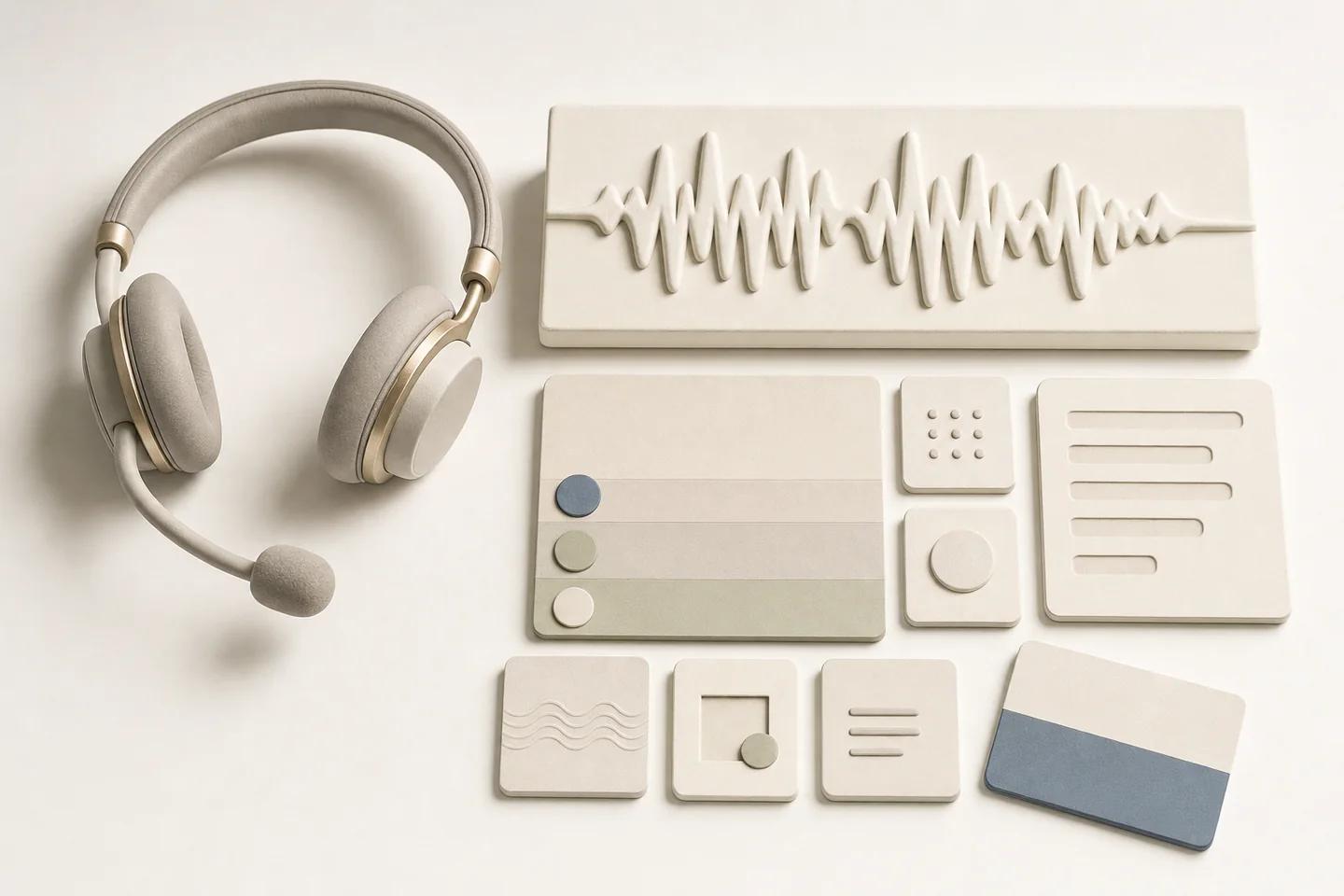
The contact-centre platform forks an authorized copy of the caller's audio to the detection service as a stream. The service buffers short windows of speech, typically a few seconds, extracts spectral and temporal features, and scores them for traces that text-to-speech and voice-conversion systems leave behind: overly smooth pitch contours, missing breath and room noise, phase artefacts from neural vocoders, and unnatural transitions between phonemes. Scores update as the call continues, so confidence grows with more speech.
The result has to reach a person who can act. NeuroCall routes an elevated signal to the agent desktop or the fraud workflow you choose, and leaves the response to your policy: continue, step up verification, or send the call for review. That last part matters, because a voice score on its own should not end a customer call.
What makes one voice deepfake API better than another
Judge contact-centre voice APIs on five things, roughly in this order. Detection on your calls, at the alert rate your agents can handle. Time to signal, measured from first speech to alert, because a warning after the password reset is too late. Integration with your CCaaS or telephony platform and agent desktop. Where call audio is processed and stored. And how the vendor handles languages, accents and codecs in your caller mix.
Pindrop leads on integration breadth and contact-centre history; it cites more than 15 years in the field. Neural Defend's case rests on fit and control: a vendor-neutral stream connection rather than a fixed partner list, signals the agent sees in context, SDKs that drop results into your own tools, and deployment options down to on-premises and air-gapped for banks and telecoms that cannot send audio to a shared service. Because NeuroCall is in Beta, run it as a shadow pilot next to whatever you use today.
Separate deepfake detection from caller authentication when you compare. Voice biometrics answers whether this voice matches the enrolled customer; deepfake detection answers whether the voice was synthesised. A cloned voice can pass a biometric match, which is exactly why contact centres add a synthesis check. Some vendors bundle both; others, including Neural Defend, focus on the authenticity signal and leave authentication to the system you already run.
Why contact centres need voice deepfake detection now
Voice is the authentication factor most exposed to cloning. The US Federal Trade Commission warned consumers in March 2023 that scammers were using AI voice cloning in family emergency schemes, needing only a short clip of a person's voice. Contact centres face the same technique pointed at account recovery, card replacement and payee changes. Pindrop reports on its homepage that one in 80 callers in its data is now an AI agent. Whatever the rate in your queues, the attacks concentrate on the few call types that move money or access.
How to pilot a voice deepfake detection API
Run candidates in shadow mode on real traffic before any agent sees an alert. Stream an authorized copy of audio from one or two queues, log every score with the call ID, and compare against confirmed fraud cases and a sample of verified genuine callers.
- Alerts per 1,000 calls at your chosen threshold, and what share were confirmed fraud.
- Time from first caller speech to alert, at p95.
- Performance by language, accent and channel (PSTN, VoIP, mobile).
- Behaviour on hold music, transfers, conference legs and IVR segments.
- Data handling: where audio goes, how long it is kept, and who can access it.
Where voice deepfake detection falls short
Narrowband telephone codecs, packet loss and background noise remove much of the evidence detectors use, and very short utterances give little to score. Accuracy also varies with languages and accents that were under-represented in training. A detector cannot tell you that a genuine customer is being coached by a fraudster on another line. Keep call-backs to registered numbers, out-of-band confirmation and transaction limits for high-risk requests whichever API you choose.
Neural Defend across the customer journey
Fraud rings rarely stick to one channel. The same identity used on a cloned-voice call often appears in a face-swapped onboarding selfie or a doctored claim video. Neural Defend covers those channels on one detection model, ARCAS 1B: NeuroVerify checks face images, video and audio with six signals per call and ranked first of 36 systems on the public VendorBench-100 image benchmark (MCC 0.876, still images only, with one author overlapping with the ARCAS paper), and NeuroDetect supports forensic review after an incident. Neural Defend holds ISO/IEC 27001, ISO/IEC 27701, ISO/IEC 42001 and SOC 2 Type II certification.
Evidence boundary
Limitations
- NeuroCall is in Beta, and Neural Defend publishes no voice accuracy figures; test it on your own calls.
- Pindrop's accuracy figures are its own, measured on its proprietary dataset; other vendors publish none for voice.
- VendorBench-100 measures still images only and does not rank voice detection.
- Competitor facts come from vendor websites on 19 October 2026 and may change.
Source record
Sources and references
- Neural DefendNeuroCall voice deepfake detection (Beta)Verified October 19, 2026.
- PindropPindrop platform for real-time communicationsVerified October 19, 2026.
- PindropPindrop PulseVerified October 19, 2026.
- Reality DefenderReality Defender deepfake detection platformVerified October 19, 2026.
- GetReal SecurityGetReal Trust and Authenticity PlatformVerified October 19, 2026.
- ASVspoofASVspoof challenge series on spoofing and deepfake speech detectionVerified October 19, 2026.
- Federal Trade CommissionScammers use AI to enhance their family emergency schemesPublished March 20, 2023. Verified May 15, 2025.