How deepfakes can impact elections
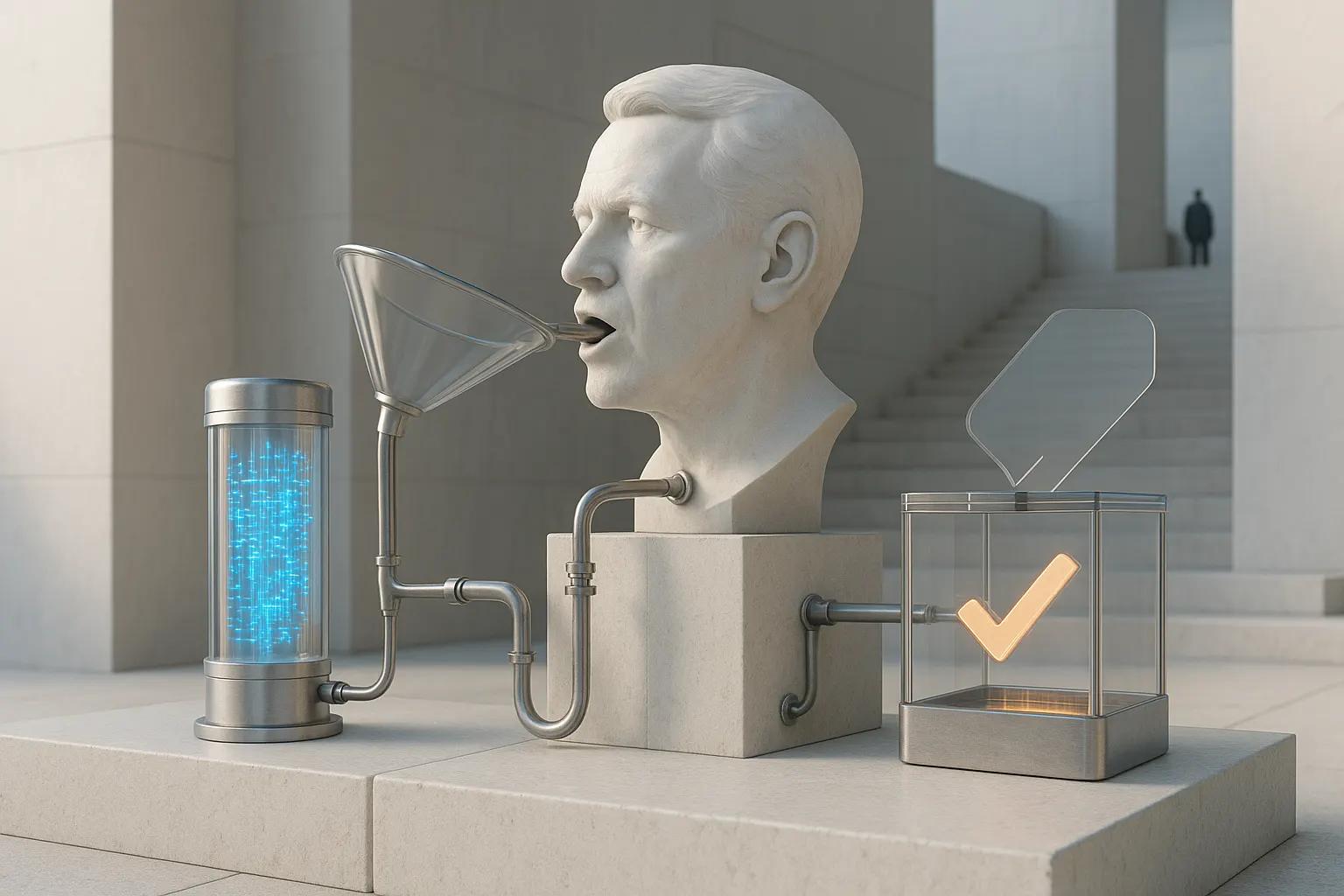
Deepfakes can affect an election at four points. They can deceive voters about process, for example a cloned official's voice announcing a changed polling date. They can damage a candidate, with fabricated audio of a slur, a faked confession or sexual imagery. They can inflate support, with AI-generated celebrity endorsements or crowds. And they can give anyone caught on a real recording a ready excuse: claim it is AI.
The first type is the most dangerous because it can change who turns out, and it is often the easiest to rebut quickly with an official correction. The second and third aim at persuasion, which research suggests is hard to achieve at scale. The fourth, sometimes called the liar's dividend, works without anyone making a deepfake at all.
| Use | Example form | Who is harmed |
|---|---|---|
| Voter suppression or confusion | Cloned voice robocall telling people not to vote | Voters, election officials |
| Smearing a candidate | Fake audio of offensive remarks, sexual deepfakes | Candidates, especially women |
| Fake endorsement or support | AI images of celebrities or crowds backing a candidate | Voters, the people impersonated |
| Denying real evidence | Claiming genuine footage is AI-generated | Public trust, journalists |



How are deepfakes used in elections? The New Hampshire robocall
The clearest US example came shortly before the New Hampshire presidential primary in January 2024. Thousands of voters received robocalls with an AI-generated voice imitating President Biden that urged them not to vote in the primary, combined with misleading caller ID information. In September 2024 the Federal Communications Commission issued a $6 million forfeiture order against political consultant Steve Kramer, who was behind the campaign.
The regulatory response was quick. On 8 February 2024 the FCC released Declaratory Ruling 24-17, confirming that AI-generated voices count as artificial voices under the Telephone Consumer Protection Act, so such robocalls need the called party's prior consent. The case was caught through voter complaints and investigation, not automated detection, which shows how much election defence still depends on people reporting what they receive.


Did deepfakes change any 2024 election results?
Not measurably, according to the most systematic tracking available. The Centre for Emerging Technology and Security (CETaS) at the Alan Turing Institute monitored elections throughout 2024, the year more than 2 billion people in at least 50 countries voted. Its September 2024 briefing found 16 confirmed viral cases of AI-enabled disinformation or deepfakes in the UK general election and 11 across the EU and French elections combined. Most exposure was among users who already held the views the content pushed, so it consolidated opinion rather than swaying undecided voters.
Its final report on 13 November 2024 found no conclusive evidence that AI disinformation changed the US presidential result, while noting this partly reflects missing data on how such content affects real voting behaviour. It did find that AI content shaped US election discourse, from fabricated celebrity endorsements to false allegations against immigrants, some of it repeated by candidates and widely covered by media. Non-AI falsehoods remained highly influential.



The harms that matter even when results do not change
Measuring impact only by vote totals misses most of the damage. Sexual deepfakes of female candidates can push people out of public life. Deepfakes that incite hate can create physical safety risks for candidates and election workers. Each viral fake also teaches voters that any clip might be false, which helps politicians wave away real recordings of things they did say.
Labeling creates its own traps. CETaS found realistic deepfakes labeled as parody or satire that viewers still took as fact, and genuine media of candidates wrongly accused of being AI-generated. From 2 August 2026, Article 50 of the EU AI Act requires deployers who create deepfake content to disclose that it is artificially generated or manipulated, but a label only helps when the creator chooses to follow the rules.

What election offices, campaigns and newsrooms should do
Preparation matters more than speed of detection. CISA's guidance for election officials stresses maintaining trusted official channels and an incident response plan before false content circulates. When a suspicious clip appears, verify the underlying fact separately from the media: if a recording claims polling stations have moved, the official schedule answers that faster than any forensic analysis.
Keep the original post, its URL, account details and timestamps, and record how it spread. Decide in advance who approves a public correction and through which channels. Campaigns should keep a library of genuine recordings of their candidate, which gives analysts a reference to compare against, the same method a California court used in 2025 to spot deepfaked witness videos.
- Publish voting dates, locations and rules on one authoritative page and repeat them often.
- Agree an escalation path with platforms and telecom providers before the campaign starts.
- Correct harmful claims quickly without amplifying the fake clip itself.
- Separate three questions: is the fact false, is the media manipulated, and who made it.


Where detection helps election verification, and how NeuroDetect fits
Detection is most useful when a clip's authenticity is the story: a recording of a candidate that will drive coverage, or a video that could trigger unrest. It is less useful for process lies, where the official fact rebuts the claim, and it cannot say who made a fake. Political audio is often short, compressed and re-recorded, which lowers confidence, so analysts should report uncertainty rather than a yes or no.
NeuroDetect, Neural Defend's forensic media workspace, is built for that kind of verification. Newsroom and election analysts upload an authorized image, audio, video or document into a case. The analysis keeps model and version context, explainability heatmaps and attention views show the regions, frames and audio segments behind a finding, and an LLM-assisted summary explains results in plain language with links back to the evidence. The analyst makes the final call, and the downloadable forensic report records observations, uncertainty, provenance and analyst notes for editors, lawyers or regulators. For phone-based voter calls, NeuroCall, currently in Beta, is Neural Defend's voice deepfake detection product.

Evidence boundary
Limitations
- CETaS findings rely on observable viral cases and social media metrics; private-channel deepfakes such as messaging-app voice notes are hard to count.
- Absence of measurable impact on results does not mean absence of effect on turnout, trust or candidate safety.
- Election deepfake laws differ by country and US state and change often; this page is not legal advice.
- Detection confidence falls on short, compressed or re-recorded political clips, and no tool identifies who created a fake.
Source record
Sources and references
- Centre for Emerging Technology and Security, The Alan Turing InstituteAI-Enabled Influence Operations: Safeguarding Future ElectionsPublished November 13, 2024. Verified October 19, 2026.
- Centre for Emerging Technology and Security, The Alan Turing InstituteAI-Enabled Influence Operations: Threat Analysis of the 2024 UK and European ElectionsPublished September 19, 2024. Verified October 19, 2026.
- Federal Communications CommissionIn the Matter of Steve Kramer, Forfeiture Order FCC 24-104Verified August 7, 2026.
- Federal Communications CommissionFCC 24-17, Declaratory Ruling on AI-generated human voicesPublished February 8, 2024. Verified August 7, 2026.
- Cybersecurity and Infrastructure Security AgencyMis-, Dis-, and Malinformation Planning and Incident Response Guide for Election OfficialsVerified August 7, 2026.
- European CommissionTransparency obligations under Article 50 of the AI ActVerified August 8, 2026.