
Neural Defend

Government and public services / NeuroVerify

Deepfake Detection API for Government and Welfare Services

For agencies and programme operators that enrol citizens, pay benefits and confirm that pensioners are alive, remotely. NeuroVerify checks the selfie or video for deepfakes and manipulation beyond liveness, so benefits reach the person entitled to them.

It fits the selfie or video step your enrolment already runs: one API call, no new step for the citizen, one unified risk score with signal-level evidence.

NeuroVerify does not verify citizen records, decide eligibility or issue credentials. It adds authenticity evidence for face, video and audio; programme rules and caseworkers decide.

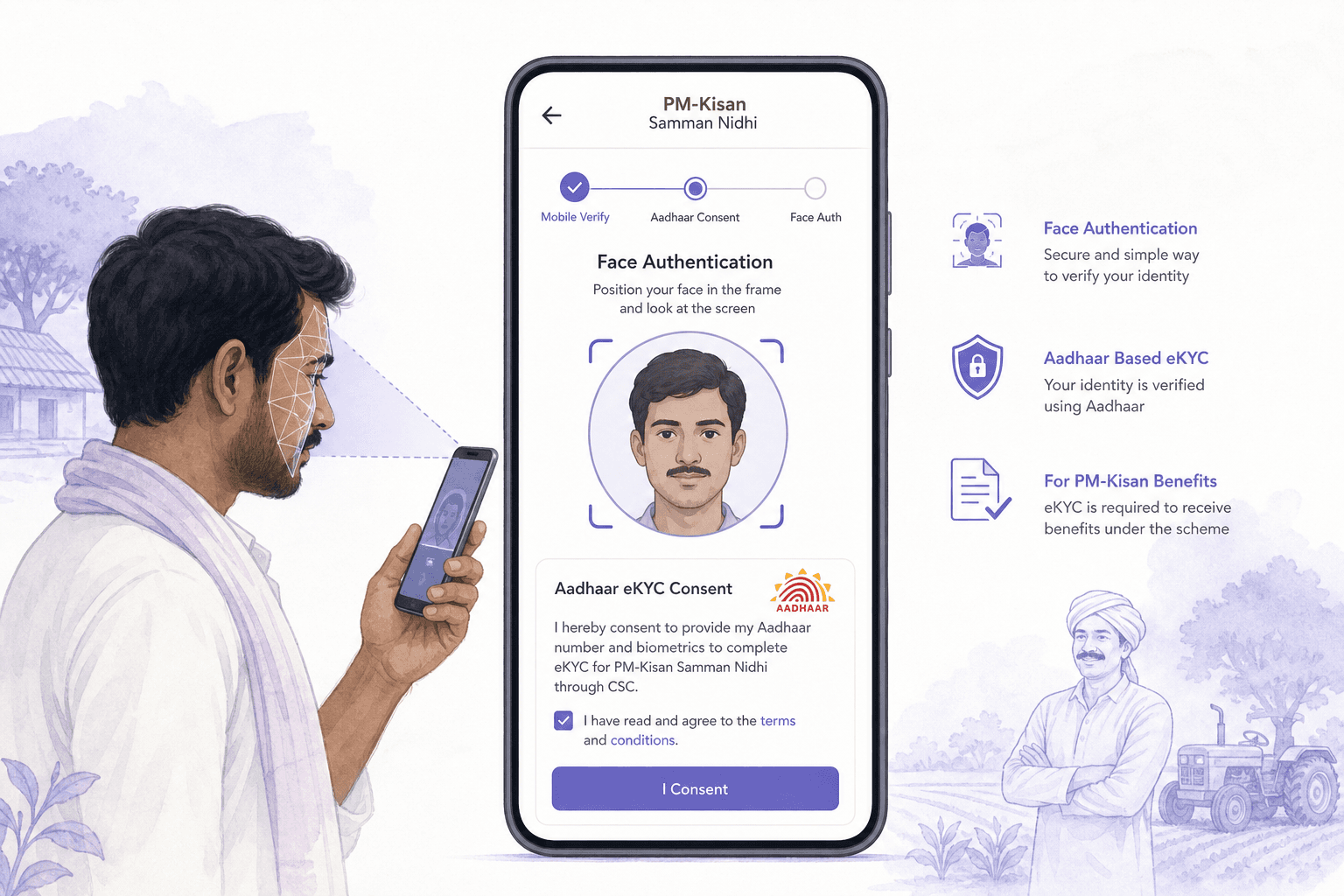
Light editorial illustration of a government benefits portal with a citizen selfie capture step on a light background.
AI-generated conceptual editorial illustration on a light background; not product UI or forensic evidence.
Powered byNeuroVerifyExplore the product
  • #1 of 36on the public VendorBench-100
  • <200 msp95 on eligible image requests
  • 6 → 1six checks, one unified score
  • 0new steps for your customer

The gap

Digital access for everyone also opens the door to impersonation.

Governments are moving enrolment, benefit claims, licensing and proof-of-life online. Citizens use phones and shared devices, and many do so through assisted channels or intermediaries. That access is the goal, and it needs to be inclusive.

Public programmes pay out real money and issue credentials with legal weight. A benefit, pension, licence or digital ID obtained under a false identity harms the genuine citizen and the programme. Fraud that gets past the face check also tends to repeat across programmes.

Where current checks stop

Registry lookups confirm that a record exists. Face match confirms two images look alike. Liveness confirms a prompt was followed. None of them tells a caseworker whether a face was generated, swapped or injected. See deepfake risk controls for public benefits and synthetic media controls for government enrollment.

Remote benefit claim or proof-of-life

Citizen logs in → Claim or life-certificate request → Selfie or short video → Liveness and face match → Caseworker or system approval → Payment or credential issued

The selfie or video is the key evidence in the file. NeuroVerify adds an authenticity read to it.

Remote proof-of-life for pensions is one example. Several countries run digital life-certificate schemes, and the same risk applies to any remote check of a person.

Threats

How deepfakes target public programmes

These are attack techniques, not claims about any agency or country.

01

Claiming benefits as another person

An attacker uses a stolen identity and a swapped or generated face at enrolment or claim.

02

Fake proof-of-life for a deceased recipient

A synthetic video or a stand-in is used to keep a pension or benefit payment flowing.

03

Fraud through intermediaries and kiosks

An assisting agent submits many enrolments with substituted faces or injected video.

04

Synthetic identities in digital ID enrolment

A fabricated person with a generated face is enrolled to obtain a credential that unlocks other services.

05

Impersonating licence holders

A swapped face is used to renew or transfer licences and permits remotely.

06

Deepfake calls to caseworkers

A cloned voice or video impersonates a recipient or official to redirect payments.

Public sector use of biometrics carries extra privacy and fairness duties. See GDPR, biometrics and authenticity analysis and EU AI Act Article 50 and synthetic content for context. Your own legal team sets what is permitted.

For wider guidance, see deepfake detection for government and public sector and the government industry page.

Where NeuroVerify fits

Where NeuroVerify sits in digital public services

NeuroVerify sits at the selfie or video step of enrolment, claim and proof-of-life, before a payment or credential is issued. Your portal or app sends the media it already collects. NeuroVerify runs six signals in one request and returns a unified risk score with signal-level evidence.

Programme policy decides next steps: approve, ask for another channel, send to a caseworker, or require in-person verification. Inclusion matters, so a flag should lead to an alternative route, not a dead end.

NeuroVerify Unified Trust LayerSix parallel analysis layers
  • Visual Safety Screening
  • Live Presence Verification
  • Face Manipulation Detection
  • AI Generative Model Analysis
  • AI Pixel-Level Manipulation
  • AI Content Compliance
01

Send the citizen selfie or video

Pass the media from your portal, app or assisted-service kiosk to NeuroVerify with one API call.

02

Read the unified risk score

Get one score with evidence from the six signals.

03

Apply programme policy

Approve, step up through another channel, route to a caseworker or require in-person verification.

04

Keep evidence with the case

Store the score and signal evidence with the claim so audits and appeals have context.

What you get

What public programmes gain

Protect payments and credentials

Catch synthetic or swapped faces before money or a credential is issued.

Inclusive by design

Citizens use the same selfie or video. Flags route to alternatives, not to refusal.

Support for caseworkers

Signal-level evidence helps caseworkers prioritise cases instead of reviewing everything.

Sovereign deployment options

Run in a private cloud, on-premises or air-gapped to meet data-residency needs.

Auditable

Evidence from each signal supports audit and appeals.

Questions

What teams ask before they integrate.

Does this add a step for citizens or assisted-service staff?

No. NeuroVerify fits the selfie or video step your journey already runs. You send the media you already capture in one API call. There is no new step for the end user.

Integration uses native mobile SDKs (Android/Kotlin, iOS/Swift, Flutter), backend SDKs (Python, TypeScript/Node.js, Go, Java) or REST. Two lines of code is the product claim; live in under 24 hours is the target.

We already run liveness at enrolment. What does this add?

Not as a replacement. Liveness asks whether a live person was in front of the camera. NeuroVerify asks whether the media itself is authentic, and it includes a Live Presence Verification signal alongside five others, so it checks beyond liveness. See deepfake detection vs liveness detection.

You can keep your current liveness vendor and send the same selfie or video to NeuroVerify as well.

Can we use it for remote proof-of-life?

Yes. Remote proof-of-life asks a recipient to show a selfie or short video. NeuroVerify checks that media for deepfakes and manipulation, which a prompt-based liveness check alone does not.

Does it verify records or eligibility?

No. NeuroVerify checks face images, video and audio. It does not check registries, documents or eligibility rules. Those remain with your programme systems.

Can it run in a sovereign or air-gapped environment?

Yes. NeuroVerify can run in a private cloud or customer VPC, as a secure container, on-premises or air-gapped. See data residency for deepfake detection.

Neural Defend holds ISO/IEC 27001, ISO/IEC 27701, ISO/IEC 42001 and SOC 2 Type II.

Will it slow down our portal?

NeuroVerify returns in under 200 ms p95 on eligible image requests under defined test conditions. The test methodology is available on request, so you can compare it with your own traffic and network path.

Image checks run inside the capture step, so the end user does not see a separate wait. Video and audio take longer because they carry more media; ask us for numbers that match your clip lengths.

How do we avoid wrongly blocking genuine citizens?

NeuroVerify returns one unified risk score plus signal-level evidence, so a reviewer can see which of the six signals raised concern. It does not make the final decision. Your own policy decides whether to approve, step up, route to manual review or decline.

Because thresholds are yours, you can tune them to your own tolerance for false positives and false negatives. See deepfake detection errors.

Can we pilot it on our own enrolment media?

Yes. We recommend evaluating on your own media: your real capture conditions, devices and attack samples. Start with a small test set, compare the unified score and signal evidence against your current checks, then set thresholds with your own policy team.

NeuroVerify ranked #1 of 36 systems on VendorBench-100 (detection score MCC 0.876 versus 0.646 for the next-best vendor), but a public benchmark is a starting point. Your own media is the real test. Contact us to set one up.

Evaluate NeuroVerify

Pilot NeuroVerify on your enrolment and claim media

Send representative selfies and video from enrolment, claims and proof-of-life. We will show the unified score and evidence so your programme can judge fit in your own environment.