Why Gig Worker Identity Needs Checking More Than Once
A bank verifies a customer once and then relies on login security. A gig platform cannot. The question is not only who opened the account but who is driving the car or carrying the food today. Background checks, driving licence checks and right-to-work checks attach to the account holder, and they protect nobody if another person does the work.
That is why gig platforms combine onboarding verification with selfie checks at shift start or at random intervals. Those repeated checks are the target for deepfakes. A worker renting out an approved account can hand the renter a set of the owner's photos or a recorded video, and the renter can try to replay them, or use a face swap, when the app asks for a selfie.
What the UK Delivery Platform Agreements Show
The UK offers a documented example of the problem and the response. On 30 April 2024 the Home Office announced that Deliveroo, Just Eat and Uber Eats had committed to confirm directly that substitute riders have the right to work, after a small minority of riders used substitution to avoid right-to-work checks. Deliveroo said it was first to roll out direct right-to-work checks, substitute registration and identity verification technology.
On 30 June 2025 the government said that, although the firms had introduced right-to-work checks on all account holders and registered substitutes, ministers were still concerned about illicit account sharing leading to illegal working. The three firms agreed to increase facial verification checks and fraud detection so that only registered account holders can work, within 90 days. Deliveroo and Uber Eats would increase the quantity and sophistication of their checks, and Just Eat would move the same checks from monthly to daily.
Attacks at Onboarding Versus Attacks at Shift Start
The two stages call for different emphasis. At onboarding the attacker usually has someone else's identity documents and needs a face to match them. At shift start the attacker is impersonating a real, already-approved worker whose face is on file.
Frequency changes the economics. A monthly selfie leaves a renter weeks of uninterrupted work between checks; a daily or shift-start check means the renter has to beat the camera every time. That raises the value of making each check hard to fake, and it also multiplies the number of genuine workers who meet a false rejection. Moving from monthly to daily checks, as Just Eat agreed to do in the UK, makes the accuracy and speed of the manipulation check a day-to-day operational concern rather than a one-off onboarding cost.
| Stage | Typical attack | What the check must catch |
|---|---|---|
| Sign-up | Stolen or borrowed ID with a generated selfie that resembles the ID photo | Generated faces and injected media before the face match |
| Background and licence check | Clean record of the ID holder used by someone with a disqualifying record | Binding the checked identity to the face that will work |
| Shift-start selfie | Renter replays the owner's video or wears a face swap | Replay, face swap and liveness failure on a live capture |
| Payout or phone change | Account taken over or sold to another person | Fresh face check tied to the enrolled face, with notice to old contact details |
A Verification Sequence for Gig Platforms
The goal is to keep the worker on the road while making impersonation expensive. A sequence that balances both:
- At sign-up, validate the ID, run manipulation and liveness analysis on the selfie, then match it to the ID portrait before ordering background checks.
- Search the new face against existing and banned workers to catch one person behind several accounts.
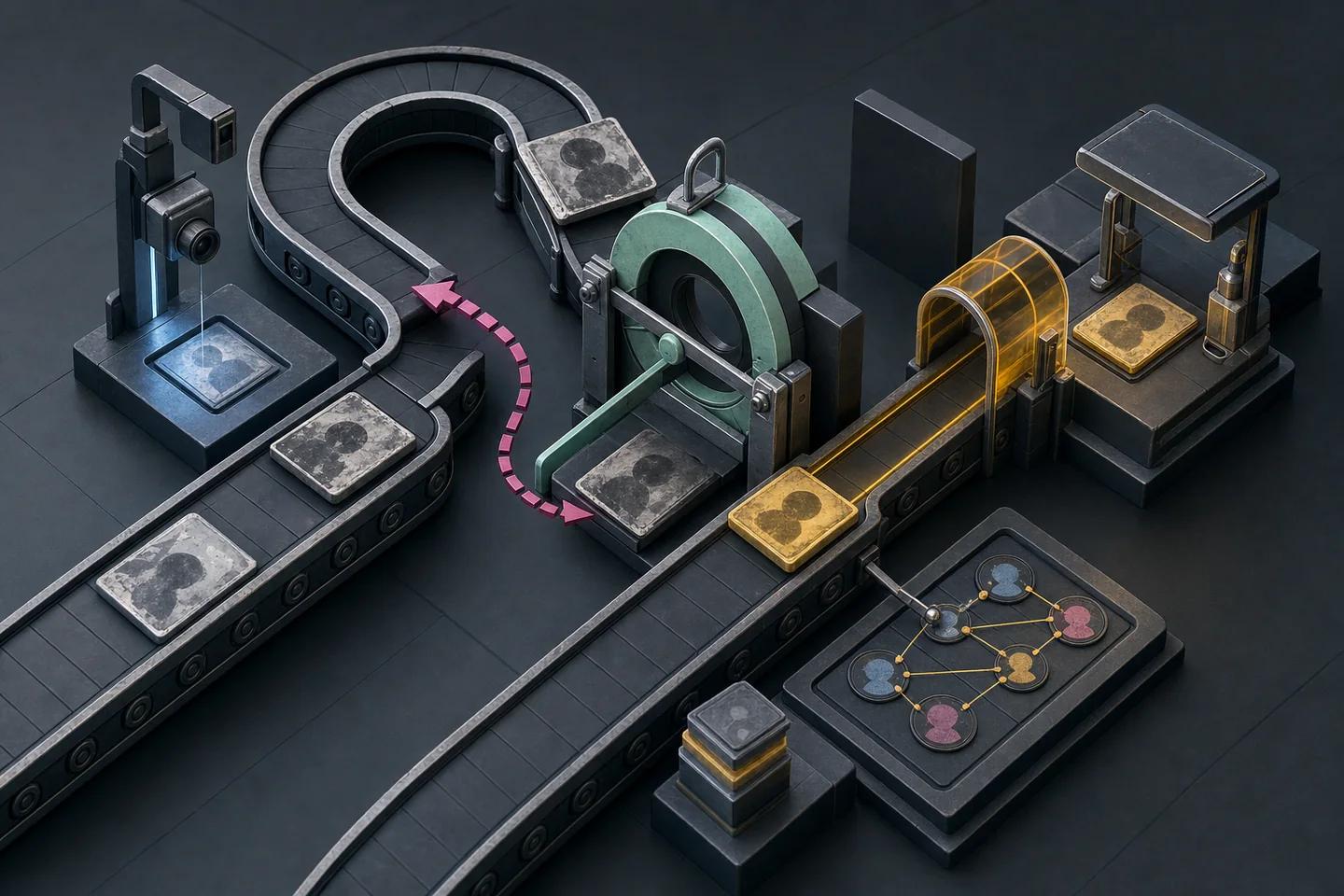
- At shift start or at random points, request a short live selfie in the app and screen it for replay, face swap and generation before matching it to the enrolled face.
- Treat changes to payout account, phone number or device as high risk and repeat the face check.
- Route failures to a support review with a clear path back to work, not an automatic deactivation.
- Register legitimate substitutes as people in their own right, with their own checks, where the law and platform model allow substitution.
Deactivation, Fairness and Honest Limits
Deactivation cuts off a worker's income, so a face check failure should never end an account by itself. Workers often take selfies outdoors, in helmets, at night or on cheap phones, all of which raise false rejection rates. Platforms should measure failure rates by device type, lighting conditions and demographic group, give workers a human review with a fast turnaround, and explain what to do differently on a retry.
Deepfake detection also has a clear boundary. It catches a fake face; it does not catch a real account holder who logs in, passes the selfie and then hands the phone to someone else for the shift. Location patterns, device signals, customer reports and random re-checks during a shift address that. And a genuine worker coerced into renting their account will pass every face check.
How NeuroVerify Fits Gig Worker Verification
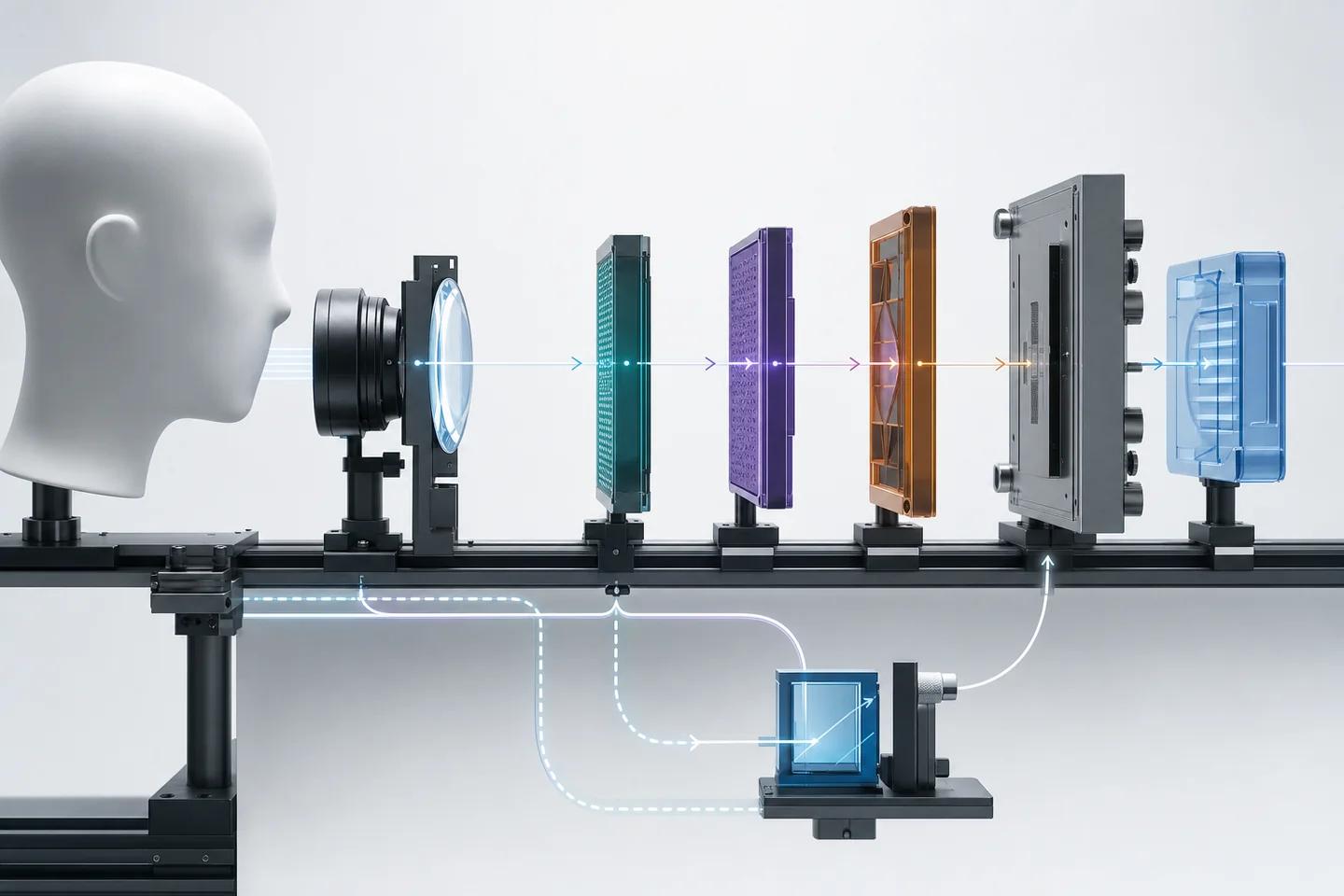
NeuroVerify, Neural Defend's face, video and audio API, checks sign-up and shift-start selfies for deepfakes and manipulation beyond liveness. One request returns six signals: Visual Safety Screening, Live Presence Verification, Face Manipulation Detection, AI Generative Model Analysis, AI Pixel-Level Manipulation and AI Content Compliance, combined into a unified risk score with signal-level evidence. The platform's policy decides whether the worker starts, retries or goes to review.
Repeated checks only work if they are fast and cheap to run. NeuroVerify returns results in under 200 ms at p95 on eligible image requests under defined test conditions, and Android, iOS and Flutter SDKs put the capture inside the worker app. Neural Defend describes integration as two lines of code and live in under 24 hours. On the public VendorBench-100 still-image benchmark, Neural Defend ranked first of 36 systems with an MCC of 0.876 against 0.646 for the next-best vendor; video selfies and injection attacks are outside that benchmark and should be tested in a pilot. NeuroVerify does not analyse ID documents or run background checks.
Evidence boundary
Limitations
- Face checks do not detect an approved worker handing over the phone after passing a shift-start selfie.
- Outdoor capture, helmets, glare and low-end phones raise false rejection rates, so review paths and subgroup monitoring are essential.
- NeuroVerify does not analyse ID documents or perform background, licence or right-to-work checks.
- VendorBench-100 covers still images only and does not measure video selfies, injection resistance or latency on mobile networks.
Source record
Sources and references
- GOV.UK, Home OfficeDelivery firms to bolster rider security checks to stop illegal workingPublished June 30, 2025. Verified October 19, 2026.
- GOV.UK, Home OfficeDeliveroo, Just Eat and Uber Eats to enhance security checks to prevent illegal workingPublished April 30, 2024. Verified October 19, 2026.
- National Institute of Standards and TechnologyNIST SP 800-63A-4, Digital Identity Guidelines: Identity Proofing and Enrollment (PDF)Published July 31, 2025. Verified October 19, 2026.
- arXivVendorBench-100: A Unified Cross-Paradigm Benchmark for Deepfake Image Detection (v2)Published July 29, 2026. Verified October 19, 2026.
- Federal Trade CommissionFTC Policy Statement on Enforcement Related to Gig WorkVerified August 7, 2026.