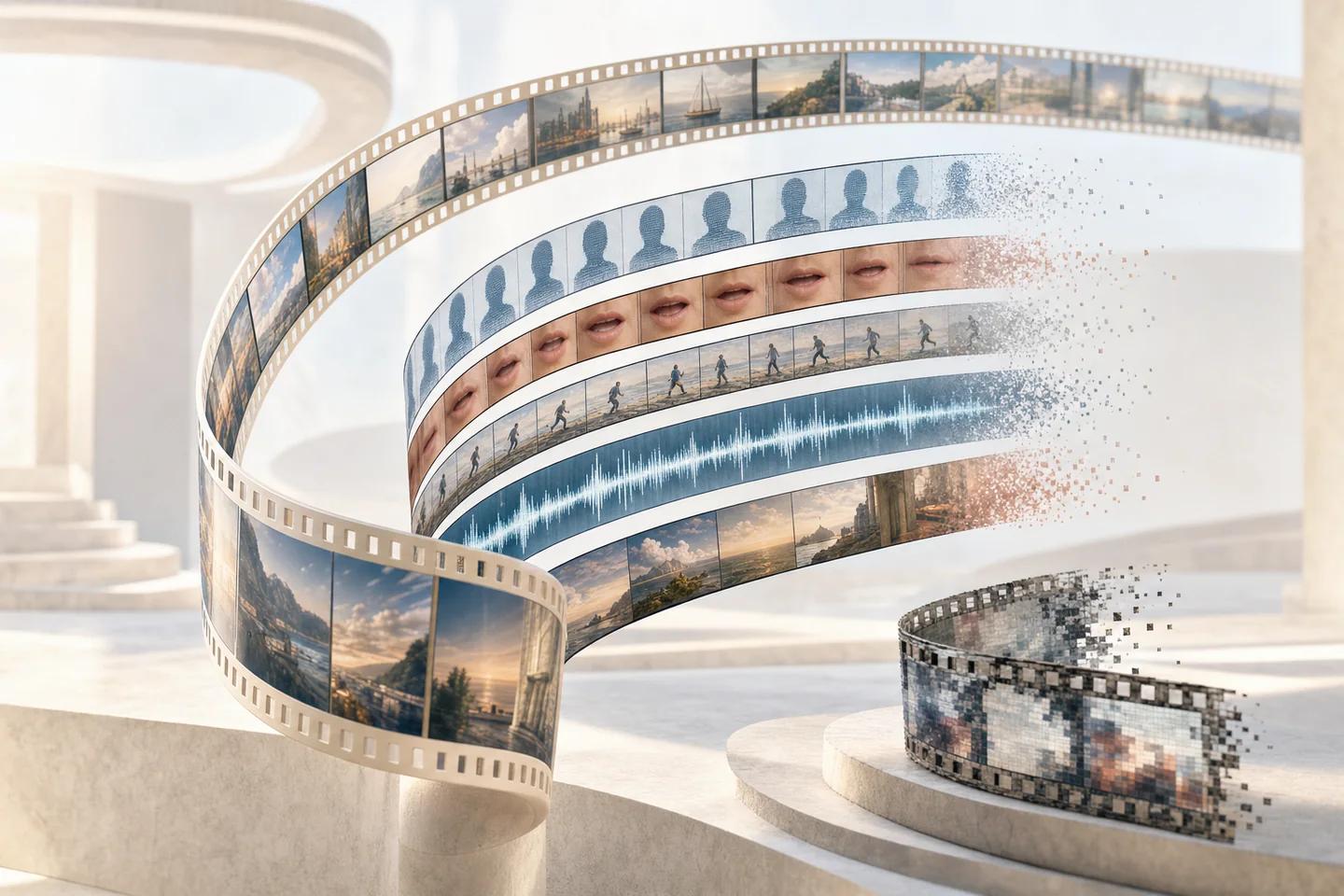
Why is full-body generation harder than face manipulation?
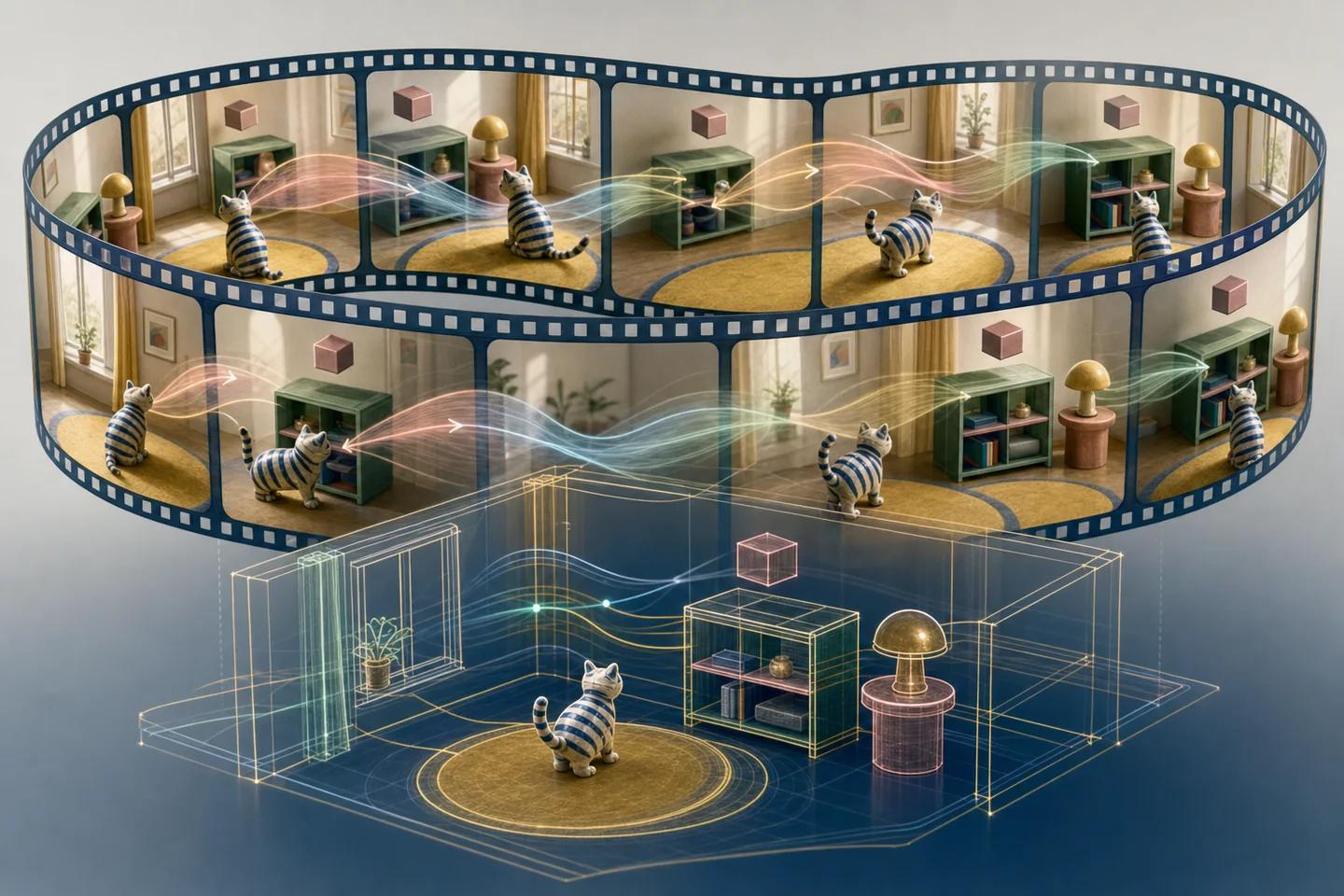
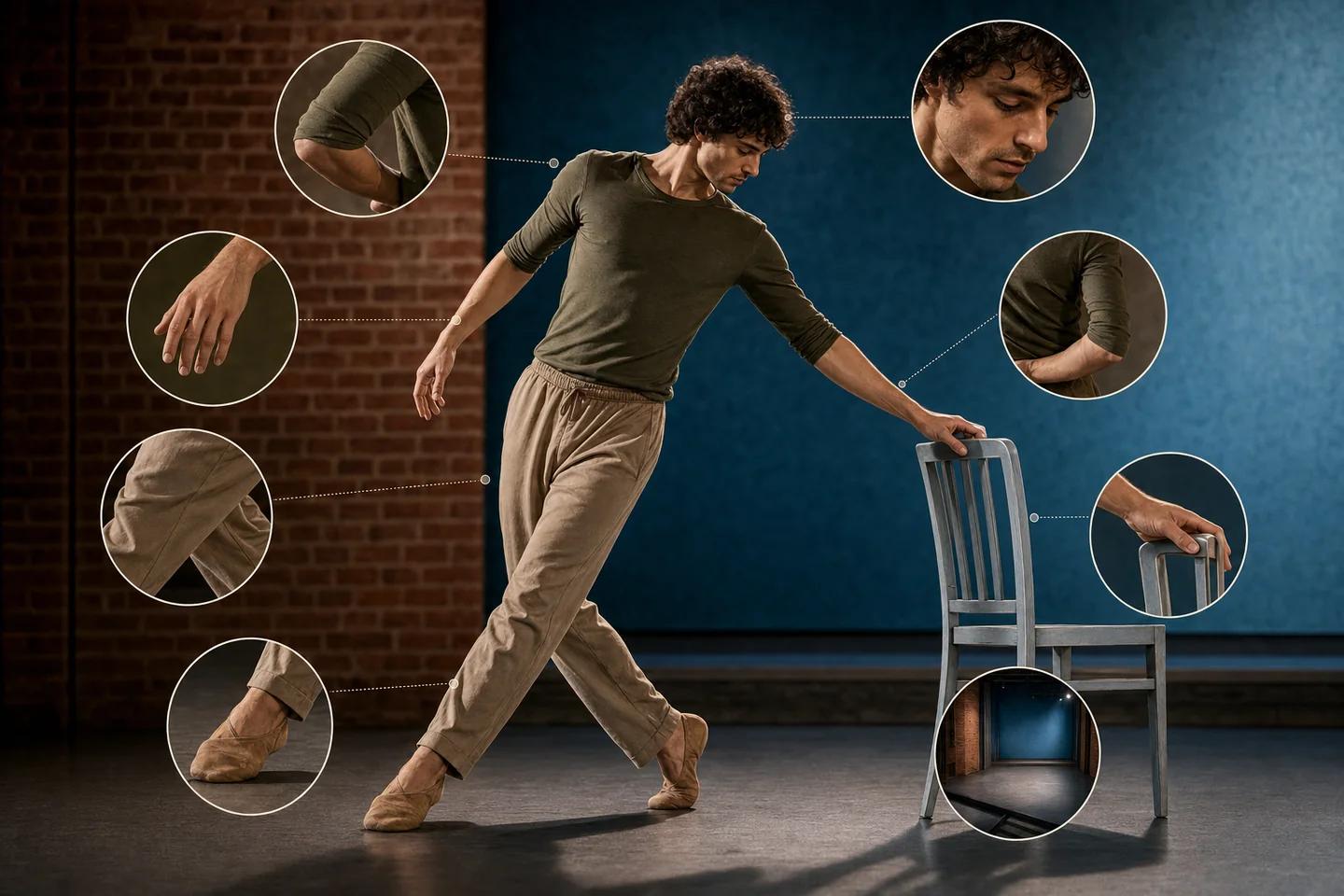
Full-body generation is harder because a body is an articulated, self-occluding object that moves through a scene and touches it. A face occupies a fairly rigid, well-aligned region that appears in millions of front-facing photos. A body has dozens of joints, hands with fine fingers, clothes that fold and swing, hair that moves with momentum, feet that must stay planted on the ground, and limbs that pass in front of and behind each other. Every one of those has to be right in every frame, and errors are easy for viewers to spot.
Training data is also less helpful. Faces can be cropped and aligned so a model sees the same layout again and again; bodies appear in endless poses, camera distances, clothes and partial views. A face swap can leave the original body, scene and motion untouched. A full-body generator has to produce or control all of them, which multiplies the places where physics and continuity can fail.
How does AI motion transfer separate appearance from movement?
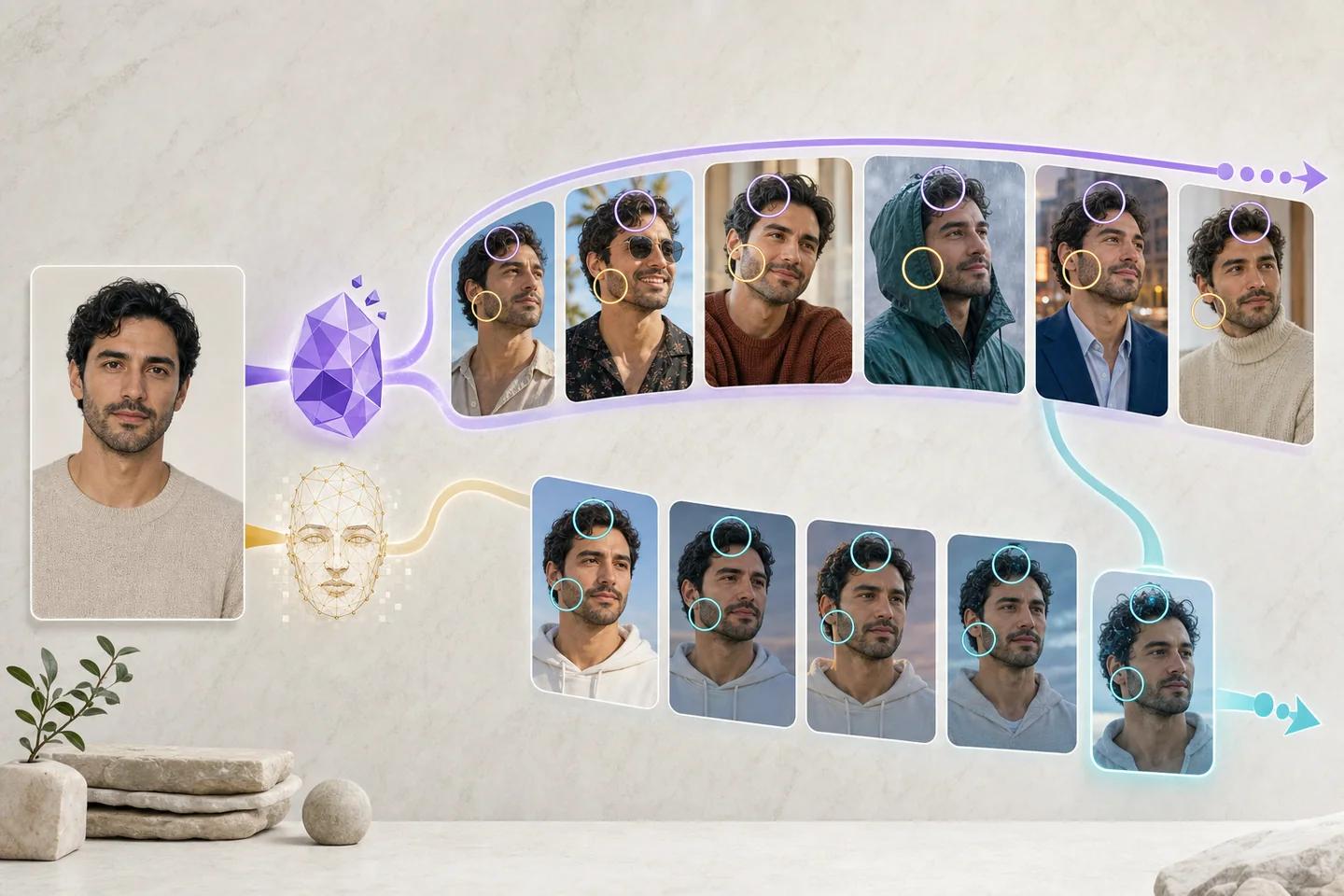
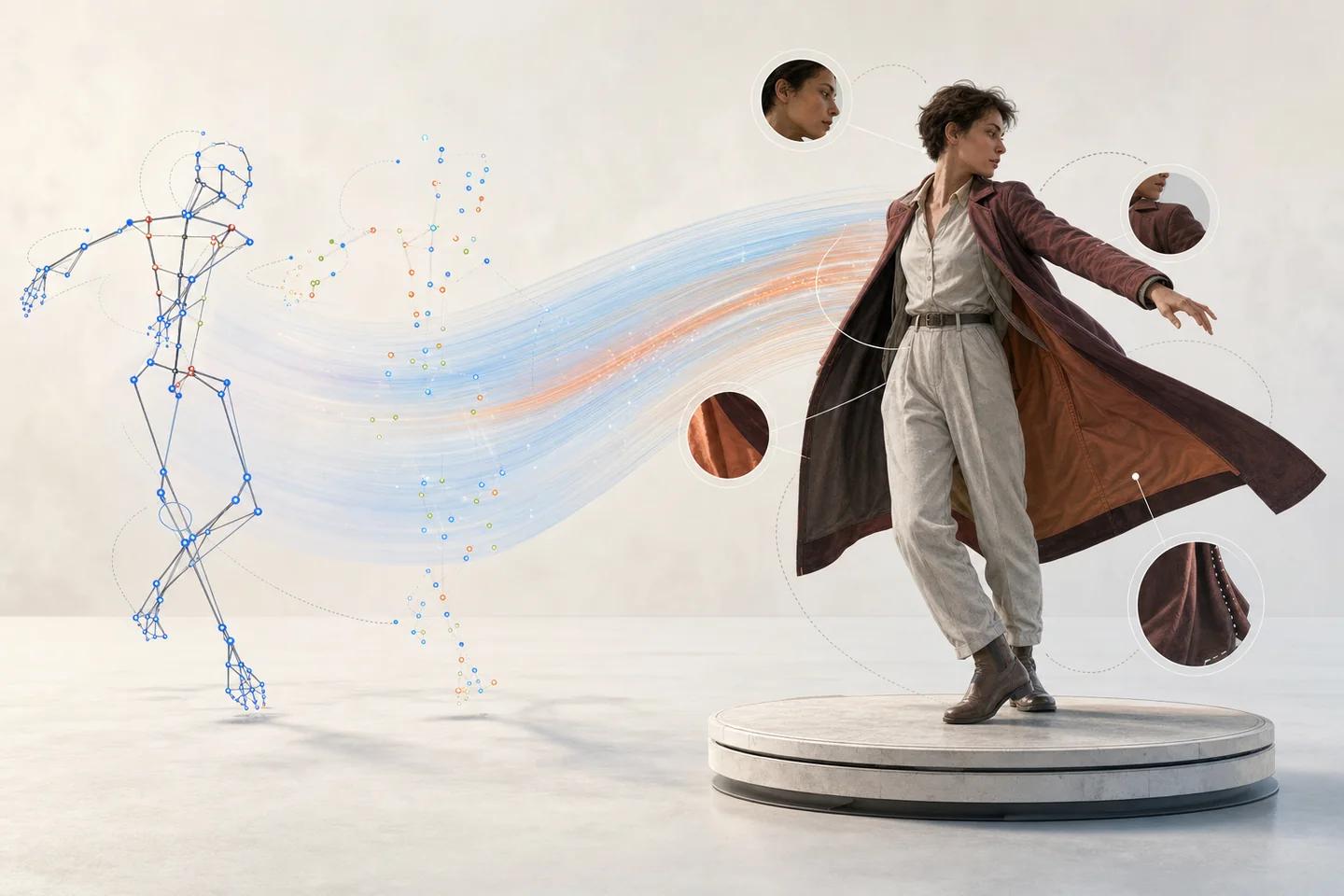
Motion transfer works by splitting a video into two parts, what the person looks like and how they move, then recombining one person's appearance with another's motion. Everybody Dance Now, posted in August 2018 by Caroline Chan, Shiry Ginosar, Tinghui Zhou and Alexei Efros, did this with pose as the bridge. It extracted a stick-figure pose sequence from a source dancer, then trained a video-to-video translation model to render the target person in those poses, needing only a few minutes of the target performing standard moves. It predicted two consecutive frames at a time for temporal coherence and used a separate pipeline for realistic faces. The authors also released a forensic tool for detecting videos made by their own system.
First Order Motion Model, published at NeurIPS 2019, removed the need for a pose detector. It learned keypoints on its own, each with a local affine transformation describing how the region around it moves, and a generator that handles parts hidden or revealed by motion. Its authors report that it needs no annotations or prior information about the object; once trained on one category, such as faces or bodies, it can animate any object in that category from a single source image.
How did full-body synthesis develop after motion transfer?
Later systems kept the appearance-and-motion split but improved how appearance is held steady. Animate Anyone, posted in November 2023, used a ReferenceNet to merge detailed features from a reference image, a lightweight pose guider to control movement and a temporal module to smooth transitions, and named consistent character appearance across frames as the main challenge. General video models then began generating people inside whole scenes from text, as OpenAI's February 2024 Sora report showed, without any explicit pose input.
| Year | System | Control signal | Source of appearance |
|---|---|---|---|
| 2018 | Everybody Dance Now | Extracted 2D pose | A few minutes of target video |
| 2019 | First Order Motion Model | Learned keypoints with local affine motion | One source image |
| 2023 | Animate Anyone | Pose sequence via pose guider | One reference image through ReferenceNet |
| 2024 | Sora report | Text prompt, no explicit pose | Learned from training data |
Where full-body fakes still break
Hands are the classic failure: extra or merged fingers, impossible bends, and hands that change shape when they cross the body. Feet slide across the floor instead of planting. Clothing pops between patterns or ignores gravity, and a sleeve or necklace can appear and vanish across frames. Occlusion is hard because the model must remember what a hidden arm looked like when it reappears. Contact with objects, such as gripping a cup or leaning on a table, often looks weightless.
None of these are guaranteed. Pose-driven systems inherit errors from the pose estimate, so a wrong skeleton produces a confident but wrong limb, while modern video models fix many of the obvious problems in short clips. Long shots with fast motion, crossing limbs and object interaction remain the best places to look.
Why full-body fakes matter for fraud and evidence
Most identity verification is face-centred, so full-body fakes matter less for onboarding than face swaps do. They matter more for misinformation, fabricated evidence and impersonation on social and commercial platforms: a public figure appearing to do something they did not, a fabricated incident video attached to an insurance claim, or a fake endorsement clip. The FBI's December 2024 public service announcement warns of fabricated promotional videos used for investment fraud. For these cases, the useful questions are whether the whole scene is consistent, not only whether the face is real.
How to examine a suspect full-body video
Look at the whole frame and the whole clip. Check hands, feet, clothing and hair through motion and occlusion, and check contact with the ground and objects. Compare the person's appearance at the start and end of the clip. Ask for the original file and its source, because downloading and re-encoding blur the fine detail where many errors live. Detector output should be read with its scope in mind: a face-focused detector says little about a manipulated body or background.
How Neural Defend examines full-body and scene-level manipulation
NeuroDetect is designed for evidence beyond the face. An analyst uploads an authorized video into a case and reviews the original alongside explainability heatmaps and attention views over regions and individual frames, so a sliding foot or a regenerated sleeve can be located in time and space. An LLM-assisted summary describes the findings with links to the evidence, the analyst makes the final call, and the forensic report records observations, uncertainty, provenance and model context.
Where people appear in onboarding or verification video, NeuroVerify screens the face with six signals in one API call and returns a risk score with signal-level evidence. Deployment can be managed cloud, private cloud or VPC, secure container, on-premises or air-gapped, which suits sensitive evidence that cannot leave an organisation.
Evidence boundary
Limitations
- Failure modes described are common tendencies; current video models fix many of them in short, simple clips.
- System descriptions come from each paper's abstract or report and are not compared quantitatively.
- Face-focused detectors, including face signals in NeuroVerify, are not designed to judge manipulated bodies or backgrounds.
Source record
Sources and references
- arXivEverybody Dance NowPublished August 22, 2018. Verified October 19, 2026.
- arXivFirst Order Motion Model for Image AnimationPublished February 29, 2020. Verified October 19, 2026.
- arXivAnimate Anyone: Consistent and Controllable Image-to-Video Synthesis for Character AnimationPublished November 28, 2023. Verified October 19, 2026.
- arXivVideo-to-Video SynthesisPublished August 20, 2018. Verified August 7, 2026.
- OpenAIVideo Generation Models as World SimulatorsPublished February 15, 2024. Verified August 7, 2026.
- FBI Internet Crime Complaint CenterCriminals Use Generative Artificial Intelligence to Facilitate Financial Fraud (I-120324-PSA)Published December 3, 2024. Verified October 19, 2026.