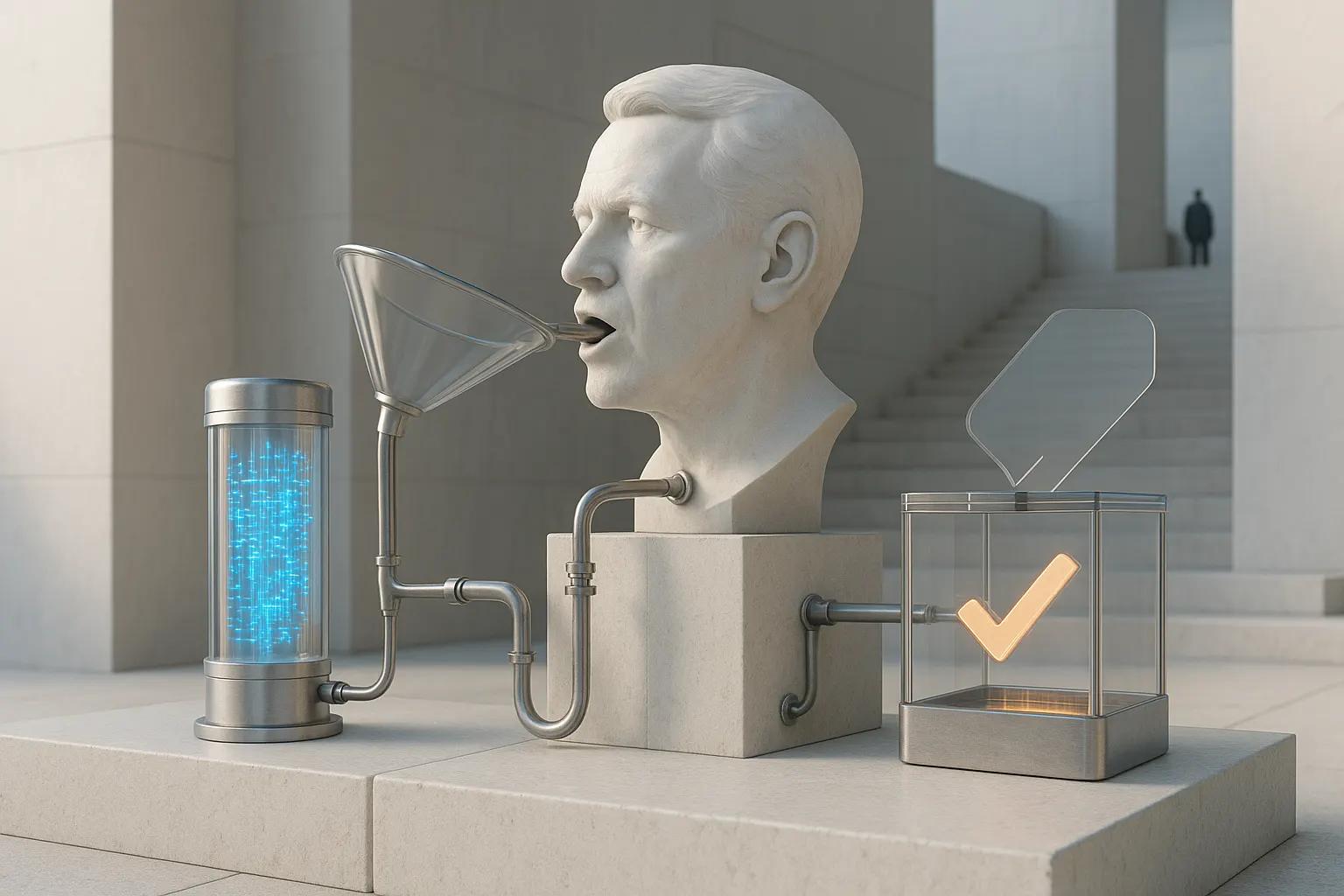

Mark Cuban says AI copies of him sell diabetes cures on Facebook
On the Pivot podcast with Kara Swisher and Scott Galloway, reported by IBTimes UK on 26 August, Mark Cuban said Facebook ads use an AI version of his face and voice to promote a diabetes treatment he never sold. He said he hears every week from older people who believe they paid $294 for it on his recommendation, and he called Facebook the worst of the worst.
The attack is simple. Scammers build a short video from a cloned face and voice, attach a health claim aimed at a chronic condition, and buy targeted ad placements. Some ads include a small disclaimer saying the figure is AI. Cuban's point is that viewers have already been persuaded by the time they reach it.
The target is the buyer, usually an older consumer, and the celebrity's reputation is collateral. In October, Meta disputed reporting on internal estimates of scam ad revenue, calling one figure rough and overly inclusive, and said it removed more than 134 million scam ads in 2025. The control that would have caught these ads sits at ad intake: face and voice manipulation checks on the creative before it runs, combined with a list of frequently impersonated public figures. Our explainer on the FTC impersonation rule covers what US regulators currently prohibit.
| Date | Target | Attack | Channel |
|---|---|---|---|
| 24 to 25 Aug 2026 | Hawaii voters and the family of the late Haunani-Kay Trask | AI-generated voice and image used as a fake political endorsement | Broadcast TV campaign ad |
| 25 Aug 2026 | Federal child-protection law (United States v. Anderegg) | Stable Diffusion images of fictional minors; in-home possession charge dismissed on appeal | Court ruling; case began with an Instagram message to a minor |
| 26 Aug 2026 (reported) | Mark Cuban and older consumers | Cloned face and voice selling a $294 diabetes treatment | Paid Facebook ads |
| 27 Aug 2026 | People following the Nepal-Tibet flood | AI-generated disaster footage presented as real | X and other social platforms |
| 28 Aug 2026 (reported) | Wisconsin congressional candidate Rebecca Cooke | Grok-made lookalike video labelled as satire | Campaign social media accounts |
A fake endorsement from the late Haunani-Kay Trask in a Hawaii campaign ad
Hawaii News Now reported on 24 and 25 August that independent congressional candidate Nathan Berning ran a 30-second television ad in which an AI-generated version of Haunani-Kay Trask appears to endorse him. Trask, a Native Hawaiian scholar and activist, died in 2021. The ad used a synthetic version of her voice and an image built from a widely published photo of her.
Berning first said the woman was a model. He later admitted the video was AI-generated, apologized to the family and said the ad would not run in its current form. Trask's sister, Mililani Trask, called it a fraud on voters. State Rep. Scot Matayoshi said Act 247, a 2026 Hawaii law, lets the family sue over misuse of her image.
This case shows a gap that detection alone cannot close. Hawaii News Now noted that federal rules on candidate advertising stop TV stations from censoring such ads. What helps is speed of verification: newsrooms and the family need a clear, documented finding that the voice and face are synthetic. Our guide to how deepfakes can affect elections covers the wider pattern.
Seventh Circuit rules on AI-generated child abuse images in United States v. Anderegg
On 25 August 2026 a Seventh Circuit panel of Judges Lee, Pryor and Kolar affirmed the dismissal of one count against Steven Anderegg. The court held that 18 U.S.C. 1466A(b)(1) was unconstitutional as applied to his in-home possession of obscene virtual child sexual abuse material, because Stanley v. Georgia (1969) and Ashcroft v. Free Speech Coalition (2002) bind lower courts.
According to the government, Anderegg installed Stable Diffusion on his laptop, added components to generate explicit content and used curated prompts to produce hundreds of photorealistic images of prepubescent children. The government conceded the charged images do not depict or link to an actual child. The case began in October 2023, when Meta reported an Instagram message carrying such images to a minor's account to the NCMEC CyberTipline.
The ruling is narrow. Charges for producing, distributing and transferring the material to a minor under 16 remain. The opinion says current models can produce images virtually indistinguishable from abuse of real children, which pushes one question to the centre of future cases: whether a real child's likeness was used. That makes forensic provenance evidence more important for prosecutors and trust and safety teams, who should keep following their legal reporting procedures for this material.
AI-generated videos of the Nepal-Tibet flood spread within a day
Flooding struck the Nepal-Tibet border on 26 August 2026. On 27 August an X account posted a clip of a bridge collapsing into floodwater, described as footage from the disaster. Lead Stories found that cars, a bus and a crowd vanish during the collapse without debris, and a commercial detector scored the clip as AI-generated.
Full Fact debunked a second clip, shared thousands of times, showing a wave sweeping cars down a street. It carried an invisible SynthID watermark, which indicates it was made with Google AI. Full Fact, citing the BBC, said the flood had killed more than 1,000 people.
Nobody needed to profit for this to cause harm. Fabricated footage during a disaster competes with real rescue information and distorts what responders and donors see. The controls that worked were watermark checks, frame-by-frame review for physical inconsistencies and reverse searches for the original upload. Our page on fake official media during crises explains how these campaigns build momentum.
A Grok-made lookalike video in Wisconsin's most competitive House race
Wisconsin Public Radio reported on 28 August that Rep. Derrick Van Orden's campaign posted a Grok-generated video of a young woman who strongly resembles his Democratic opponent, Rebecca Cooke, calling herself the Anointed One and telling peasants to vote for her. A disclaimer beneath the video says it is AI-generated, and the campaign calls it satire.
Cooke called it character defamation. Wisconsin's 2024 law requires campaign ads to disclose AI-generated content but does not cover social media posts. WPR cited the National Conference of State Legislatures: 28 states have AI disclosure laws for political content and three have some form of ban on political deepfakes.
Here the control question is about labelling rather than detection, since the campaign admits the video is synthetic. The risk is that clips lose their labels as they are reshared, so platforms that strip context need a way to re-identify synthetic media after the fact.
What security teams should do this week
Three of this week's five cases used a real person's face or voice without consent, and two of them reached the public through paid or broadcast channels. The steps below apply to ad platforms, brand protection teams, newsrooms and trust and safety groups.
- Screen ad creative that shows a recognizable face or voice for manipulation before it goes live, and add your executives and spokespeople to an impersonation watchlist.
- Do not treat a small AI disclaimer as a safe harbour. Review the claim the ad makes, especially health and investment offers aimed at older users.
- During breaking events, check for SynthID or C2PA provenance data first, then review frames for objects that appear or vanish, and keep a record of each check.
- Write down who decides on takedown, escalation or legal referral when a detector flags media, so a score does not sit in a queue.
- For material involving minors, follow your legal reporting obligations and do not move it outside approved law-enforcement channels.
Where Neural Defend fits
Most of this week's incidents end in an investigation: a family proving a voice is synthetic, a newsroom checking flood footage, a platform reviewing an ad complaint. NeuroDetect is Neural Defend's forensic workspace for that work. Analysts upload authorized image, audio or video into a case, see explainability heatmaps down to regions, frames and audio segments, and export a forensic report that records observations, uncertainty, provenance and model version. The analyst makes the final call.
Platforms that need to screen media at upload can call NeuroVerify, which checks a face image, video or audio for deepfakes and manipulation and returns one risk score with six signal-level results, under 200 ms p95 on eligible image requests. Where scams move to the phone, NeuroCall (Beta) analyses voice calls. On the public VendorBench-100 benchmark of 100 still images, Neural Defend ranked first of 36 systems with an MCC of 0.876 against 0.646 for the next vendor; that benchmark does not cover video or audio.
Evidence boundary
Limitations
- Mark Cuban's statements are his own account given on a podcast; this report did not independently verify the ads, the number of buyers or Meta's ad review decisions.
- Reporting on the Hawaii ad comes from local news coverage; the ad itself and any legal filings under Act 247 were not reviewed.
- Detection can show that media is likely synthetic but cannot decide whether a campaign video is satire, whether an ad breaks platform policy or what a court will allow.
Source record
Sources and references
- IBTimes UKMark Cuban Blasts Facebook as 'Worst of the Worst' Over AI Scams Using His Image and VoicePublished August 26, 2026. Verified October 19, 2026.
- IBTimes UKMark Cuban Accuses Facebook of Allowing AI Deepfake Scams as Meta Faces $16B Revenue ClaimPublished October 7, 2026. Verified October 19, 2026.
- Hawaii News NowAI-generated endorsement depicting late activist outrages Hawaiian communityPublished August 24, 2026. Verified October 19, 2026.
- United States Court of Appeals for the Seventh CircuitUnited States v. Steven Anderegg, No. 25-1354, opinion decided 25 August 2026Published August 25, 2026. Verified October 19, 2026.
- Lead StoriesFact Check: FAKE Video Shows Nepal Bridge Collapsing Into Floodwaters, It Is AI-GeneratedPublished August 28, 2026. Verified October 19, 2026.
- Full FactFake footage of Nepal-Tibet flood circulates onlinePublished September 2, 2026. Verified October 19, 2026.
- Wisconsin Public RadioVideo in competitive congressional race spotlights challenge of regulating AI-generated political contentPublished August 28, 2026. Verified October 19, 2026.
- arXivVendorBench-100: A Unified Cross-Paradigm Benchmark for Deepfake Image DetectionPublished July 29, 2026. Verified October 19, 2026.