
Phone and consent → Registry or bureau pull → Selfie and liveness → Credit decision → Disbursal
Disbursal is hard to reverse, so the selfie has to be reliable.
Digital lending / NeuroVerify
Digital lenders move from application to disbursal in minutes, and the selfie is often the only live check between a data record and a credit decision. NeuroVerify checks that selfie for deepfakes and manipulation beyond liveness and returns one unified risk score with evidence.
It runs behind the selfie step already in your origination flow: no new step for the borrower, one API call.
NeuroVerify does not assess creditworthiness, verify documents or decide on a loan; it adds authenticity evidence for your credit and fraud policy.
The gap
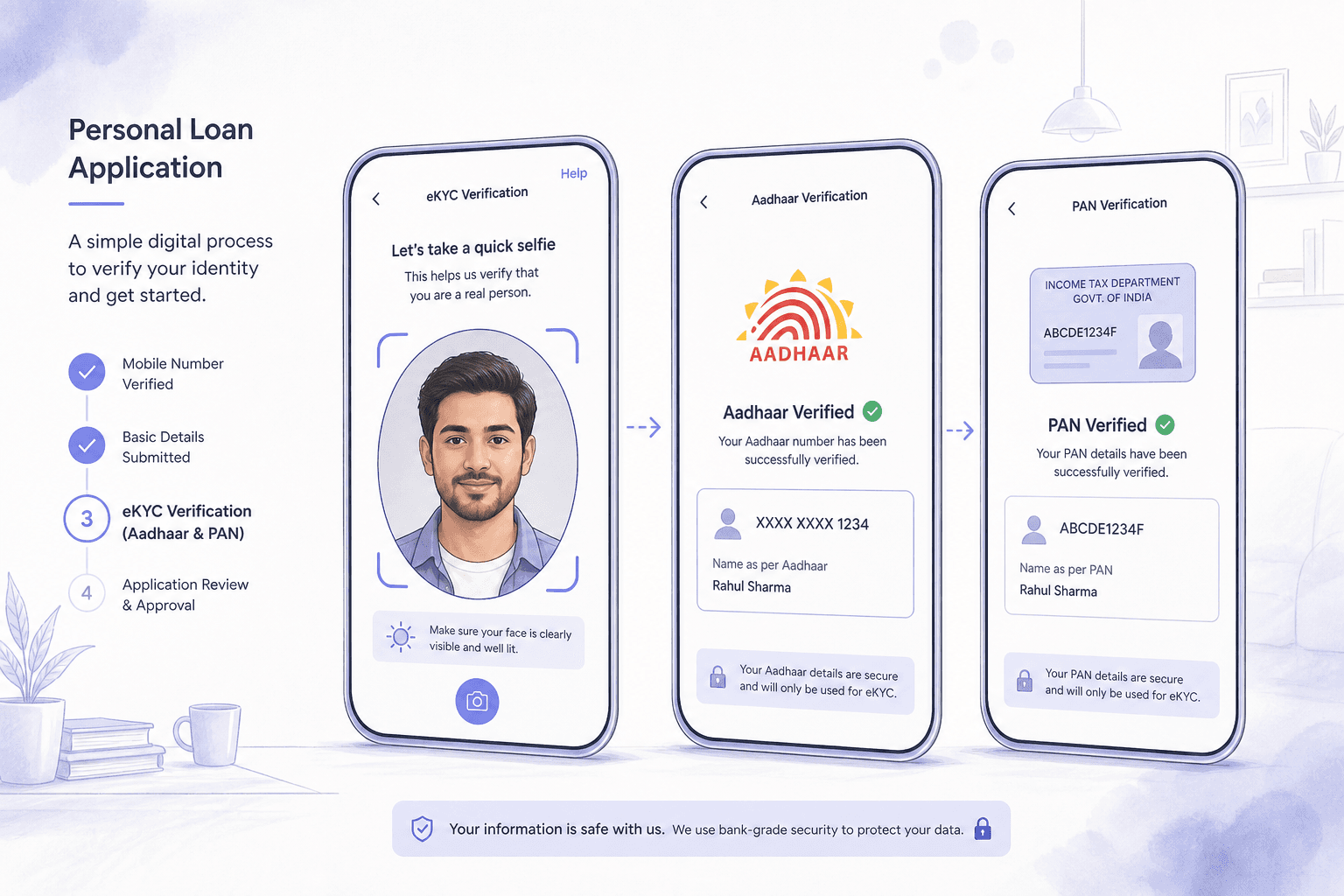
Instant personal-loan apps compete on how quickly a borrower gets money. The journey is short: identity data pulled from a registry or credit bureau, a bank statement or income signal, a selfie, and a decision. Money leaves the account soon after.
Phone and consent → Registry or bureau pull → Selfie and liveness → Credit decision → Disbursal
Disbursal is hard to reverse, so the selfie has to be reliable.
Bureau and registry pulls confirm that data exists and is consistent. They do not prove who is holding the phone. Face match confirms two images look alike. Liveness confirms a presentation check passed. Neither tells you whether the face was synthetic, swapped or injected.
An attacker who has assembled genuine data for one person only needs a face that matches the file and passes a prompt. Generative tools now produce that cheaply.
Lending fraud tends to surface in collections, not at approval. Once the funds are out, the evidence you hold is the capture. A check on the authenticity of that capture, taken at the time, is worth more than a review months later. See how deepfakes exploit KYC verification systems.
Threats
These are techniques, not claims about any lender. Each tries to get a borrower approved who is not who they appear to be.
A real person with real data is recruited to complete the selfie, then the funds are moved on. The media is authentic, but the intent is not.
The attacker has valid personal data and builds a face to match it, then submits that as the live capture.
A face swap on a handset or a screen replay is used to pass the liveness prompt.
Software below the app presents a prepared video as the device camera, so the lender receives a convincing stream.
An operator submits many applications in a session, reusing or lightly editing the same media.
One face, or one generated face, is used with several identities to test thresholds and borrow in small amounts.
Small tickets are often the first test. Controls that only apply at higher amounts leave an easy entry.
Where NeuroVerify fits
NeuroVerify sits behind the selfie capture in your origination flow. You send the image or video you already collect. One call returns a unified risk score with evidence from six signals, and your credit and fraud rules decide whether to approve, step up or decline.
That includes cases where liveness passes. NeuroVerify is designed to look beyond liveness for generated, swapped or injected media.
Pass the image or video from your capture step to the API with an SDK or REST.
Get one score with signal-level evidence in a single response, before the credit decision runs.
Use score bands to approve, step up to video KYC, refer to manual review or decline, by loan size and channel.
Keep the output with the loan file so fraud and collections teams can use it.
What you get
Catch synthetic and swapped faces before disbursal.
Apply the check from the first loan, not only at higher amounts.
Signal-level output supports tuning and review.
The selfie flow stays as it is, so extra friction does not hit completion rates.
SDKs for mobile and backend, REST, and deployment in your VPC or on-premises.
Questions
It sits behind the selfie or face-capture step you already run. You send the image, video or audio you already collect to one API call, and the response comes back with a unified risk score and signal-level evidence. The end user sees no new step.
Integration uses native mobile SDKs (Android/Kotlin, iOS/Swift, Flutter), backend SDKs (Python, TypeScript/Node.js, Go, Java) or the REST API. Two lines to integrate and live in under 24 hours are product claims; your own environment and review process set the real timeline.
Liveness asks whether a live person appears to be in front of the camera. It was designed around printed photos, screen replays and masks. It does not ask how the media was produced, so a face swap, a fully synthetic face or an injected stream can satisfy it.
NeuroVerify checks for deepfakes and manipulation beyond liveness. Keep your liveness vendor and add the authenticity evidence next to it. See deepfake detection vs liveness detection.
One unified risk score, plus evidence from six signals: Visual Safety Screening, Live Presence Verification, Face Manipulation Detection, AI Generative Model Analysis, AI Pixel-Level Manipulation and AI Content Compliance.
Your policy decides what happens next: approve, step up, route to manual review or decline. NeuroVerify does not approve or reject the borrower or the loan.
Latency is under 200 ms p95 on eligible image requests under defined test conditions. The methodology is available on request, so you can compare it with your own traffic.
On the public VendorBench-100 benchmark, NeuroVerify ranked first of 36 systems, with a detection score (MCC) of 0.876 against 0.646 for the next-best vendor.
Deployment options are a managed cloud API, private cloud or customer VPC, a secure container, on-premises, and air-gapped. Pick the one that matches your data residency and security requirements.
The platform holds ISO/IEC 27001, ISO/IEC 27701, ISO/IEC 42001 and SOC 2 Type II certifications. For handling details, see product data handling and the trust centre.
Yes. Send a representative sample of borrower selfies across loan sizes, channels and device types and compare the scores with your own labels. Include genuine captures from low-end handsets and poor lighting so you can see how thresholds behave on real users, not just on attacks.
Contact the team to set up an evaluation. See also how to evaluate a detection API.
No. Many lenders use a score band to decide when to step up to video KYC or manual review. NeuroVerify gives that decision better evidence. Your regulator and policy decide which journeys require which controls.
Evaluate NeuroVerify
Send NeuroVerify a sample of your application selfies, including approved and later-defaulted cases, and compare the scores with your own outcomes.