How Could Deepfakes Enable Insider Trading?
Insider trading depends on information the market does not have yet: earnings before release, a pending acquisition, a failed drug trial. Deepfakes give an outsider two new ways to profit from that gap.
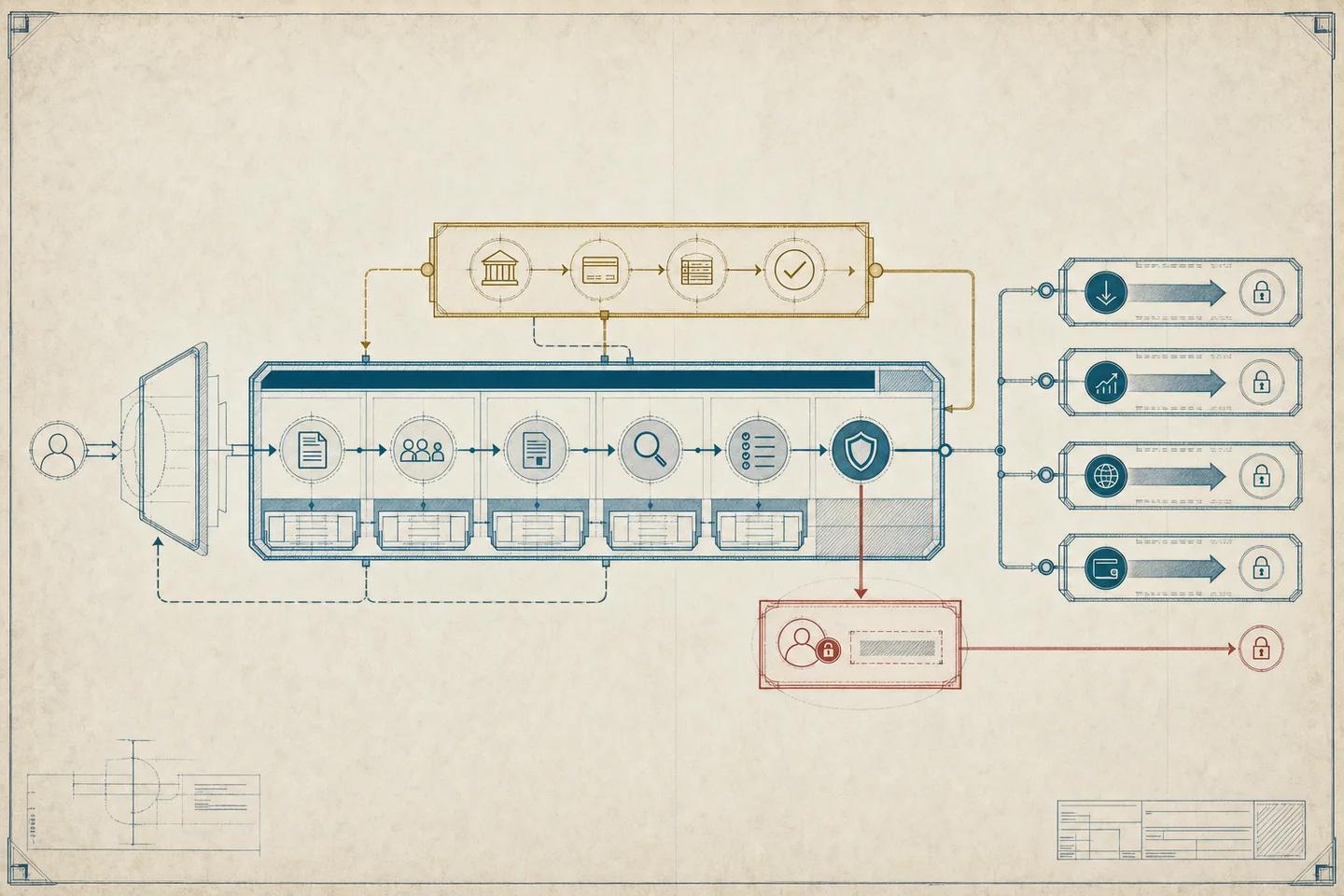
The first is extraction. An attacker clones the voice or face of a chief financial officer, a deal partner at an investment bank or an outside lawyer, then calls someone inside the circle of knowledge and asks for the latest numbers, the deal timetable or a draft announcement. The request sounds routine because it comes from the right person. The attacker then trades, or sells the information to someone who does.
The second is fabrication. Instead of stealing real inside information, the attacker creates false information and trades ahead of it: a video of a chief executive announcing a resignation, an audio clip of a regulator discussing an investigation, or an image of a disaster at a company site. In legal terms this is closer to market manipulation than insider trading, but the economics are the same. The attacker knows the truth before the market does, because they made the lie.
| Route | What the attacker fakes | Who is targeted | What the attacker gains |
|---|---|---|---|
| Extraction | The voice or face of an insider or adviser | Finance, investor relations, deal teams, external counsel | Real material nonpublic information |
| Fabrication | A market-moving video, audio clip or image | Traders, news wires, social media audiences | A short-lived price move the attacker positioned for |

What Does the Public Record Show So Far?
The public record shows each building block in use, though not yet a prosecuted deepfake insider trading case. Live executive impersonation works: FinCEN's alert FIN-2024-Alert004 of 13 November 2024 cites the widely reported February 2024 case in Hong Kong where a finance worker paid out about $25 million after a video call with a deepfaked chief financial officer. An attacker who can get a payment approved on a video call can also ask for a board pack.
Fabricated images can move prices. On 22 May 2023 a picture of smoke beside the Pentagon spread on Twitter through verified accounts, including one impersonating Bloomberg. Arlington County's fire department said there was no explosion or incident, experts said the image showed hallmarks of AI generation, and US outlets reported a sharp but short-lived drop on Wall Street. Bloomberg described it as possibly the first AI-generated image to move the market.
Regulators have named the technique. The FBI's public service announcement of 3 December 2024 lists images created for market manipulation and videos of company executives used in live calls among the ways criminals use generative AI. On 19 November 2024 the Reserve Bank of India warned that deepfake videos of its Governor were circulating to promote investment schemes. Federal Reserve Governor Michael Barr told a conference in April 2025 that deepfake attacks had risen twentyfold in three years, citing figures from Signicat.
Which People and Teams Are Most Exposed?
Exposure follows access to price-sensitive information and the habit of sharing it by phone or video. Inside a listed company that means finance, investor relations, the corporate secretary and anyone on a deal team. Outside it, the same information sits with investment bankers, lawyers, auditors, printers and investor relations agencies, all of whom take calls from executives they may know only by voice.
On the fabrication side, the exposed parties are the ones who act fastest on new information: algorithmic and discretionary traders, news wires and the editors who decide whether a clip is real. A fake video that reaches a wire service and is published, even briefly, does far more damage than one that stays on social media.
What Controls Reduce Deepfake Insider Trading Risk?
The controls that work treat a face or voice as a claim to be checked, never as proof of identity, whenever price-sensitive information or money is involved. A practical set looks like this:
Detection adds a second line. Recordings of unusual calls, videos circulating about the company and clips that a trading desk is about to act on can be checked for signs of generation or manipulation before anyone relies on them.
- Release material nonpublic information only through channels set in advance, such as a secure data room or a named email domain, never because a caller asks.
- Call back on a number from the firm's own directory before discussing deal or earnings details, even when the caller is a known executive.
- Agree verification phrases or second-person confirmation for urgent requests from senior leaders, and train assistants and deal staff to use them.
- Point investors and media to the company's official filings and press channels as the only source of announcements, and monitor for impostor accounts and fake clips.
- Ask compliance surveillance teams to look for trading that precedes a fake clip or follows an unusual information request.
Where Does Forensic Deepfake Detection Help, and Where Does It Not?
Forensic detection helps after a suspicious call or clip has been captured: it can show whether a recording carries traces of voice cloning or face manipulation, which frames or audio segments drove that view, and what processing the file has been through. That evidence supports an internal investigation, a regulatory referral or a public correction.
It does not help with information already given away on a call no one recorded, and it cannot identify who traded on it. A fabricated clip can also move prices in the minutes before anyone checks it. Detection buys time and confidence for the people who must respond; verification procedures prevent the leak in the first place. Our guide to preserving synthetic media evidence explains what to keep so a forensic review is possible.
How Neural Defend Supports Market Integrity Teams
Neural Defend's NeuroDetect is a forensic media workspace for investigations. Compliance, security or communications teams upload an authorised video, audio file, image or document into a case. The analysis records the model and version used, and the views show the original alongside explainability heatmaps and attention maps down to individual regions, frames and audio segments. An LLM-assisted summary explains the findings in plain language and links each point to evidence, while the analyst makes the final call. The case exports as a forensic report covering observations, uncertainty, provenance, model context and analyst notes.
For screening at volume, NeuroVerify scores face images, video and audio in one API call with six signals, returning eligible image results in under 200 ms at p95. NeuroCall, for live voice channels, is currently in Beta. On the public VendorBench-100 benchmark of 100 adversarial still images, Neural Defend ranked first of 36 systems with an MCC of 0.876 against 0.646 for the next vendor; the benchmark covers images only and one author also co-wrote Neural Defend's ARCAS 1B paper. Deployment can be managed cloud, private cloud, on-premises or air-gapped, and Neural Defend holds ISO/IEC 27001, ISO/IEC 27701, ISO/IEC 42001 and SOC 2 Type II.
Evidence boundary
Limitations
- Public evidence of deepfakes used specifically to obtain inside information is thin; this page describes documented techniques, not a measured trend.
- The Pentagon image's market effect was reported as brief, and estimates of its size vary between outlets.
- Forensic detection cannot recover information disclosed on unrecorded calls or identify who traded on it.
- VendorBench-100 covers still images only and one author also co-wrote the ARCAS 1B paper; NeuroCall is in Beta.
Source record
Sources and references
- Financial Crimes Enforcement NetworkFinCEN Alert on Fraud Schemes Involving Deepfake Media Targeting Financial Institutions (FIN-2024-Alert004)Published November 13, 2024. Verified October 19, 2026.
- FBI Internet Crime Complaint CenterCriminals Use Generative Artificial Intelligence to Facilitate Financial Fraud (I-120324-PSA)Published December 3, 2024. Verified October 19, 2026.
- EuronewsFake news about an explosion at the Pentagon spreads on verified accounts on TwitterPublished May 23, 2023. Verified October 19, 2026.
- Reserve Bank of IndiaRBI cautions public on deepfake videos of Top Management circulated over social media giving financial advice (Press Release 2024-2025/1537)Published November 19, 2024. Verified October 19, 2026.
- Board of Governors of the Federal Reserve SystemDeepfakes and the AI Arms Race in Bank Cybersecurity (speech by Governor Michael S. Barr)Published April 17, 2025. Verified October 19, 2026.
- arXivVendorBench-100: A Unified Cross-Paradigm Benchmark for Deepfake Image Detection (v2)Published July 29, 2026. Verified October 19, 2026.